
The Oregon International Air Show (formerly the Portland Rose Festival Air Show) is an annual event that has been ongoing since 1988 (with the exception of the 2020 air show which was canceled due to the COVID Pandemic). After 2021, the single, large air show was broken up into two events at the beginning and end of summer. The first part of the air show takes place in Hillsboro, Oregon in late May, and the second part takes place in McMinnville, Oregon in late August. I had the chance to volunteer at the 2023 air show in Hillsboro, so here are some of the photos and videos I took while there. (Forgive the blurriness of most of them since I’m not very skilled with action photography and my DSLR is a dinosaur from the late-2000s with ancient auto-focus.) Note that this is not the entire lineup and that I was only there for one day (21 May). All photos and videos are my own, and I have included some historical background to some of the aircraft, as well.
Military Aircraft
U.S. Air Force F-15C Eagle (Oregon Air National Guard 142nd Fighter Wing)
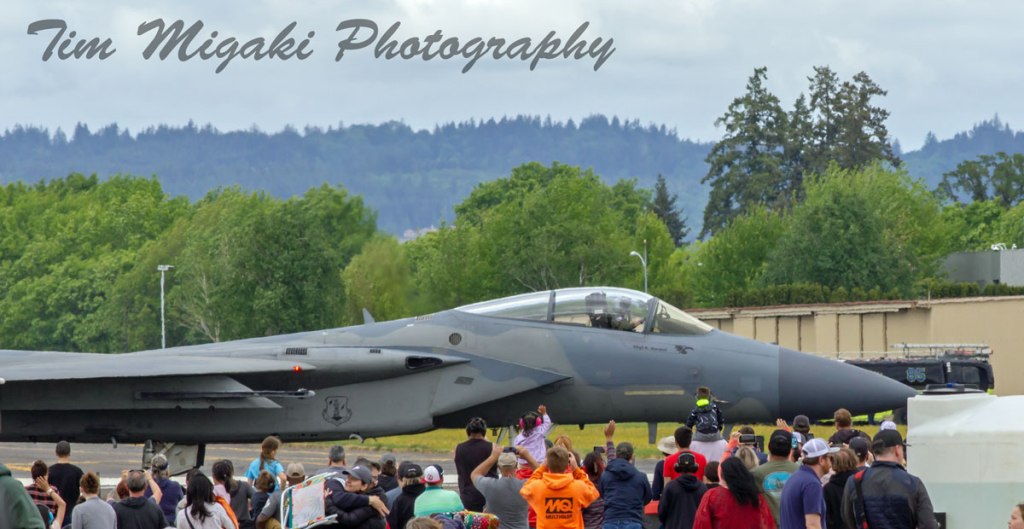
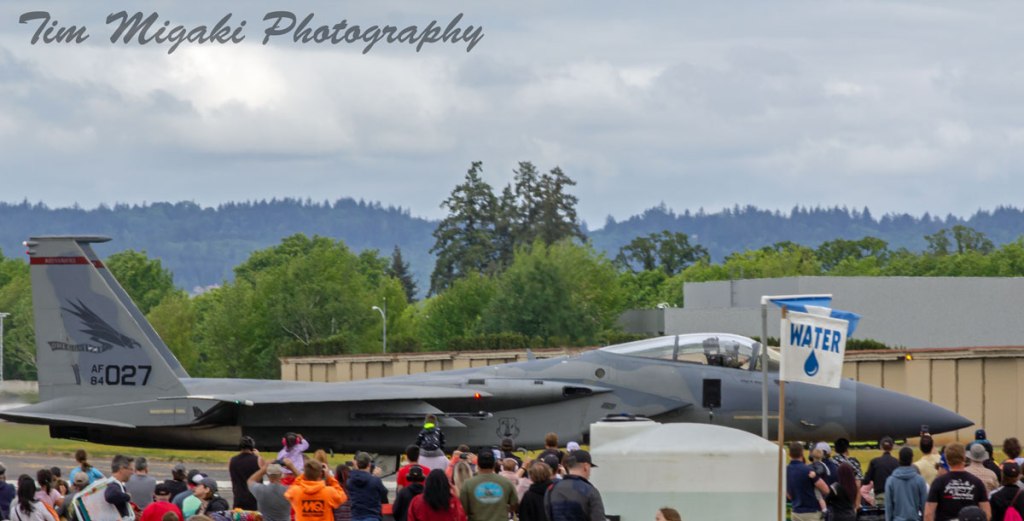

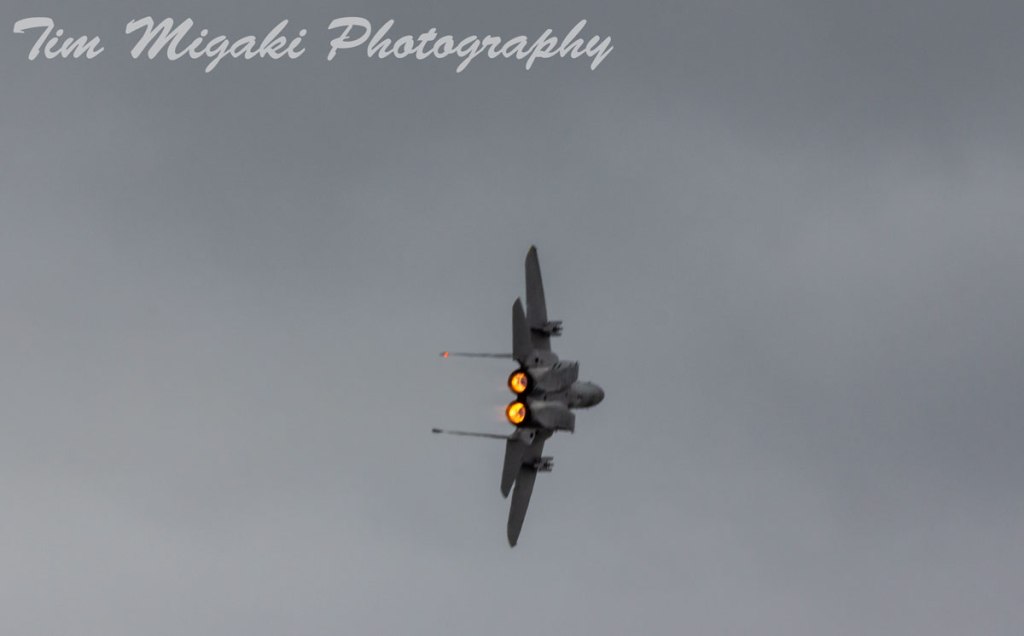


Entering U.S. Air Force service in 1976, the F-15C Eagle is an all-weather air superiority fighter that succeeded the F-4 Phantom II. Possessing high maneuverability, acceleration, and range, the Eagle is equipped with advanced avionics, radar, and weapons systems that allow it to outperform and outfight most enemy aircraft. With an exceptional and proven combat record, the Eagle has over 100 air-to-air kills with 0 losses. Its power and performance are evident given its low wing loading and a thrust-to-weight ratio greater than 1. This means that a clean Eagle can climb vertically. First seeing combat with the Israelis in 1977, the F-15C also saw success in the Gulf War and in the Balkans conflicts by the USAF. Variants of the F-15C are also used by Japan and Saudi Arabia.1
You will occasionally see these flying around the skies above Oregon because they are huge jets, and you will definitely hear them coming. This F-15C from the 142nd Fighter Wing took off and did a few passes before heading back to base at PDX. It was a real thrill to see one of these up close, and I must say that you can certainly “feel” the power of these aircraft (by the rumbling in your chest), especially when they are flying away from you with their afterburners lit.
U.S. Air Force F-35A Lightning II


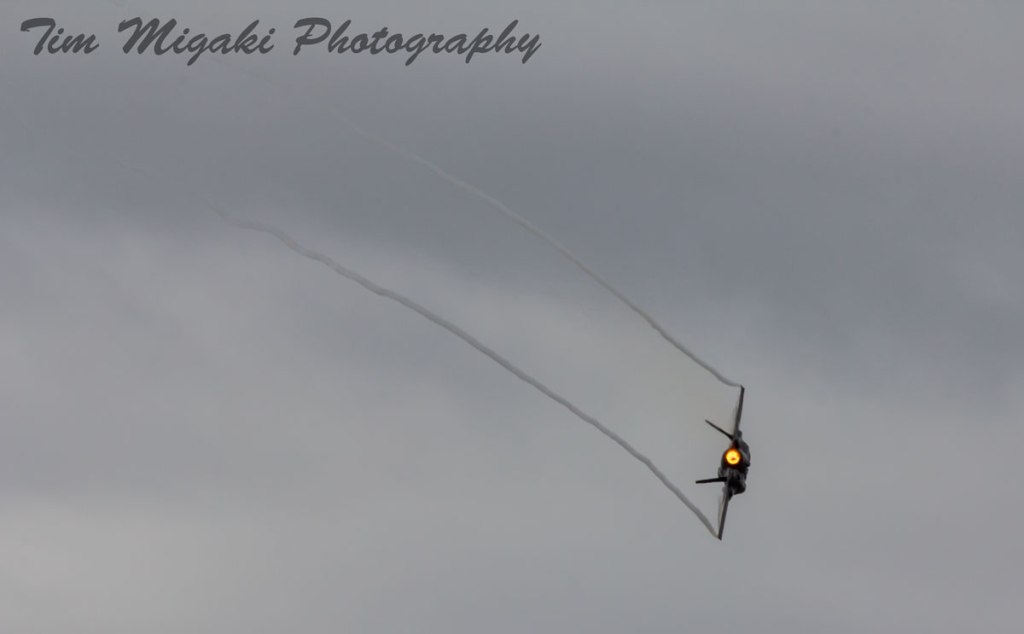
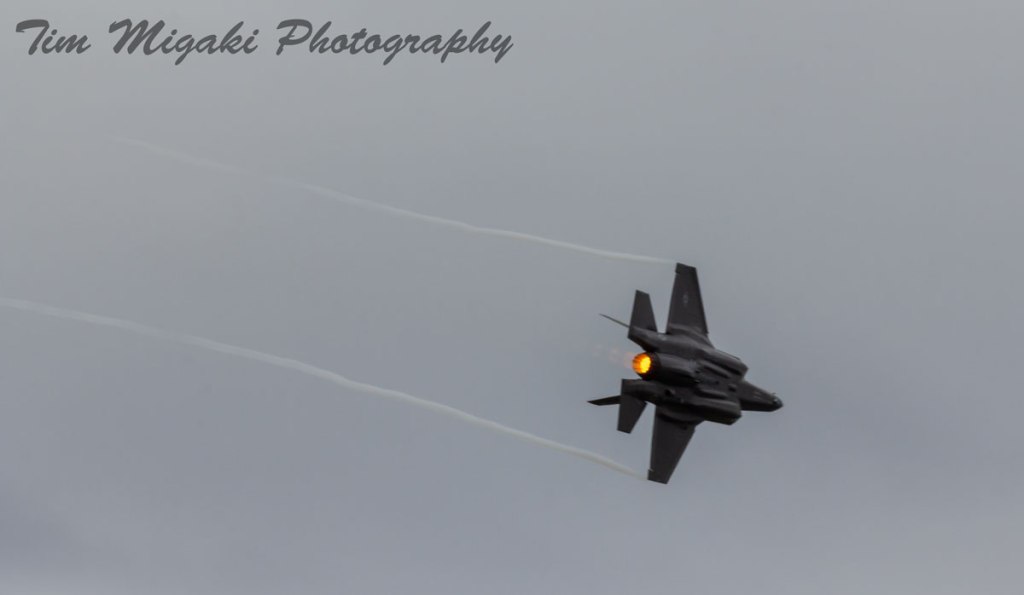


While not quite as “cool” as the Marines’ STOVL capable B-variant, nor as large as the Navy’s C-variant, it was still nice to see one of these in flight. One of the passes the pilot did was done at low-speed with high alpha. The aircraft looked like it was crawling along with its nose pointed upward.
The F-35A is the conventional takeoff and landing variant used by the U.S. Air Force. It achieved Initial Operating Capability (IOC) in August 2016. The entire F-35 development program experienced numerous delays and cost overruns (see: F-35 Lightning II: Development). The A variant has already suffered a number of notable maintenance issues, mishaps, and crashes. Thankfully, the one at this air show seemed to fly just fine.
U.S. Navy EA-18G Growler (& Growler Demo Team)


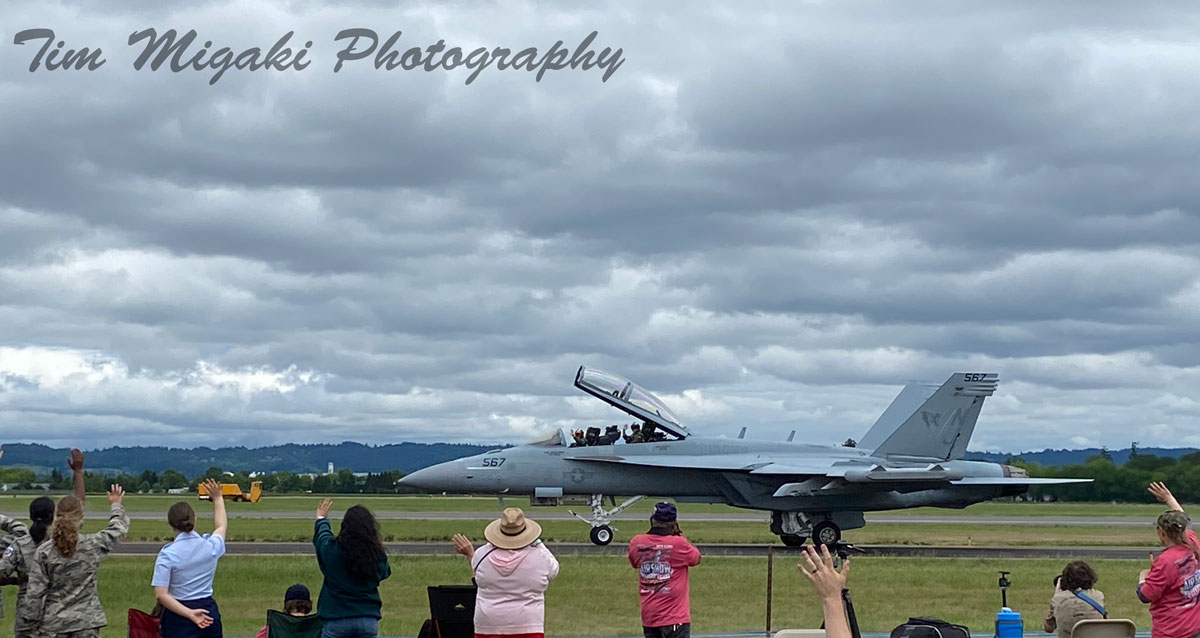

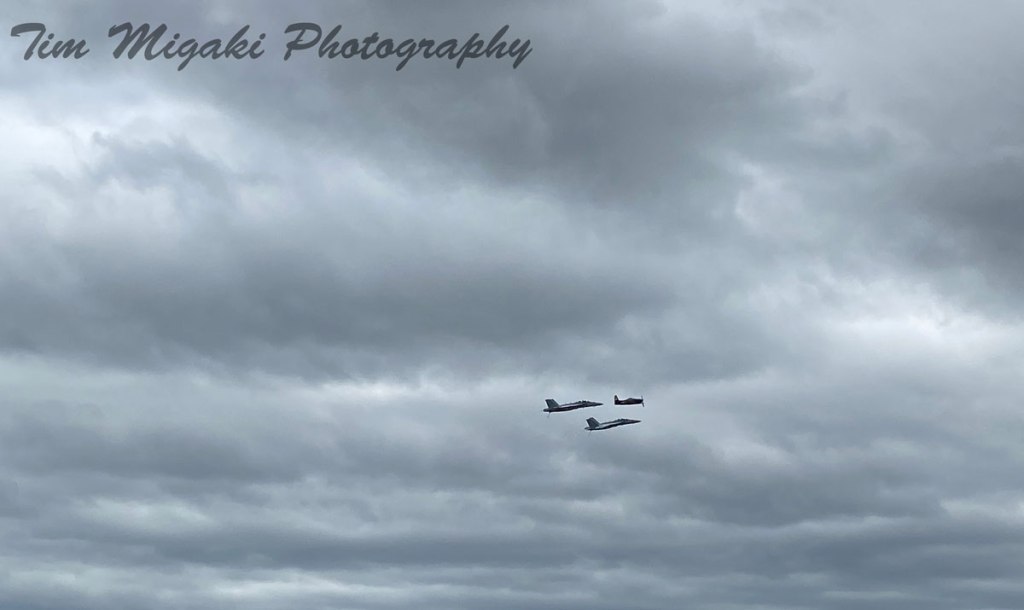
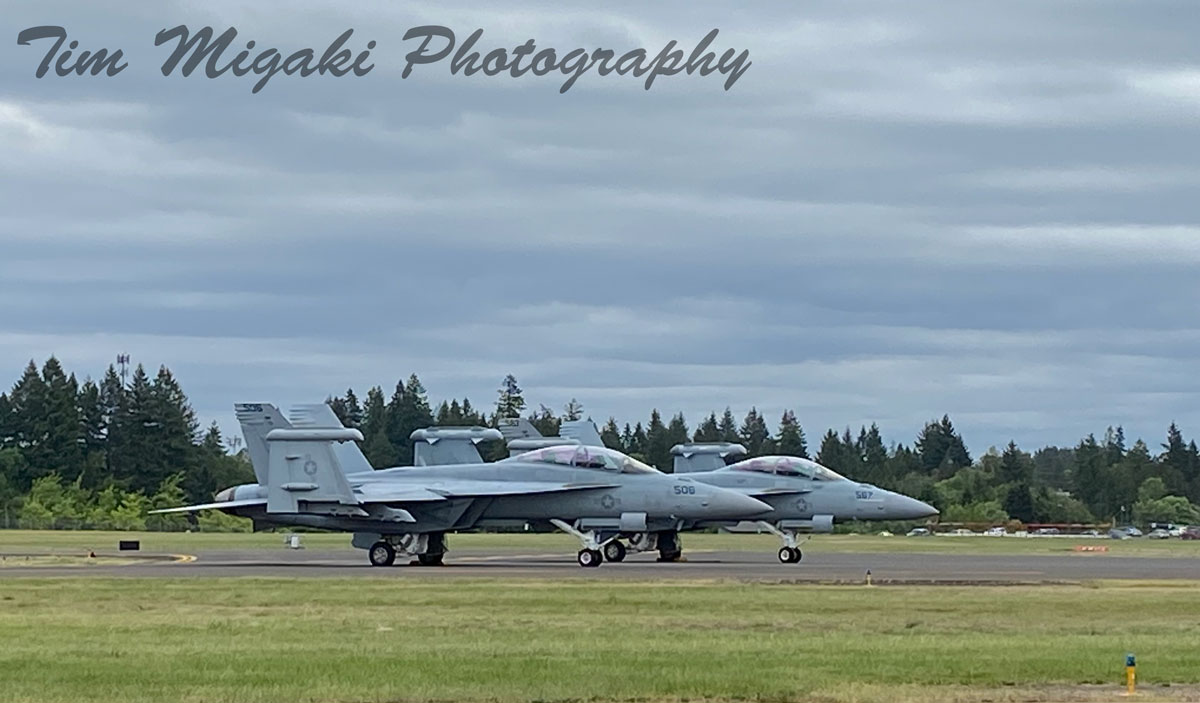
Several Navy EA-18 Growler electronic warfare planes were at the air show. One was a static display and others were part of a demonstration team. These are a derivative of the F/A-18F Super Hornet and replaced the EA-6B Prowler in the electronic warfare role. That said, these planes were clean and had no jamming pods or anti-radiation missiles on them.
U.S. Army AH-64 Apache

The Army brought an Apache helicopter that it was using as a static display. People were lined up for a chance to sit inside the rear cockpit while the soldiers talked about the aircraft. Unfortunately, I did not get the chance to see the aircraft up close. I am guessing that this is the Longbow variant of the Apache, but it has the radar bulb removed from the rotor head.
F8F Bearcat

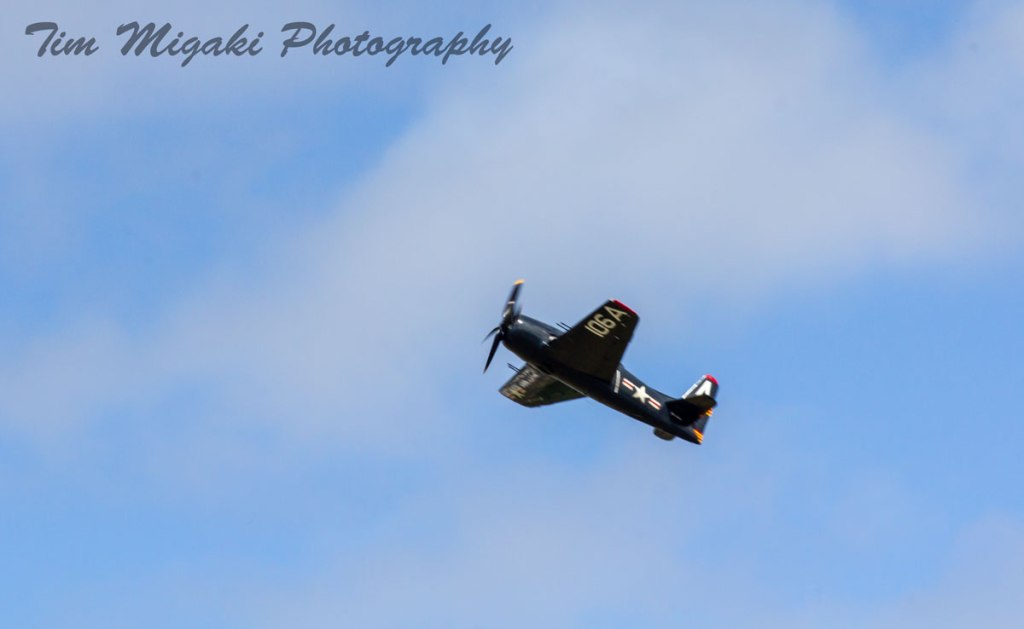

The Bearcat is the last in a venerable series of Grumman propeller-driven carrier aircraft. Powered by the mighty R-2800 Double Wasp engine used in planes such as the F6F Hellcat and F4U Corsair (among others), the Bearcat was the fastest piston-engined production fighter ever built with a top speed of 421 mph. At 20% lighter and smaller than the Hellcat, the Bearcat also had a 30% greater climb rate and outstanding maneuverability. Apart from looking like a smaller version of the Hellcat, the Bearcat can also be distinguished by its bubble canopy, providing greater all-around visibility. Arriving in frontline service in May 1945 with VF-19, the Bearcat did not see much service at the very end of WWII, but production continued until May 1949, with 24 Navy squadrons operating the fighter. Retired from U.S. Navy service in 1952, 250 aircraft would be refurbished and sold as the F8F-1D to the French Armee de l’Air who used them in Indochina. Other Bearcats would find their way into service with both North and South Vietnam, as well as with the Royal Thai Air Force, which had about 130 airframes.2
AD-4W Skyraider “Spad”


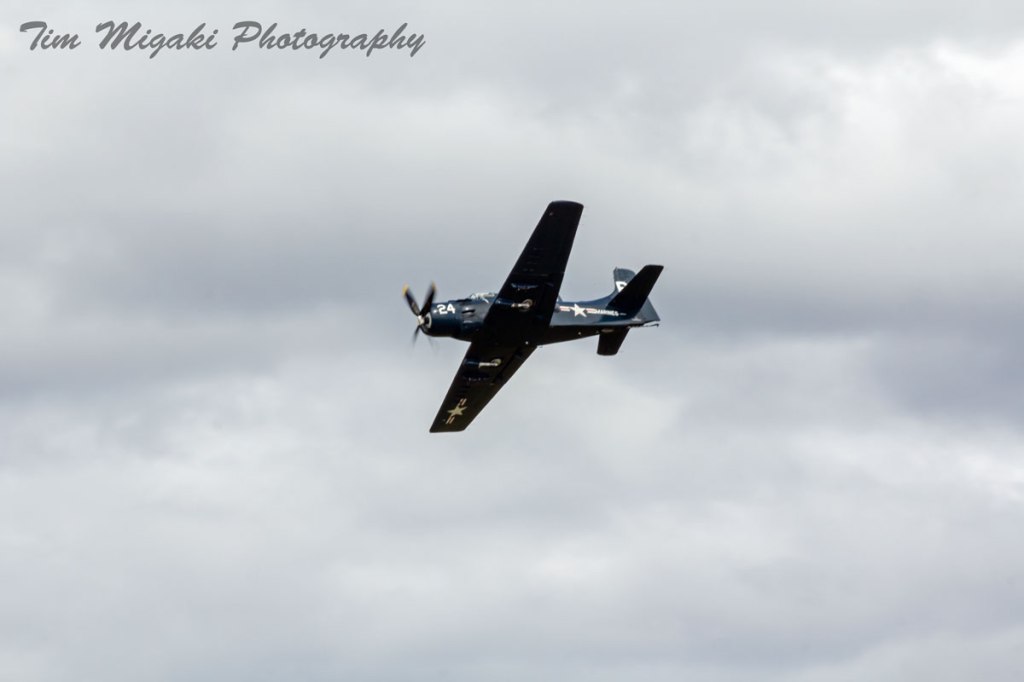


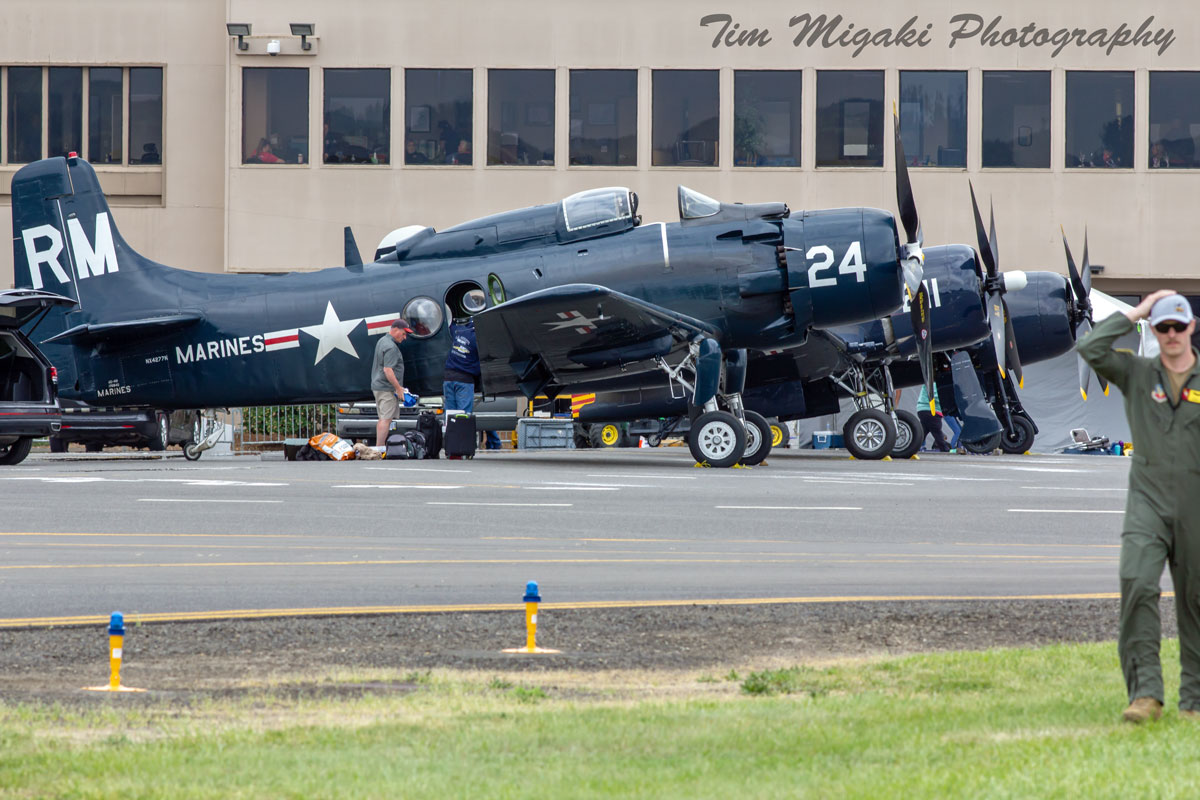
Designed during WWII by Douglas Aircraft to replace the Dauntless dive bomber and with considerable combat experience to draw upon, the A-1 Skyraider is possibly one of the greatest attack aircraft ever produced. Entering service with the U.S. Navy in December 1946, the Skyraider would see a production run lasting 12 years. A mere four years into production, there were 22 variants (with over 30 variants designed throughout its life). The “Spad,” as it was called, saw lengthy service through Korea and Vietnam with the U.S. Navy, Marines, and Air Force. Other operators included, but not limited to, the British Royal Navy, French Armee de l’Air, and the Republic of Vietnam Air Force. Designed around the Wright R-3350 radial piston engine producing 2700 hp, the Skyraider is meant to be rugged and to carry a large assortment of weapons (up to 8,000 lbs.) under its wings. While considered something of an anachronism in an era of jets, the Skyraider’s impressive loiter times and weapons loadout allowed it to stay on station and provide air support far beyond the capabilities of jets in service at the time. The AD-4W variant (seen here) is a three-seat airborne early warning aircraft that was also used by the Royal Navy’s Fleet Air Arm.3
F4U Corsair


Powered by the 2,000 hp Pratt and Whitney R-2800 Double Wasp radial engine, the Vought F4U Corsair, or Hog/Hose Nose/Bent-wing window maker/Whistling Death, is famous as the gull-winged warbird of WWII. The first American fighter to exceed 400 mph, the Corsair was initially rejected for service by the U.S. Navy due to poor visibility from the canopy and over-the-nose, as well as a tendency to bounce on the deck during carrier landings. The Corsair eventually cut its teeth in February 1943 as a land-based fighter with the Marines on Guadalcanal. Capable of taking on the A6M Zero, all Marine squadrons were re-equipped with the Corsair within six months. Major Gregory “Pappy” Boyington would become the highest-scoring Marine ace with 28 kills. By the end of 1943, while operating purely from land bases, the Corsair had already shot down over 500 Japanese aircraft. By the end of WWII, the F4U would have shot down some 2,140 enemy aircraft and performed over 64,000 sorties for air combat and ground attack.4
The first use of the Corsair aboard aircraft carriers was with the British Fleet Air Arm. In order to stow the aircraft below deck, each wing had to be shortened by 8 inches. The first major European operation by the Royal Navy involving Corsairs was Operation Tungsten in April 1944, where Corsairs flying from HMS Victorious provided air cover during the attack on the German battleship Tirpitz. Some 2,000 Corsairs were supplied to the Royal Navy and Royal New Zealand Air Force for service in the Pacific, as well.5
One highly interesting kill by a Corsair occurred on 10 May 1945 over Ie Shima near Okinawa. Lieutenant Robert Klingman and his flight leader, Captain Kenneth Reusser, of VMF-312, pursued a Kawasaki Ki-45 “Nick” up to high altitude. Reusser expended all his ammo and Klingman’s guns froze in the cold air, so he resorted to a series of three ramming attacks using the Corsair’s massive propeller to literally saw off the rudder, rear cockpit, and right stabilizer of the Ki-45 which crashed. Klingman managed to fly back to a friendly airfield on Okinawa and perform a dead stick landing with his plane out of gas. The tips of his propeller blades were also a bit shorter, as well.6
The F4U would continue to see service following WWII in Korea, where some 80% of the close air support missions flown by the U.S. Navy and Marines in the first year of the war, 1950, involved Corsairs.7 The Corsair also has a unique kill in Korea for shooting down a jet aircraft. On 10 September 1952, Captain Jesse Folmar and First Lieutenant Willie Daniels of VMF-312 tangled with several MiG-15s. In an eight-minute dogfight, Folmar managed to get off a five-second burst with his Corsair’s 20mm guns and shot down a single MiG-15. While he was overwhelmed by other MiGs and shot down, Folmar bailed out of his plane and was rescued by friendly forces shortly thereafter.8 By the end of production in 1952, more than 12,500 had been produced. The late F2G variant was powered by the even more powerful 3,000 hp Pratt and Whitney R-4350 Wasp Major engine. Corsairs would also be operated by the French Navy from land bases in Indochina against the Viet Minh from 1952 to 1954.9
This is definitely one of my favorite WWII warbirds. Not only does the gull-wing shape give it a distinctive appearance, but once they ironed out the kinks in it, it became a highly successful naval aircraft. A fast and powerful plane that had an initially rocky start aboard carriers, but proved itself in combat against Japanese aircraft and was far more than just an oddity.
P-38J Lightning

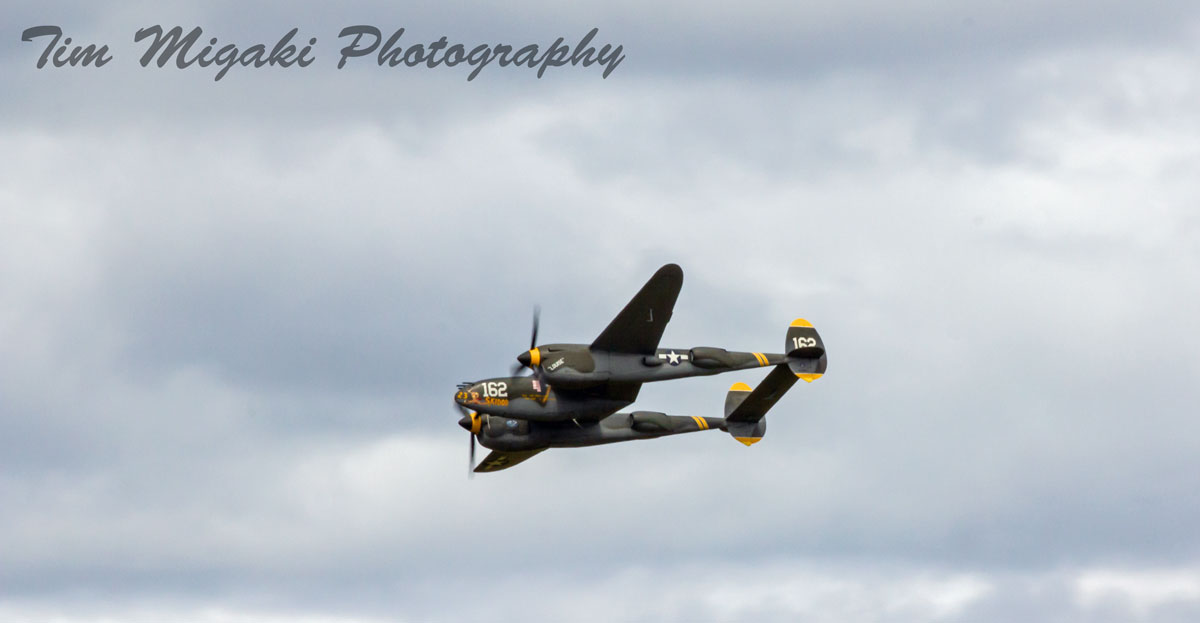


Lockheed developed this aircraft in response to a February 1937 U.S. Army Air Corps request specifying a high-performance, long-range interceptor that could operate at high altitudes and high speeds for at least an hour. The result was the unique twin-engined, twin-tail boom configured P-38 Lightning. First flying in January 1939, it set a new North American transcontinental speed record of 7 hours and 2 minutes. Entering service with the Army Air Corps in August 1941, the British Royal Air Force also expressed interest, but a ban on American exports of superchargers to Europe meant the aircraft would be underpowered and British interest eventually waned. The name “Lightning” was reportedly of British origin, but quickly gained widespread use. Throughout 1942 and 1943, 12 squadrons throughout the Southwest Pacific and the Aleutians were equipped with P-38Es. Given the aircraft’s excellent performance, specialized reconnaissance variants (F-4 and F-5) were created that only mounted cameras. The J model featured improved propellers that increased the airspeed and climb rate at altitude. When fitted with drop tanks, the J model had a range of 2,300 miles. This allowed it to fly deep into enemy territory, engage in ten minutes of combat, and fly back to bases in England. It had a top speed of 414 mph but could exceed 550 mph in a dive. However, in high-speed dives handling became difficult and the P-38 became one of the first combat aircraft with power-assisted controls.10
The P-38 was deployed extensively throughout the Pacific, Mediterranean, and Europe. Due to its unique appearance, it eventually picked up the nickname, “fork-tailed devil.” Some of the J models were modified as fighter bombers with an additional seat with a Norden bombsight for the bombardier. In Europe, the P-38 was eventually used heavily in the ground attack and tactical bombing roles. The P-38 was well-suited to the distances involved in the Pacific Theater where 27 U.S. Army Air Force (USAAF) squadrons were equipped with P-38. During Operation Vengeance on 18 April 1943, pilots from the 339th Fighter Squadron and 347th Fighter Group flying from Guadalcanal used drop tanks to fly some 500 miles and successfully intercept and shoot down Admiral Isoroku Yamamoto over Bougainville Island. One of the pilots partially credited with the kill, Thomas Lanphier, would go on to become a Lockheed test pilot. The Lightning is ultimately credited with shooting down more Japanese aircraft than any other USAAF fighter. Richard “Dick” Bong would become the highest-scoring U.S. ace of WWII with 40 kills, all in the P-38.11
Anyone familiar with the original Star Wars trilogy will undoubtedly remember the speeder bike chase through the forest moon of Endor in Return of the Jedi. Supposedly, the sound of the P-38 engines is mixed into the sound effect for the speeder bikes in that film. Sadly, I could not distinguish it because all of the warbirds were flying around at the same time, so whatever noise the P-38 was making was drowned out by all the other radial engines turning at the time.
PBY Catalina


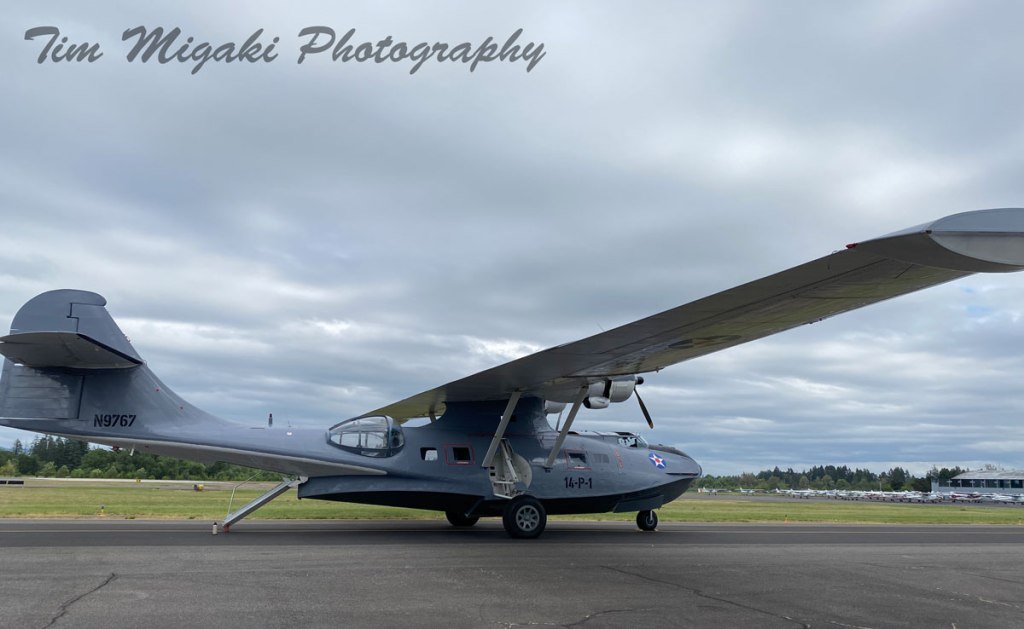

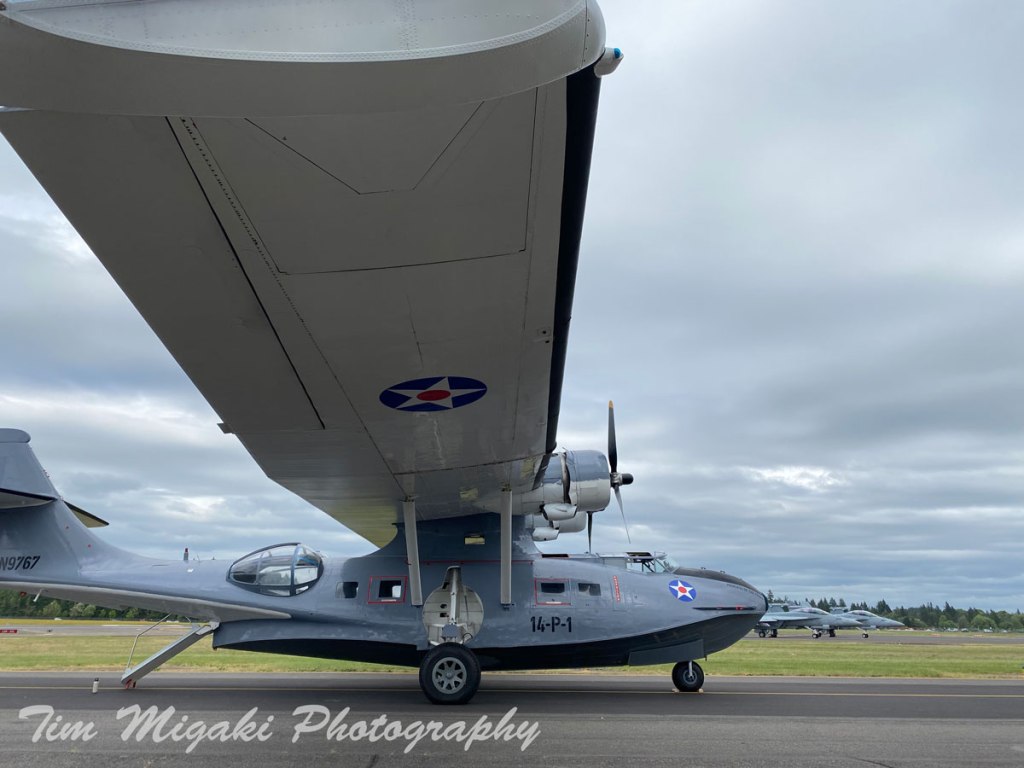
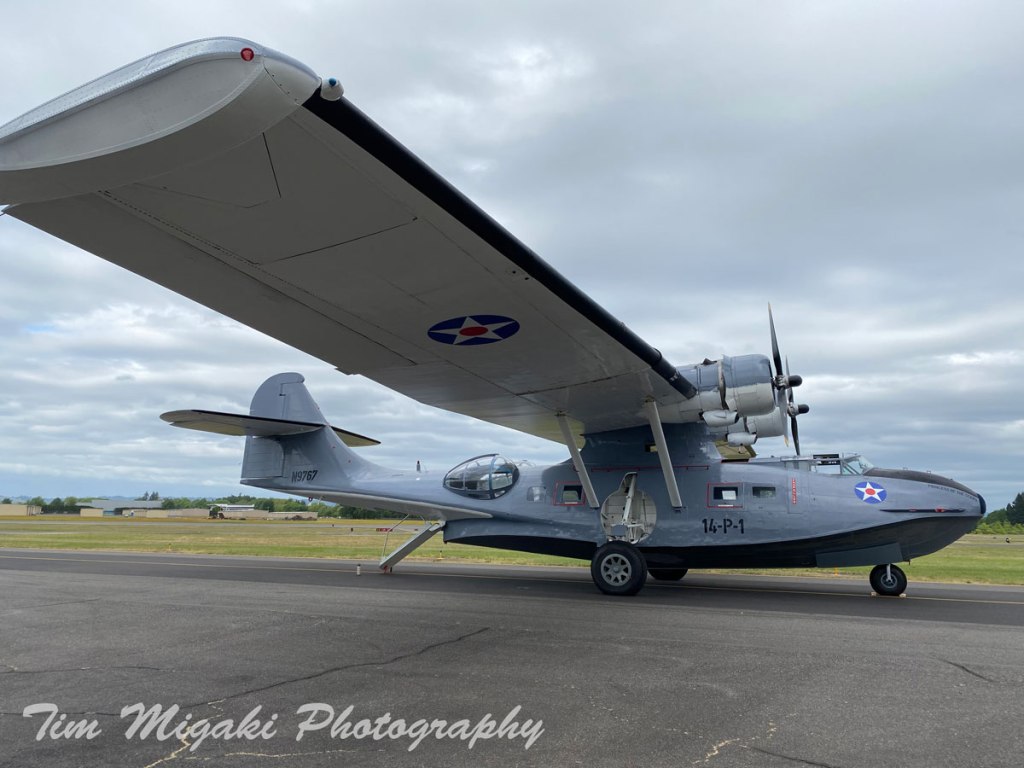

Receiving a contract from the U.S. Navy in February 1928, Consolidated Aircraft got to work on a design for a flying boat that would ultimately evolve into the PBY Catalina. Entering service with the Navy’s patrol squadrons in October 1936, the endurance of the aircraft was demonstrated when Patrol Squadron VP-3 flew a non-stop round trip flight from San Diego, California to the Panama Canal in 27 hours and 58 minutes, covering a distance of 3,292 miles. The original PB1s were powered by two 850 hp Pratt and Whitney R-1830-64 engines, but later PB2s were upgraded with 1,000 hp engines. The amphibious version, with retractable landing gear, was prototyped in April 1939 and proved successful, garnering orders from both the U.S. Navy and the Royal Air Force, which accepted 30 aircraft for service in 1941. The British quickly named the aircraft the “Catalina” which was soon adopted by the U.S. Navy in 1942.12
The Catalina saw success in British use, with one aircraft from No. 209 Squadron from Castle Archdale spotting the German Battleship Bismarck on 26 May 1941. The Royal Air Force would operate 650 of these aircraft in the Atlantic, Mediterranean, and Indian Oceans. In fact, the last U-boat sunk by RAF Coastal Command was destroyed by a Catalina of No. 210 Squadron on 7 May 1945. Other nations to use the Catalina were Canada, Brazil, Australia, New Zealand, France, the Netherlands, South Africa, and the Soviet Union. By 1945, over 4,000 aircraft had been constructed, making it the most-produced flying boat in history.13
Stunt Planes
Extra 330SC (Pilot: Jim Bourke)
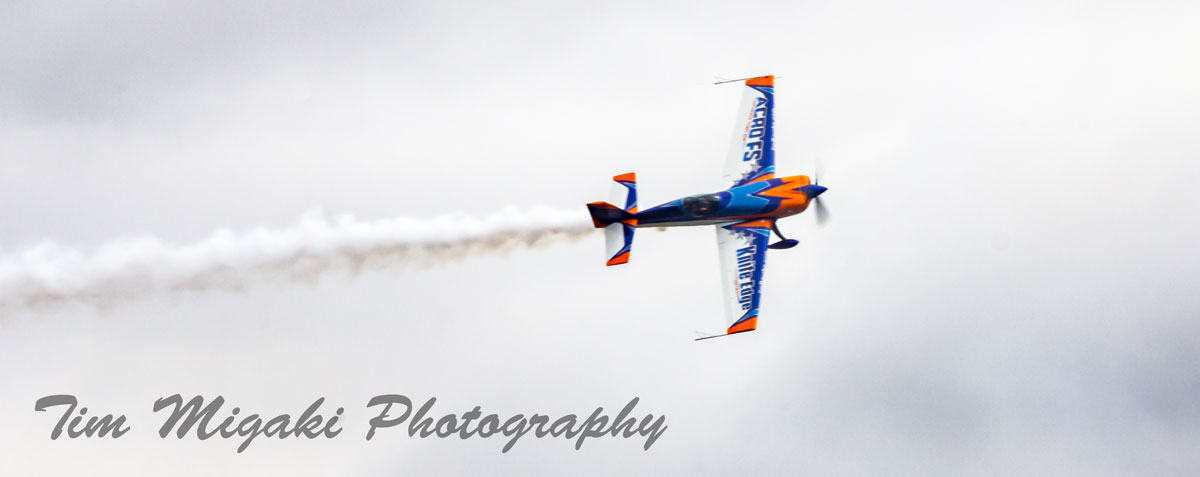
There were other stunt planes flown by other performers, of course, but I did not get the chance to capture any pictures or footage of them. The skill of these pilots was impressive, to say the least.
Super Salto Jet Sailplane (Pilot: Bob Carlton)

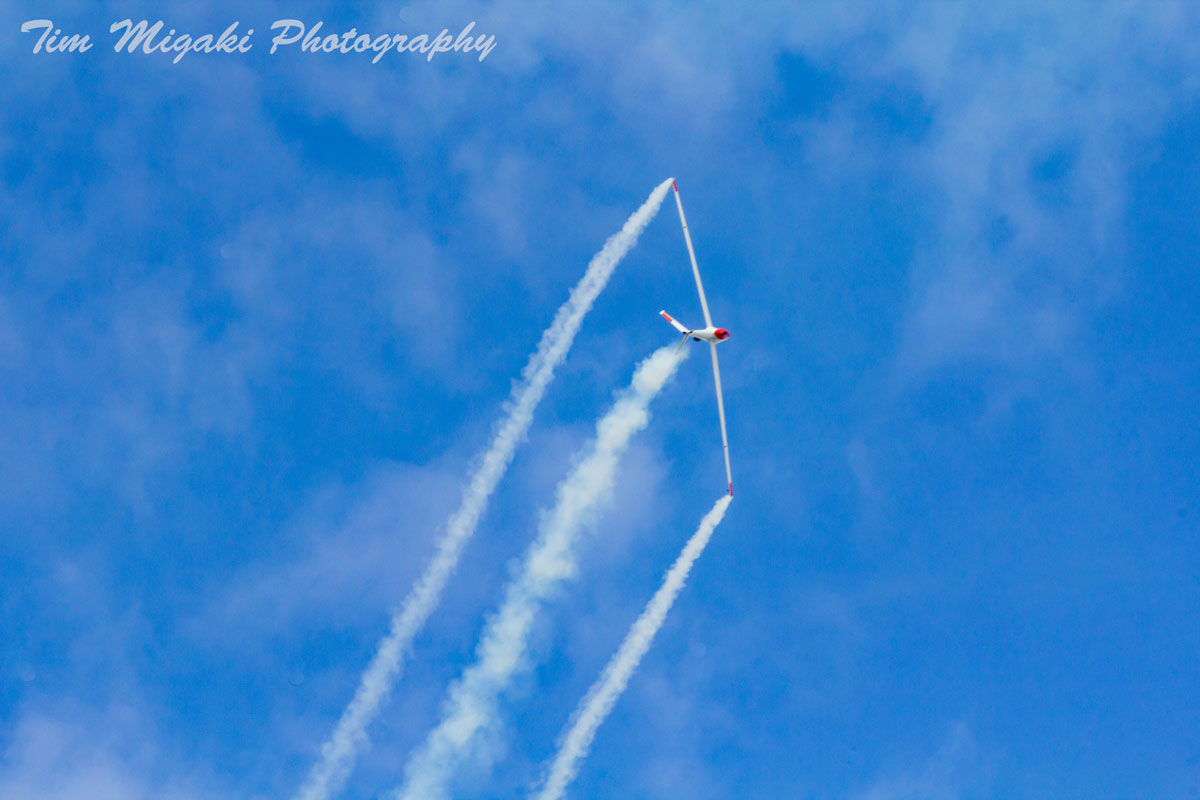
I initially thought this was merely a glider, but imagine my surprise because the sound of the jet engine certainly was not quiet like a glider. What is even more impressive is that this aircraft was performing maneuvers that seemingly would have torn the wings off of it. I have no idea how it did some of the stunts it did with those long, straight wings.
Video
Here are some of the clips I took with my phone. I stitched them together into a single video. The shots from the grassy area abreast the runways are in the volunteer seating area; in others, I am filming from around the static displays and booths.
I will end here by saying that I know air shows are just that…shows. All of the military aircraft are clean (i.e. not loaded down with ordnance like missiles and bombs). Hence, they have flight characteristics and can perform maneuvers that are beyond what they would normally be capable of (or would want to do) in a normal combat configuration. Furthermore, many of the fancy maneuvers these planes pull off at air shows have almost no practical application in terms of tactics. They just do it to wow the public spectators.
All in all, it was a fun day. Thankfully, it was cloudy and a reasonable 71 degrees outside. I will make an attempt to attend the second part of the Oregon International Air Show in McMinnville in late August, but I cannot make any guarantees. (I would also like to do Fleet Week in June, but I am not sure I will be available on that weekend. It is a bit of a shame because I like ships far more than I like aircraft, to be honest. Someday perhaps.)
Notes
1. Francis Crosby, The Complete Guide to Fighters & Bombers of the World (London, UK: Hermes House, 2006), 164 – 165.
2. Crosby, 88.
3. Crosby, 442 – 443.
4. Crosby, 152.
5. Crosby, 152.
6. Barrett Tillman, Corsair: The F4U in World War II and Korea (Annapolis, MD: Naval Institute Press, 1979), 148 – 149.
7. Crosby, 153.
8. Tillman, 171 – 173.
9. Crosby, 153.
10. Crosby, 102 – 103.
11. Crosby, 103.
12. Crosby, 320.
13. Crosby, 321.
Bibliography
Crosby, Francis. The Complete Guide to Fighters & Bombers of the World. London, UK: Hermes House, 2006.
Tillman, Barrett. Corsair: The F4U in World War II and Korea. Annapolis, MD: Naval Institute Press, 1979.
 Fair Winds & Following Seas