What powers a sailor
They say that the Navy (or any sea service for that matter) runs on coffee. No warship is going anywhere without it. Coffee is what fuels the crew. Younger sailors often start out with energy drinks because that’s what they drank in high school, but the older (saltier) sailors usually go with coffee. This is especially true when it comes to the Chief Petty Officers (CPOs), Warrant Officers, and Commissioned Officers…these men and women run on coffee. It practically flows through their veins.
Regardless of sea service (Navy, Coast Guard, Merchant Marine, etc.) or era of service, the culture is generally similar. Additionally, the coffee culture at sea isn’t really a snobby, pretentious one like in Starbucks, but rather far more utilitarian. As long as it’s not instant coffee, is hot, and constantly flowing, then it’ll do.
Life on a museum ship

One of my jobs is working as a tour guide aboard the submarine USS Blueback (SS-581) in Portland, Oregon. It’s a fun job and I get to work with a lot of crusty old sailors, most of whom are former submariners. Like many sailors, my morning drink of choice is naturally coffee, so I can certainly understand the need for the black distillate beverage, even aboard a museum ship that isn’t going anywhere. Old habits die hard with sailors.
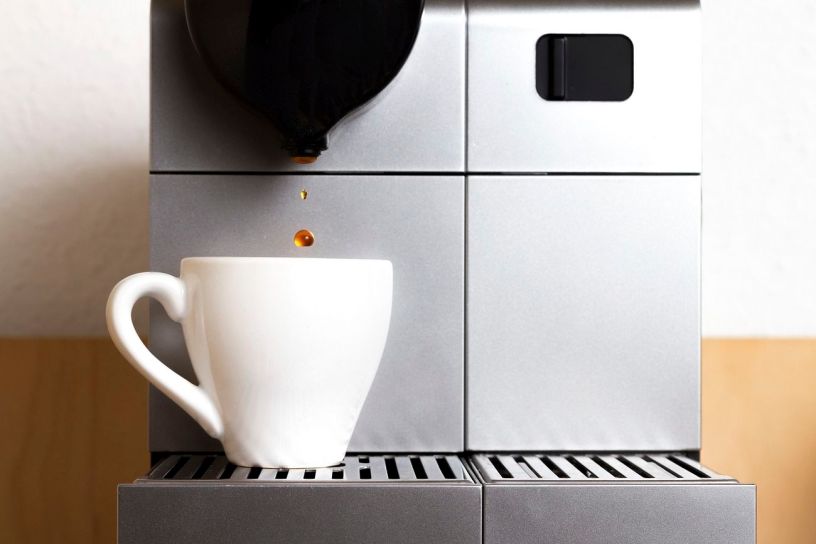
Just inside the entrance to the Blueback is the officer’s pantry. The pantry isn’t a kitchen. When the submarine was in service, the only things made in there were coffee and small snacks. Even today, it functions as a meal prep area for the tour staff. There’s an industrial-grade microwave in there, as well as a coffee maker. I should point out that this is a highly complex, state-of-the-art, coffee machine.

Commonly known as a Keurig.
It’s so advanced that I had to teach a retired Navy captain how to use the device. Let me explain.
The Captain needs his coffee
There are a variety of tour guides on the staff for USS Blueback, and we come from many different backgrounds. One tour guide is a rather lanky and unassuming-looking older gentleman who stays in shape by riding his bicycle to and from work. He’s a soft-spoken and humble man, who’s a pleasant person to chat with and always regales us with old sea stories with a soft chuckle in his voice. Such as the time he lent Admiral Rickover some underwear, but that’s for another time. From his demeanor alone, you could easily mistake him for your grandfather.
Oh, by the way, did I mention that this guy is a retired Navy Captain (O-6) who spent 30 years in the U.S. Navy and commanded both a Los Angeles-class fast attack boat and an Ohio-class “boomer” (ballistic missile submarine)? Yeah, you heard that right!
Now, on the surface (see what I did there), you would probably never know just by talking to this guy that he used to do that for a living. Yeah…it’s just a side note. I mean, nothing really of consequence, but this man is a former NUCLEAR SUBMARINE CAPTAIN! Hence, we all call him “Captain,” or “Sir,” out of respect for his rank.
Another fact I learned about the Captain is that he spent some time working as a substitute teacher after he retired from the Navy. One time he worked a long-term sub job teaching AP calculus. He strikes me as an old professorial type, so it all works out. However, he never told his students what he used to do…he’s too humble for that, but imagine finding out your teacher was a former nuclear submarine captain. Pretty cool, huh?

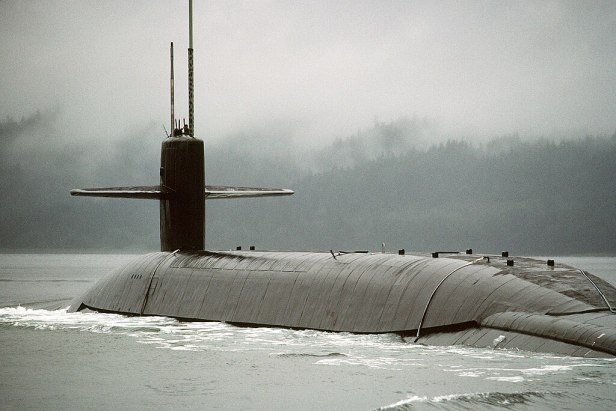
I guarantee that sailors aboard submarines drink a lot of coffee. According to one source, a typical patrol for a ballistic missile submarine consumes around 1,200 pounds of coffee.1
So one day, the Captain comes in as usual, and like all officers, goes into the officer’s pantry to get some coffee. Meanwhile, I’m sitting in the Executive Officer’s stateroom and relaxing before the workday begins. I hear the Captain’s voice coming from the pantry:
“Does anyone know how to get this machine to work?”
“Here, let me help you, Sir,” I say as I get up and go to the pantry.
I examine the thing, make sure it’s plugged in, and then ask:
“Did you put water in the reservoir?”
“Yeah, I did that,” he replies.
“Did you put a capsule (a Keurig pod) in and close the top?” I continue.
“Yup, did that.”
“Did you press the big button to make it run?”
“Yeah, but it wouldn’t start,” he says.
I spend a moment examining the thing.
“Ah, here’s your problem,” I say as I notice that he missed one crucial step.
He forgot to turn it on.
“You need to hit the little power button on the top of the machine and then press the big button.”
The coffee brews successfully, and the Captain is happy he got his coffee. I reminded him that many machines require you to take them out of O-F-F Mode before they function properly. i.e. turn it on first.
How many officers does it take to make coffee?
Now, I want to impress upon you the fact that pretty much all submarine officers in the U.S. Navy have backgrounds in engineering. In other communities of the Navy, like surface warfare or aviation, they’ll take people with just about any kind of Bachelor’s degree, be it in history or horticulture, but the submarine service gives a higher preference to people with degrees in hard sciences because they’re required to know about metallurgy, mathematics, physics, nuclear reactors, etc. The officer training pipeline for submarines (following their commissioning program) involves 6 months at the Naval Nuclear Power School (NNPS) which is basically a graduate-level course on the science and mathematics behind nuclear power, followed by another 6 months in a Nuclear Power Training Unit (NPTU) (AKA a prototype) applying the concepts they’ve learned and qualifying as an Engineering Officer of the Watch (EOOW). Then comes 3 months in the Submarine Officer Basic Course (SOBC). This is all before they even get to their first boat! Then they spend a year qualifying on every system on that boat to get their “dolphins” (submarine warfare pin), in addition to working as a division officer and leading a bunch of enlisted sailors.
Keep in mind that the U.S. Navy has an unparalleled safety record with nuclear-powered warships thanks to Admiral Hyman Rickover (The Father of the Nuclear Navy) and the Navy’s uncompromising attitude toward safety with nuclear energy. Too bad the same can’t be said for the civilian world, and let’s not get started with the Soviet/Russian track record with nuclear reactors.
Suffice it to say that all of the training for submarines for both officers and enlisted is very technical in nature. This is because submarines themselves are very complex machines, and the world below the surface of the ocean is incredibly unforgiving. Barring sinking in relatively shallow water (300 feet or less) or the availability of a Deep Submergence Rescue Vehicle (DSRV) of some sort, there’s no escape from a submarine. Any equipment malfunction, fire, or flooding on a submarine can be potentially disastrous and the sailors need to know what to do to fix it pronto. In short, submariners are not stupid, and a lot of their training is focused on damage control, firefighting, and engineering so they can save the submarine in an emergency.
My point is that all of this training and experience make the Captain a smart guy. However, I guess none of that included how to use a coffee machine invented by civilians in the late 1990s. Not enough buttons on the thing, I suppose. In all seriousness, being an officer, he probably never had to make his own coffee on any sub he served aboard. The mess cooks do that. All he had to do was just pour it or ask for a cup and someone would go fetch it for him. RHIP – Rank Has Its Privileges, as they say.
So that’s how I taught a Navy Captain how to make coffee.
Notes
- Submarine Research Center, Submarine Cuisine (Bangor Silverdale, WA: Submarine Research Center, 2004), 20. ↩︎
Bibliography
Submarine Research Center. Submarine Cuisine. Bangor Silverdale, WA: Submarine Research Center, 2004.
 Fair Winds & Following Seas
Most of the officers I worked with couldn’t even find the can of coffee much less actually make it.
LikeLike
Great story Tim
Gotta say he did pretty good, got everything except the O-F-F mode.
I really appreciated that you made sure to spell out all the acronym meanings threw out the story.
And congrats Tim on your 5th year of blogging anniversary.
Razz
LikeLike