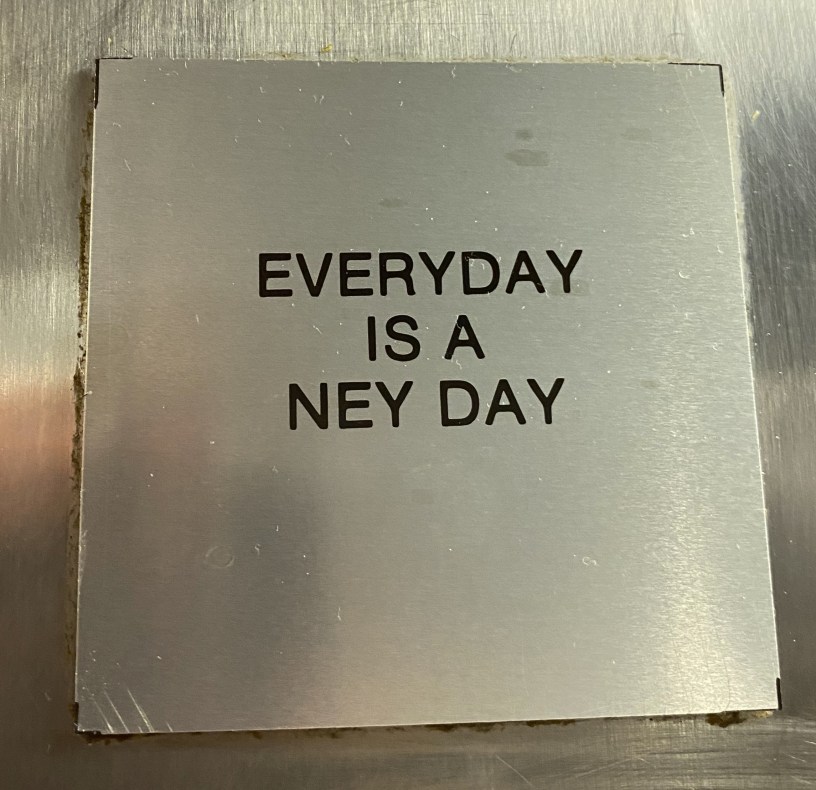
Who’s Ney?

Captain Edward F. Ney was the head of the Subsistence Division of the Bureau of Supplies and Accounts from 1940 – 1945. As his title suggests, Ney would’ve been in charge of food in the U.S. Navy during World War II.
Cooking…the Navy way
The actual task of preparing meals in the U.S. Navy was traditionally divided into two separate ratings, commissaryman and steward. Commissarymen prepared food in the galleys for the enlisted crew, while stewards prepared and served meals to the officers in the wardroom. In 1975, these were merged to form the Mess Management Specialist (MS) rating, which was then changed to Culinary Specialist (CS) in 2004.
Believe it or not, there is a cookbook in the U.S. Navy. In 1938, the first edition of The Cook Book of the United States Navy was published which replaced their original from 1920. The cookbook has been revised multiple times and you can find versions of this book online. The book itself contains sections devoted to nutrition, menu planning, and of course, recipes. In the late 1940s, this book was replaced with Standard Navy Recipe Cards (some of which had meals of questionable quality), and in the 1990s, the menus became computerized.
Before it became standardized, most of the training for cooks in the U.S. Navy was learned on the job. Current training has them attending 5 weeks of Culinary Specialist “A-School” to learn the basics of food storage, nutrition, and preparation. For cooks on submarines, selected ones are sent for another 5 months of training at the Culinary Institute of America (CIA).*
*This information on CS training may not be accurate to today’s standards. Having recently talked to a female CS who served on USS Jimmy Carter (SSN-23), she told me that the current CS A-School is about 1 month long. It’s meant to teach you the basics of using kitchen equipment, food handling, storage, and how to cook food to the proper temperature so it won’t kill someone. Most of the training in cooking is learned when you get to the fleet. Later in a sailor’s career, upon promotion to Petty Officer 1st Class or Chief Petty Officer, they would be selected to go to culinary school, which is apparently no longer the Culinary Institute of America (CIA), and it only lasts about 2 months.
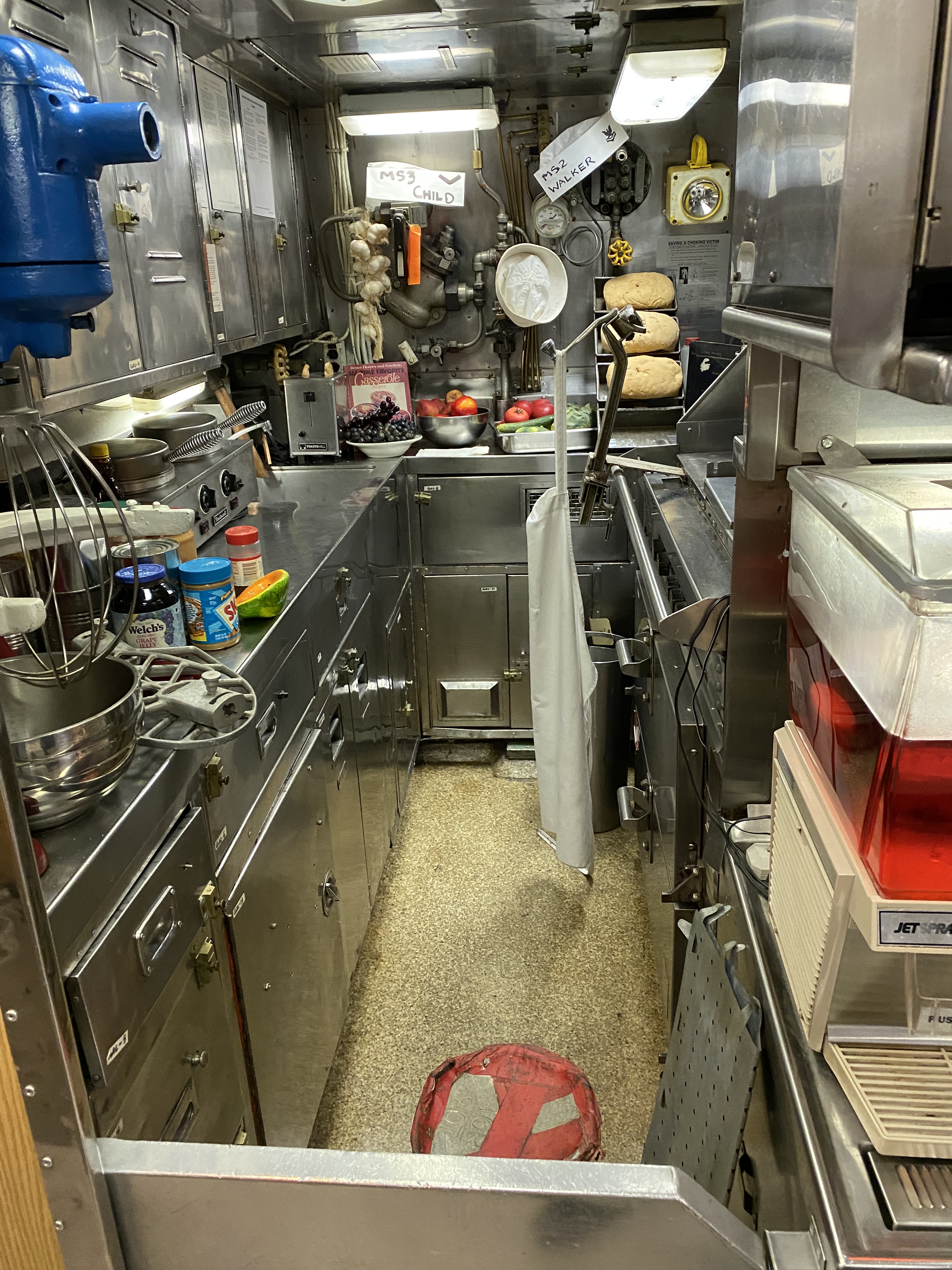
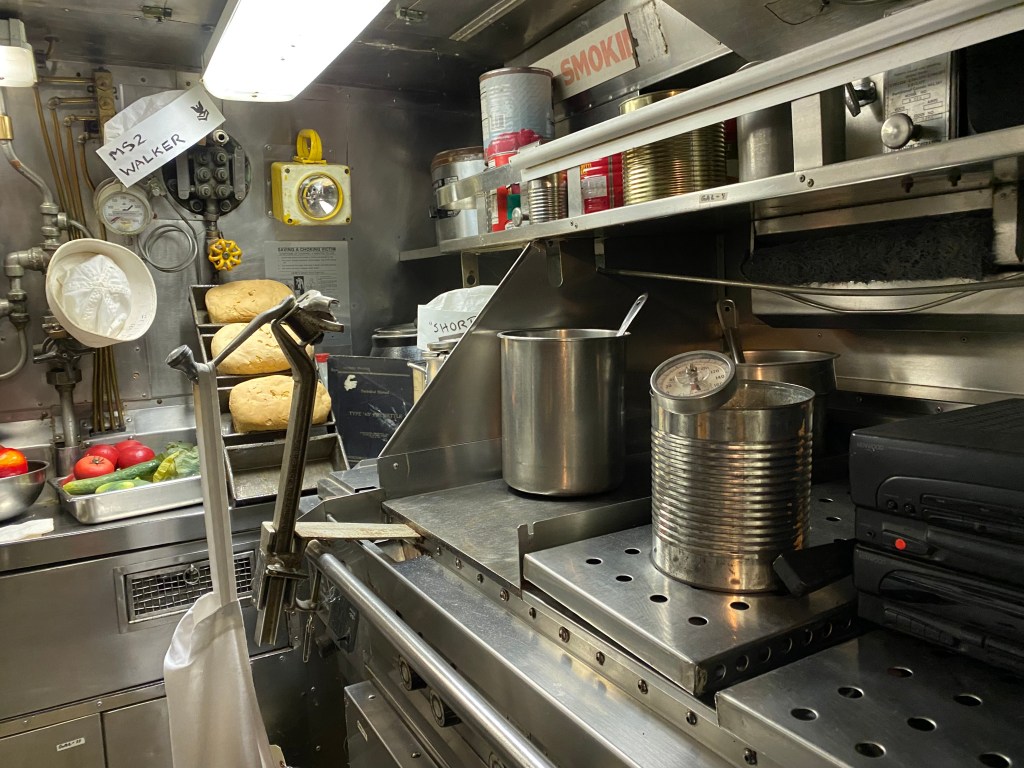

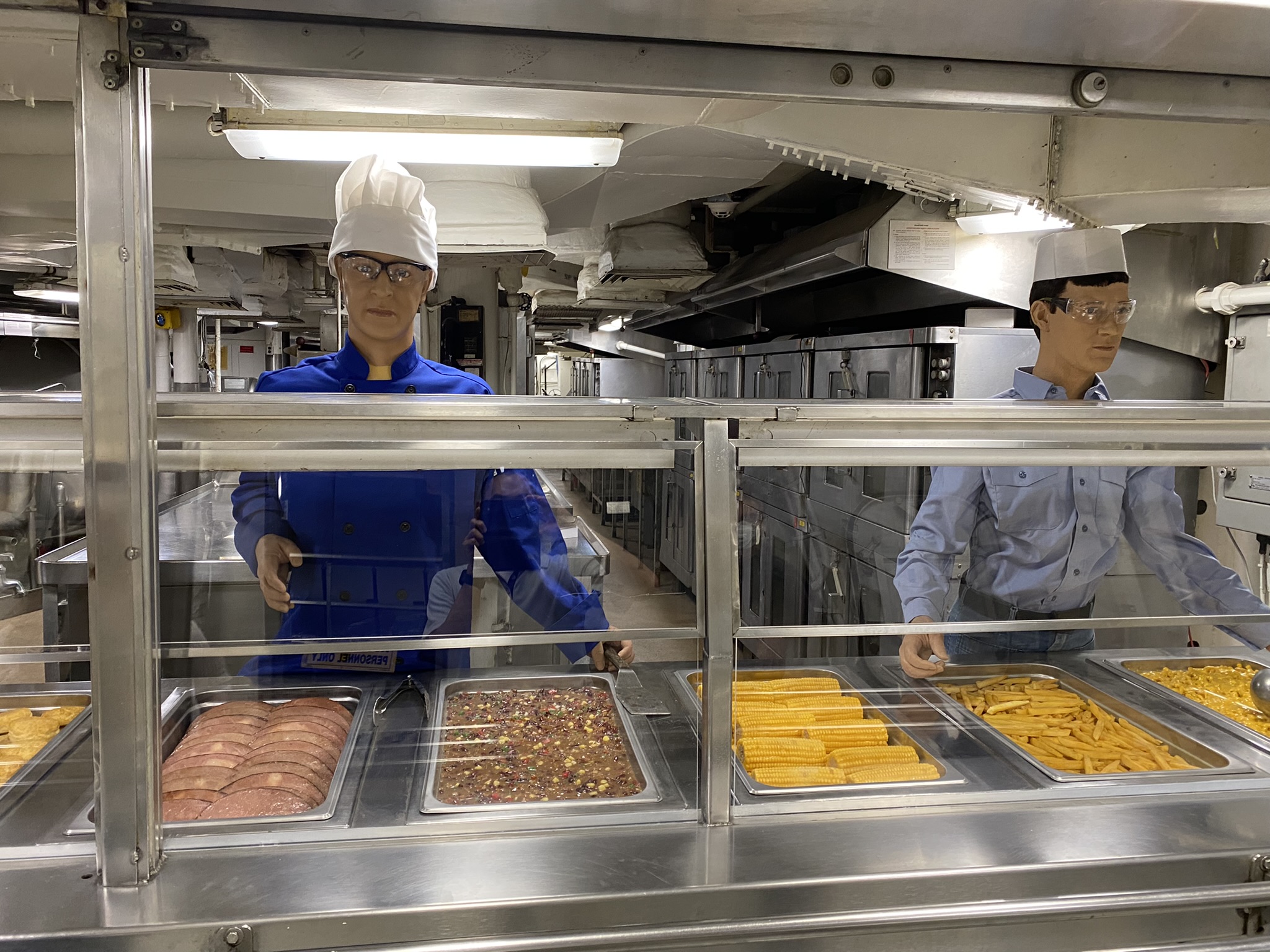


Culinary Specialists and supply officers do more than just cook and handle supplies. A great deal of time goes into menu planning and understanding nutrition information. Ideally, menus are designed to provide variety and be attractive. They must be approved by the supply officer and the commanding officer. The Command Master Chief (CMC), or Chief of the Boat (COB) in submarines, liaises with the officers and passes on the demands of the crew. Naturally, the commanding officer would have some influence on the menu, at least the items that would be prohibited in the wardroom. Perhaps the captain of a vessel wouldn’t be very fond of certain foods, such as liver, brussels sprouts, etc. However, in the case of the officers, the stewards (before 1975) would most likely be responsible for keeping the offending foods out of the wardroom. While stewards generally didn’t have any input regarding the menu itself, some enterprising ones might go out of their way to procure better food or prepare special meals for the officers. Standard practice is for the officers and enlisted to eat the same food during meal times. The difference is simply in the presentation and location. Enlisted sailors eat in the crew’s mess, while officers eat in the wardroom.1
The best food in the U.S. military can reportedly be found aboard submarines. Having talked to a number of U.S. Navy submariners, myself, the accuracy of that statement is generally on point. Much of this reputation probably comes from the fact that a lot of the food on submarines is made from scratch. For example, the dough for all the bread, pizza, cookies, pastries, and pies is handmade and freshly baked. Also made from scratch are the hamburger patties or the whipped cream for pies, etc. Unlike the rest of the Navy, submarines also have deep-fat fryers for things like fried chicken, french fries, and so on. That said, there are certainly instances of botched meals, such as a cook making pancakes with salt instead of sugar. That wasn’t a particularly popular breakfast that day.
Having never personally tasted any food that actually came out of a submarine galley, I can’t speak with any authority regarding the quality of it. However, in my experience, the food I’ve had out of galleys isn’t atrocious, but it isn’t 5-star quality, either. You can eat it and it gets the job done, but it’s occasionally hit or miss. Most of the time, it’s just ok. It’s a lot better than your average fast-food garbage, I’ll say that much. In fact, one thing that bugs me whenever I watch those mini-documentaries on TV or YouTube about food in the military is that they all make it seem like the food served from a galley or a mess kitchen is the greatest thing on the planet. (Also be aware that some videos may discuss submarine food, but show footage of a galley that’s definitely too spacious to be aboard a submarine. As previously stated, modern submarine galleys are larger than a Cold War-era boat, but space is still at a premium.) I mean, let’s be realistic, the quality of the food aboard ships, submarines, or ashore depends on additional factors, starting with the skill of the cooks. For one thing, how discriminating your personal tastes are is probably a major factor. If you grew up with lots of gourmet, Michelin-starred food, then you probably wouldn’t find a submarine meal to be the most epicurean thing you’ve ever tasted. Secondly, what your favorite foods are no doubt influences how well you enjoy the menu. Thirdly, when you’re tired and hungry just about anything tastes good. Lastly is time underway. The absence of any fresh ingredients after the first couple of weeks at sea would probably have some bearing on the quality, since any ingredients after that would come frozen, dehydrated, powdered, or out of a can. At that point, you’d be hard-pressed to refer to the food as “fresh,” and there’s only so much you can do with canned, dried, or frozen ingredients.
The following menus from 55 years apart show a progression of variety and nutrition in menu planning, at least as far as submarines in the U.S. Navy go.2
| 1944 USS Segundo (SS-398) | 1999 USS Pasadena (SSN-752) |
|---|---|
| Breakfast Fresh milk Fresh fruit Creamed minced beef Home fried potatoes Toast Bread, Butter, and Condiments (B.B.C.) | Breakfast Eggs to order Hot oatmeal Waffles Grilled bacon Golden hash browns Assorted cereal |
| Lunch Creamed veal Potatoes Buttered green beans Celery sticks Iced vanilla cake Fresh milk B.B.C. | Lunch Chicken rice soup El Rancho Beef Stew Caribbean flounder Steamed rice Buttered pasta Cauliflower au gratin Tartar sauce Baking powder biscuits Sugar cookies |
| Dinner Rare roast rib of beef Natural gravy Cream whipped potatoes Buttered corn Fresh milk Ice cream B.B.C. | Dinner Cream of broccoli soup Shrimp Jambalaya Yankee pot roast Coleslaw Steamed mixed vegetables Hot garlic bread Peanut butter cookies |
Cranking…the Navy way
Bear in mind that most of the actual cooking is reserved for the Culinary Specialists. That doesn’t mean green sailors can’t be made useful in the ship’s mess. For non-rates (E-1 to E-3), your first 90 days aboard a ship (or submarine) are going to be spent in the scullery scrubbing dishes, pots, and pans by hand. You’ll also assist the cooks with things like chopping up veggies, making salads, peeling potatoes, fetching and stocking food, and cleaning the mess. This is colloquially referred to as “mess cranking” or just “cranking.” You generally aren’t going to be doing any real cooking since you’re not a trained Culinary Specialist. It’s a crap job, and it takes time away from your other duties, such as working on your qualifications for your rating (job), but it gives the crew a chance to get to know you, and you have to make yourself useful for the time being.
The Food Service Excellence Award
In honor of Capt. Ney, in 1958, the Secretary of the Navy and the International Food Service Executives Association (IFSEA) established the Captain Edward F. Ney Memorial Award.3 This is an annual award for food service excellence in galleys throughout the United States Navy. Galleys are inspected and evaluated on a 5-star checklist, and the top scorers are then judged by a panel on who will receive the award. Winners receive a Captain Edward F. Ney trophy in recognition of their services. The current categories are:
- Afloat galleys
- Submarine category
- Small-medium afloat category
- Large afloat category
- Aircraft carrier category
- Ashore galleys
- West Coast general mess category
- East Coast general mess category
- Outside Continental United States category
Many galleys in the U.S. Navy have signs that say, “Every Day is a Ney Day,” or “Think Ney” as reminders to the culinary specialists to strive for excellent service.
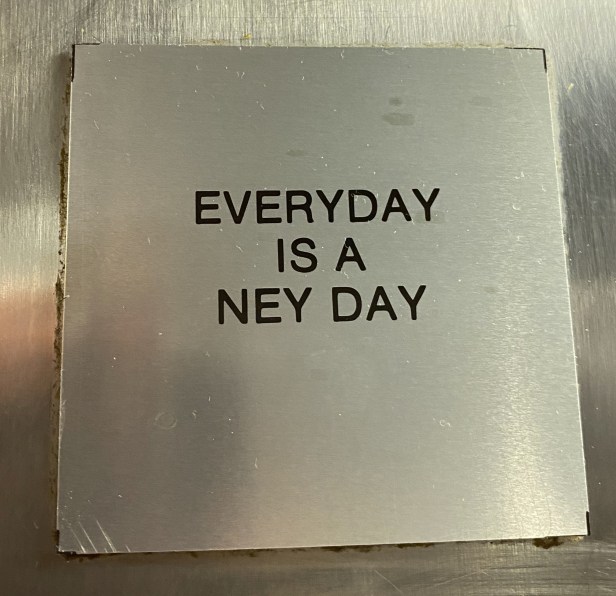
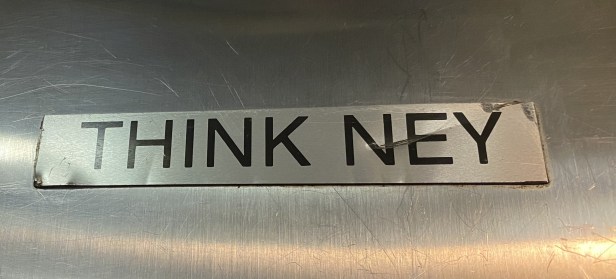
Ney signs in the galley of USS Blueback (SS-591)
This is likely a play on the phrase, “Every day is a Navy day,” referring to the overall quality of life as a sailor, both the good and bad.
For the fiscal year of 2023, the following galleys received the Captain Edward F. Ney Memorial Award:4
- Afloat
- Submarine Category Winner: USS Maine (SSBN-741)
- Small-Medium Afloat Category Winner: USS Thomas Hudner (DDG-116)
- Large Afloat Category Winner: USS Bataan (LHD-5)
- Aircraft Carrier Category Winner: USS Ronald Reagan (CVN-76)
- Ashore
- West Coast General Mess Category Winner: Joint Base Pearl Harbor – Hickam, Hawaii, Silver Dolphin Bistro
- East Coast General Mess Category Winner: Naval Station Newport, RI, Captain Edward F. Ney Hall
- Outside Continental U.S. General Mess Category Winner: Naval Air Station Sigonella, Ristorante Belle Etna
Food service awards aren’t limited to the U.S. Navy. The equivalent awards in other services would be:
- Philip A. Connelly Award (U.S. Army).
- John L. Hennessey Award (U.S. Air Force & U.S. Space Force)
- Major General William Pendleton Thompson (W.P.T.) Hill Memorial Award (U.S. Marine Corps)
- Forrest O. Rednour Award (U.S. Coast Guard)
- Captain David M. Cook Award (Military Sealift Command).
Regardless of whether you eat in a mess hall, mess deck, wardroom, or Dining Facility (DFAC), cooks strive to create appetizing meals. The tastiness of these meals varies and depends on a variety of factors, but cooked rations generally beat out field rations, such as MREs. It’s a hard job, but somebody’s got to do it.
Notes
- Submarine Research Center, Submarine Cuisine (Bangor Silverdale, WA: Submarine Research Center, 2004), 155 – 157. ↩︎
- Submarine Research Center, 157 – 159. ↩︎
- William Blees, “NBK Awarded Second Consecutive Ney Award,” Homeport Northwest (blog), July 1, 2014, https://homeportnorthwest.wordpress.com/2014/07/01/bangor-ney-14/. ↩︎
- Zamone Perez, “Navy dishes out awards for best culinary crews across the service,” Navy Times, April 21, 2023, https://www.navytimes.com/news/your-military/2023/04/21/navy-dishes-out-awards-for-best-culinary-crews-across-the-service/. ↩︎
Bibliography
Perez, Zamone. “Navy dishes out awards for best culinary crews across the service.” Navy Times. April 21, 2023. https://www.navytimes.com/news/your-military/2023/04/21/navy-dishes-out-awards-for-best-culinary-crews-across-the-service/.
Submarine Research Center. Submarine Cuisine. Bangor Silverdale, WA: Submarine Research Center, 2004.
Wright, Ed. “Shore-Based Galleys Win Ney Award”. Commander, Navy Installations Command. February 16, 2017. US Navy.
 Fair Winds & Following Seas