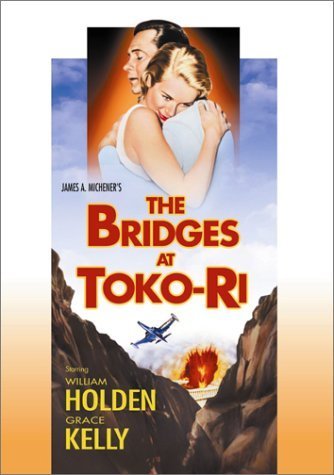
“The bridges span a narrow gap between two mountains. It’s one of the most important targets in all of Korea. Consequently, it’s fortified accordingly. Although we’re only over the target about 30 seconds; it’s a lifetime.”
Lieutenant Harry Brubaker, describing the bridges to his wife, Nancy.
- Director: Mark Robson
- Producers: William Perlberg, George Seaton
- Starring: William Holden, Grace Kelly, Mickey Rooney, Fredric March, Robert Strauss
- Released: 20 January 1955 (United States), 31 December 1954 (Canada)
Lieutenant Harry Brubaker is a naval aviator with VF-192 aboard USS Savo Island which is operating as part of Task Force 77 off the coast of Korea during the Korean War. His squadron is tasked with an upcoming mission to destroy the heavily defended bridges at Toko-Ri.
Plot
*FULL SPOILERS AHEAD!!!
Note: The film follows the plot of the book (see my review here) very closely with only a few differences.
Lieutenant Harry Brubaker (William Holden) is a WWII veteran and U.S. naval aviator recalled to active duty from his job as an attorney in Denver, Colorado to serve on the aircraft carrier USS Savo Island during the Korean War in November 1952. Rear Admiral George Tarrant (Fredric March), commander of Task Force 77, has taken a liking to Brubaker because he reminds him of his sons he lost in WWII.


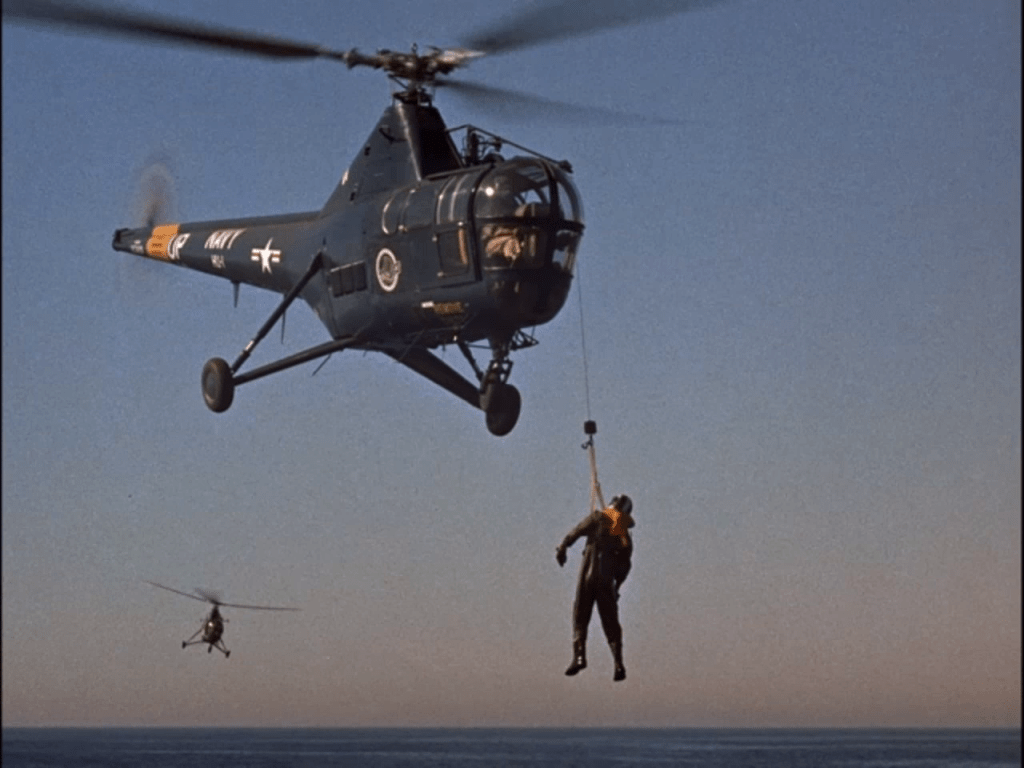
While returning to the carrier, Brubaker is forced to ditch his F9F Panther in the freezing Sea of Japan but is rescued by Chief Petty Officer (Naval Aviation Pilot, NAP) Mike Forney (Mickey Rooney) and Naval Air Crewman (NAC) Nestor Gamidge (Earl Holliman) flying a rescue helicopter. Despite his effectiveness and fun-loving, irreverent attitude, Forney has upset his superiors several times before for wearing a non-regulation green top hat and scarf while flying. While debriefing with Tarrant, Brubaker voices his frustration at the fact that he was recalled to fight in Korea while other organized units were left back in the States drawing pay and that most Americans seem to be ignorant of the conflict. Tarrant laments that “every war’s the wrong one,” and that a handful of volunteers will be required to make sacrifices for many. He further appraises Brubaker about an upcoming strike on the heavily defended bridges at Toko-Ri and gently chastises Brubaker for somehow getting his wife and two daughters to meet him in Yokosuka, Japan on their next port visit, despite Navy regulations.

While pulling into Yokosuka, Commander Wayne Lee (Charles McGraw), the Commander of the Air Group (CAG), confronts Tarrant about “pinwheeling” the aircraft to get the ship into port; causing undue stress on the aircraft’s engines. Tarrant chides Lee for going over the Captain’s head and coming directly to him with such a trivial matter. In private, Tarrant admits Lee was right, but upon seeing him back down from what he knew to be correct, Tarrant evaluates Lee to be unsuited for a higher command position.


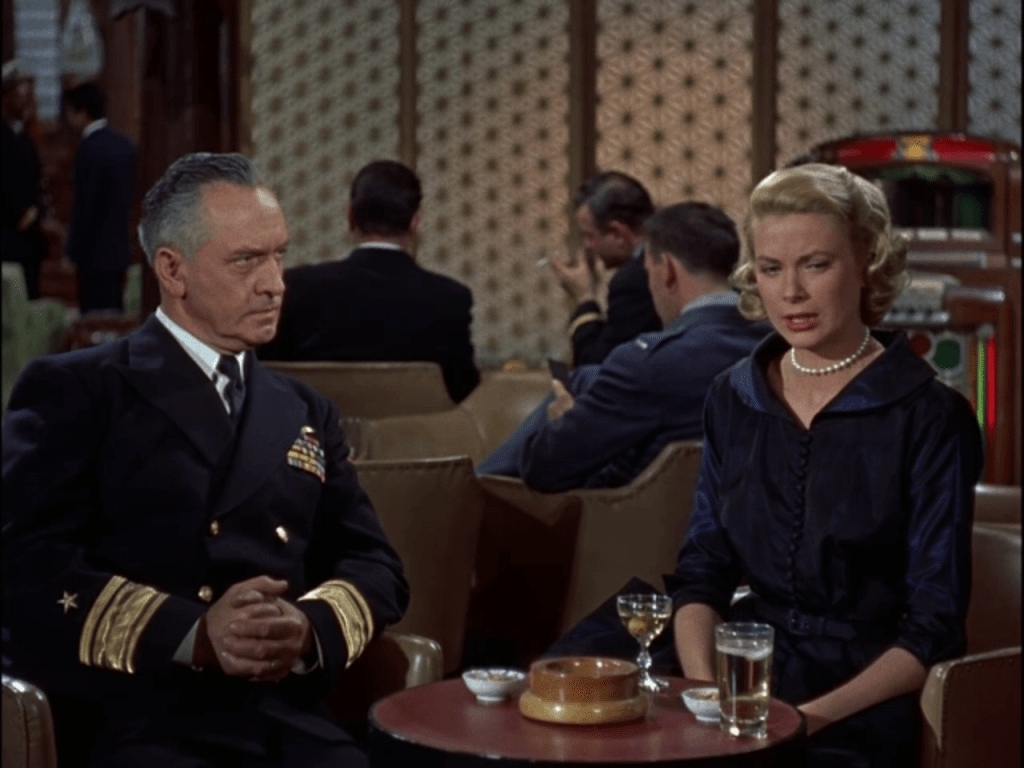
Later, at the Fujiya Hotel, Brubaker and his wife, Nancy (Grace Kelly), are relaxing with Tarrant when Gamidge arrives and informs Brubaker that Forney is in the brig after starting a brawl in Tokyo over the fact that his Japanese girlfriend left him for a sailor from USS Essex. Gamidge begs him to help get Forney out of jail, and Brubaker is forced to abruptly leave his wife and kids. Meanwhile, Tarrant informs Nancy of her husband’s earlier ditching and rescue, as well as the upcoming mission at the bridges at Toko-Ri. He also relates the story of how he lost one of his sons at the Battle of Midway, and how his daughter-in-law and wife were never the same afterward. Therefore, he urges Nancy to accept the reality of the dangers these men face to prepare herself should they be killed.

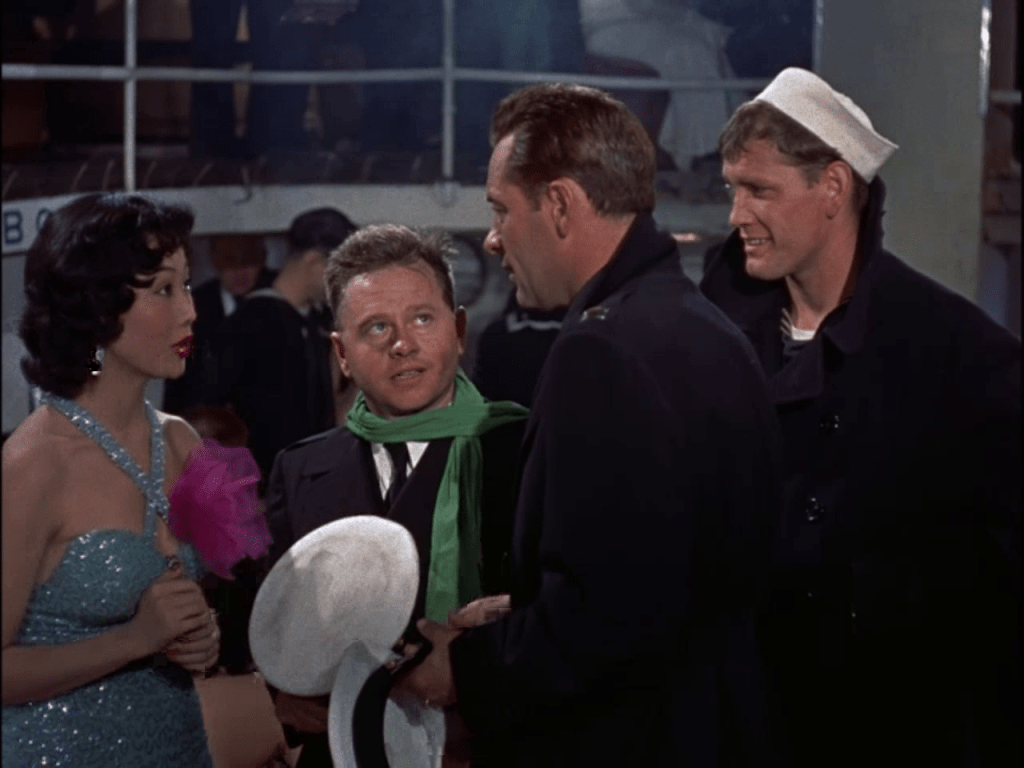
After bailing Forney out of jail and preventing him from starting another scene in a nightclub with his ex-girlfriend, Brubaker returns to the hotel late at night and tells Nancy about the bridges; assuaging her anxiety. After spending a day with his family in a bathhouse, he returns to the carrier to head back to Korea.




After flying a photo reconnaissance mission over the bridges with CAG, Brubaker suffers a crisis of confidence in his abilities. To steel his nerves, Brubaker follows Forney’s advice and stands on the ship’s bow, feeling the sea spray onto his face so he can collect his thoughts. The experience gives Brubaker the confidence to continue flying.

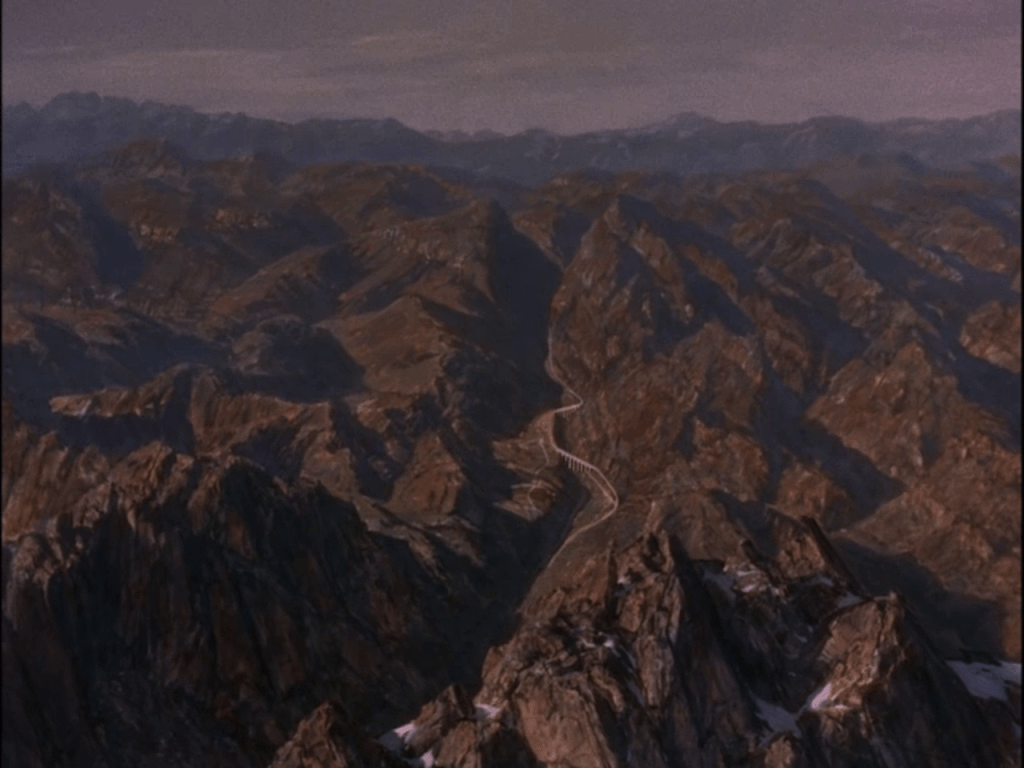

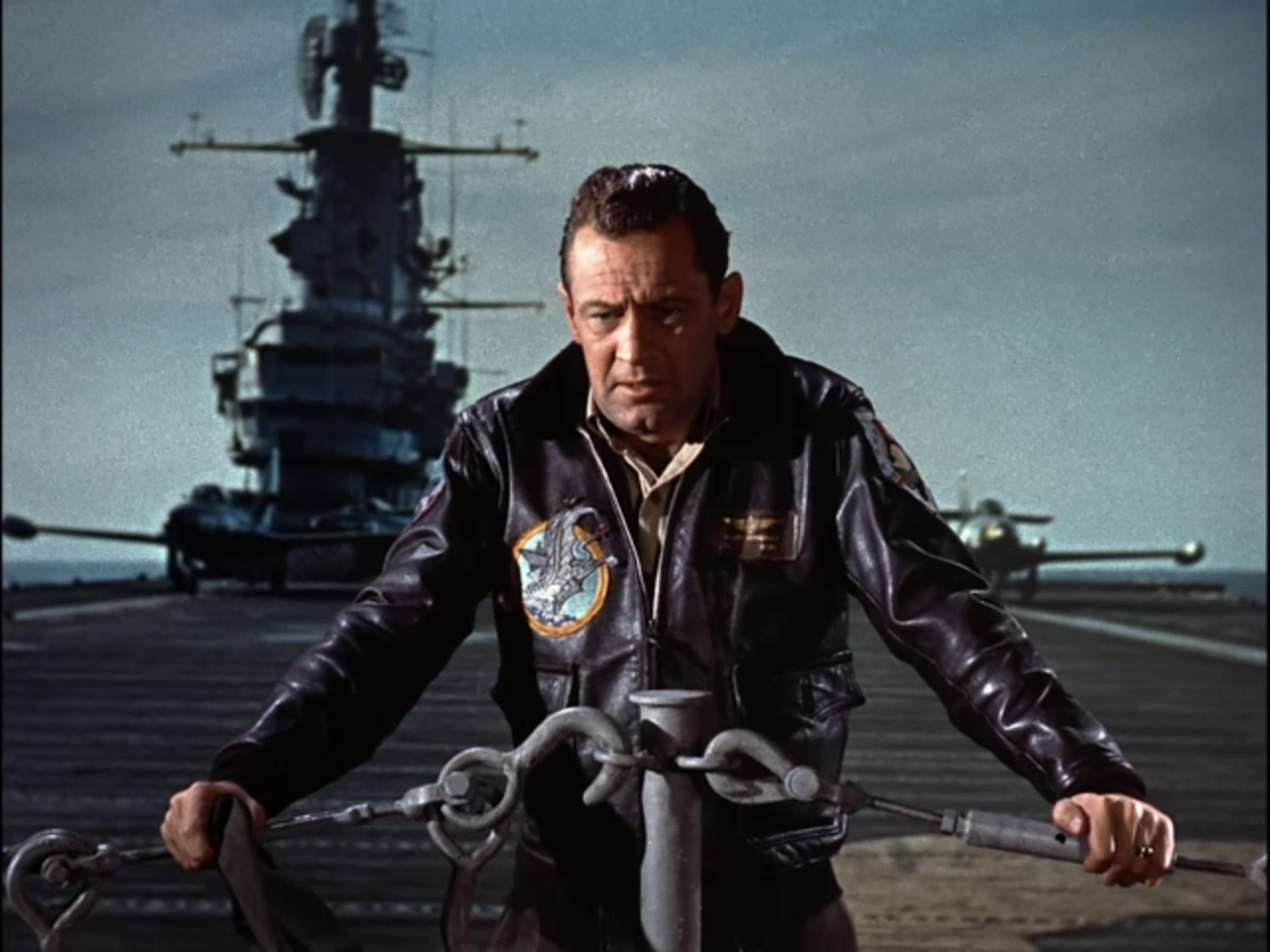
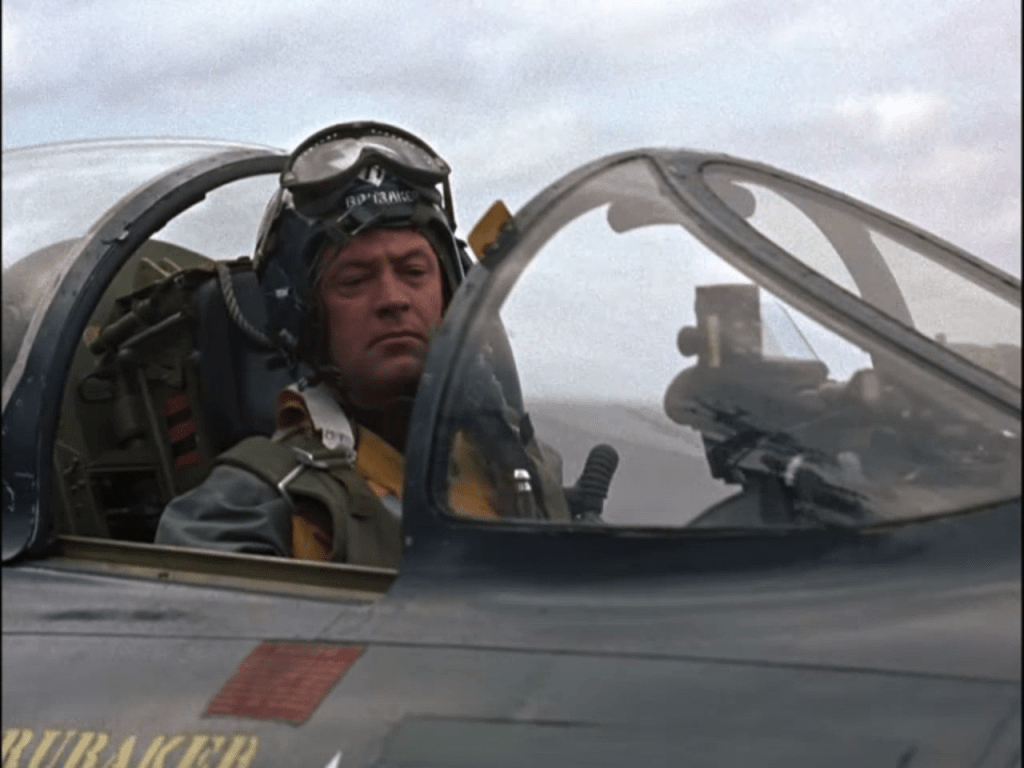


Despite heavy anti-aircraft fire, the mission to bomb the bridges is successful, with all four being destroyed.

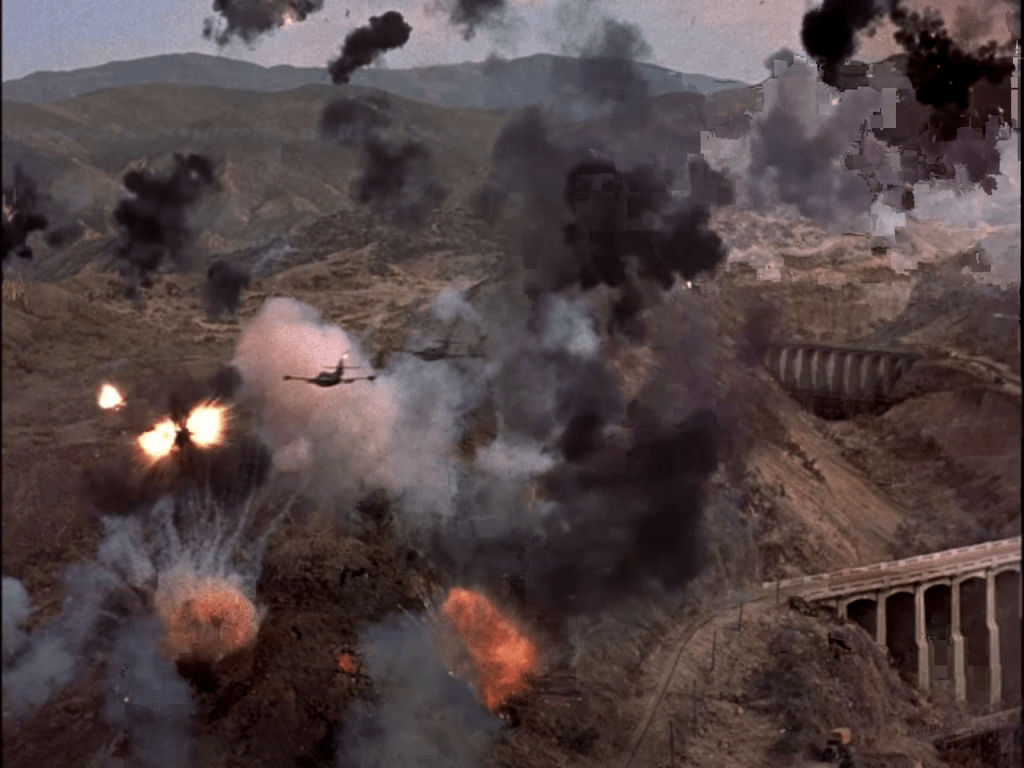

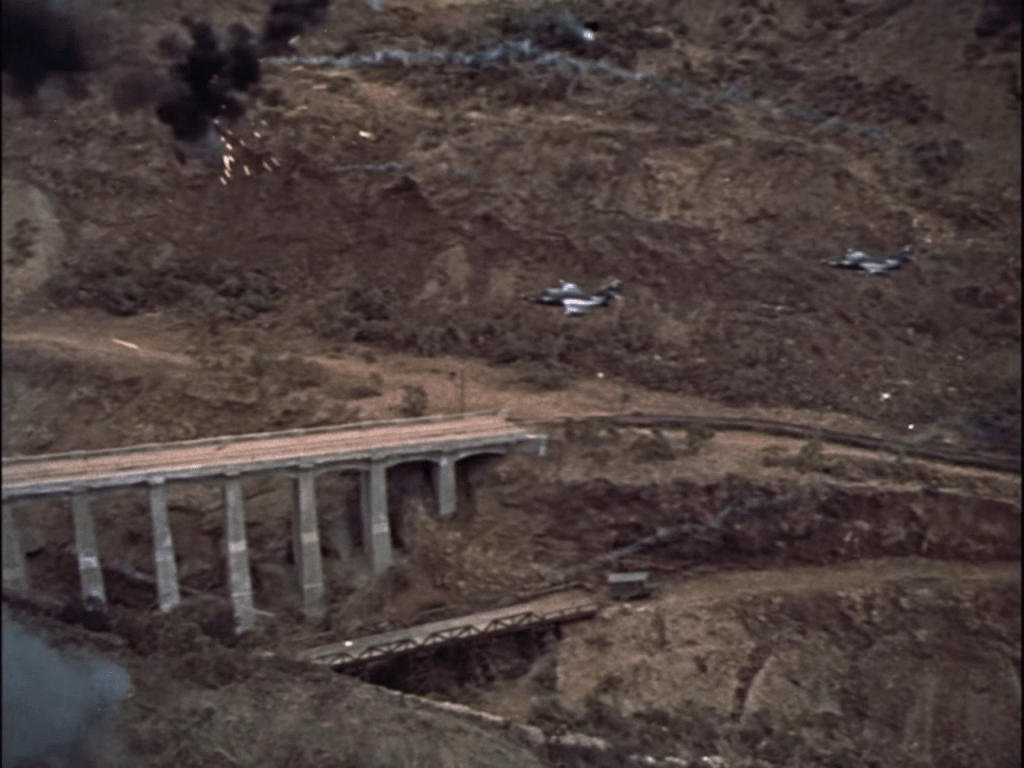


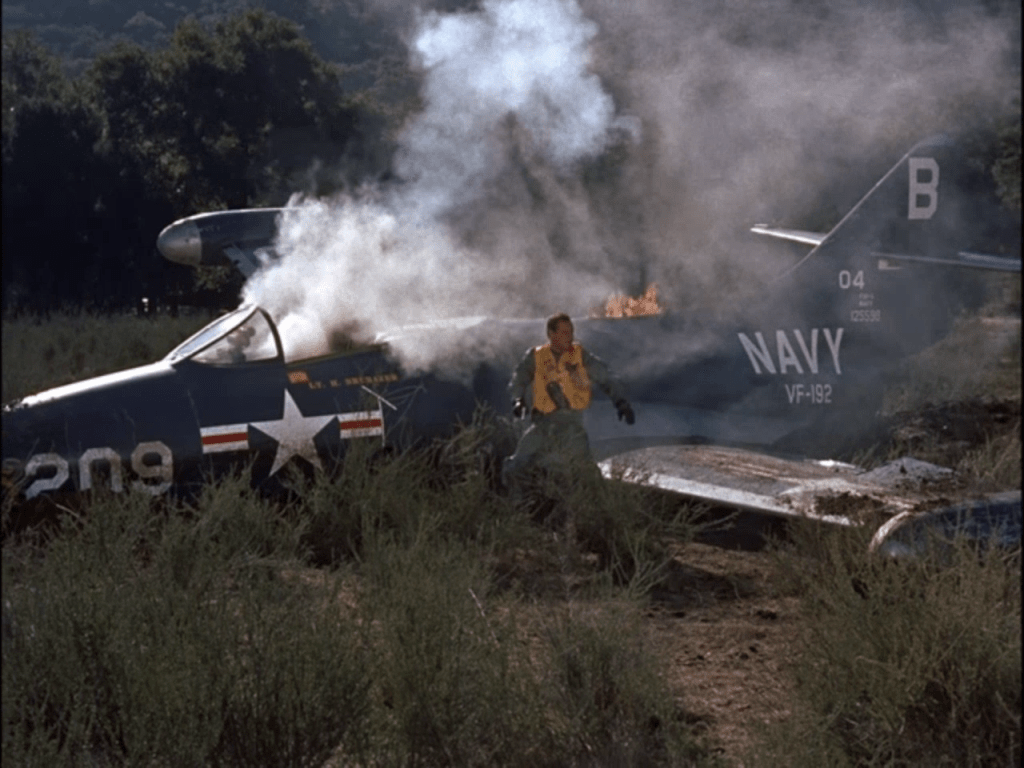
Still having ordnance, Brubaker attacks a supply dump, but his aircraft is hit by ground fire and begins losing fuel. Unable to make it over the mountains to bail out over Wonsan harbor, he crash lands in a field and takes cover in a nearby ditch while AD Skyraiders provide cover. Forney and Gamidge arrive in their rescue helicopter but are shot down by enemy troops. Gamidge is killed and Forney takes cover alongside Brubaker. The two men attempt to hold off the advancing North Korean troops, but both are overwhelmed and killed.



Back on the carrier, Tarrant questions CAG as to why Brubaker was abandoned. CAG vehemently defends his actions, arguing that the mission was ultimately successful and that he lost a good man, too. Seeing CAG stand up for what he believes in, Tarrant rescinds his previous assessment of him and believes he’ll be good for higher command. While watching aircraft catapult off the flight deck to attack new targets in Korea, Tarrant muses about the bravery of America’s volunteers and ponders to himself, “Where do we get such men?”
Historical Accuracies
Somewhat unusually for a Hollywood production, the film follows the book extremely closely (if only the same could be said for more films based on actual historical events). Many of the dialogue scenes are taken almost word-for-word from the book. A handful of scenes are switched around or changed from the book, but apart from that, this is basically a very close rendition of Michener’s novella. As closely as the film follows the book, it’s important to remember that the story itself is historical fiction. There is no actual place in (North or South) Korea called Toko-Ri. However, research indicates that Michener likely drew inspiration from multiple events and personalities, particularly two missions to bomb bridges at two different places. One is known as Majon-ni [Sp?], west of Wonsan, and the other is known as Samdong-ni, near the villages of Toko-san and Poko-ri (Michener reportedly combined the names to create the title).1 In the film, as Brubaker and CAG fly their photo recon mission, they mention passing over checkpoints at the towns of Majon-ni and Yangdŏk, with the bridges being 15 miles ahead. These are real towns in North Korea, west of Wonsan. Exactly how much of the book is based on these strike missions is debatable, but I plan to do a write-up on the various sources of inspiration for the bridges at Toko-Ri. Interestingly, unlike the book, which gives no date, the film specifically places the events in November 1952.
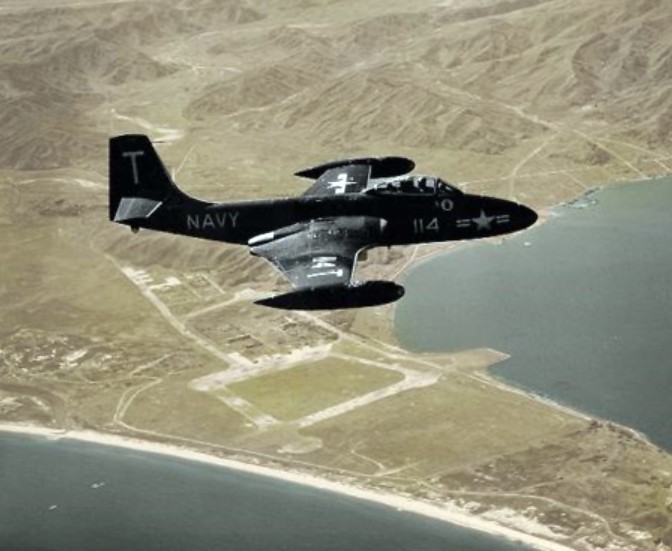
The squadron Brubaker is flying with is a real squadron (although it’s not named in the book). Fighting Squadron VF-192 “Golden Dragons” was aboard Oriskany during filming. The unit patch can be seen on the characters’ flight jackets, and a golden dragon is painted on the nose of the aircraft. Following the release of the film, they renamed themselves the “World Famous Golden Dragons.” VF-192 did two deployments to Korea, but they were aboard USS Princeton (CV-37) flying Vought F4U-4 Corsairs. They didn’t receive their F9F-2 Panthers until early 1953, and filming took place in September of that year.
On-location filming in Japan was done at Yokosuka Naval Base. This was originally the Yokosuka Naval Arsenal used by the Imperial Japanese Navy. However, upon Japan’s surrender after WWII, it was occupied by U.S. Forces, and heavily expanded during the Korean War (as Japan was still under U.S. military occupation at the time). Today, it serves as United States Fleet Activities Yokosuka, the headquarters for the 7th Fleet and the U.S. Navy’s only forward-deployed carrier. (I’ve been to Yokosuka myself, and it’s very easy to know when you’re getting close to the naval base because you’ll start seeing a lot of American foreigners, all with military regulation haircuts.) Other on-location filming was done at the Fujiya Hotel in Hakone, Kanagawa (about 30 miles west of Yokosuka). This upscale hotel still exists and has been in operation for over 100 years. It’s a complex of several buildings, and as the name suggests, it has terrific views of Mt. Fuji. Although I’ve not stayed in the hotel myself.
Since this was filmed shortly after the Korean War, it’s a real treat for modern viewers to see period-accurate aircraft and ships in this film that aren’t CGI recreations. Of course, having the U.S. Navy provide assistance, including some 19 ships, certainly helped. The film won the Academy Award for Best Special Effects in 1955. Additionally, the film’s depiction of carrier air operations is accurate for the period. For one thing, this film actually shows a photo reconnaissance flight prior to the planning of the strike. Arguably, this film made naval aviation look cool 30 years before Tom Cruise and Tony Scott’s Top Gun, except the main character dies at the end of this movie.
Historical Inaccuracies/Oddities
Exterior shots of the carriers are of USS Oriskany (CV-34) and USS Kearsarge (CV-33), both Essex-class carriers were standing in for the book’s USS Savo Island. While USS Savo Island (CVE-78) was a real ship, in reality, she was a much smaller Casablanca-class escort carrier. She sat out the Korean War in mothballs in the Atlantic Fleet. In any case, an escort carrier like Savo Island would be too small to handle jet aircraft. Additionally, as with many films featuring military aircraft, in several shots, the aircraft are flying around clean (i.e. carrying no ordnance).
While loosely based on several missions to bomb bridges during the Korean War, the events of the film do seem rather inconsequential when you realize that there was a massive effort by the U.S. Navy to interdict supplies flowing to Communist forces during the war. In fact, the 20-month effort to destroy the enemy rail network, as part of Operation Strangle, saw aircraft from TF77 making 13,000 “cuts” in railway lines and destroying 500 bridges.2 So in that regard, Brubaker’s comment about the bridges being the most important targets in all of Korea falls rather flat. Even then, reconnaissance and Battle Damage Assessment (BDA) flights showed that enemy forces constantly rebuilt and repaired the damaged and destroyed bridges and rail lines. What’s even more disheartening is that the overall interdiction effort during the war was ultimately deemed unsuccessful by Vice Admiral Jocko Clark, Commander of the 7th Fleet, who said, “It [the U.S. Navy] did not interdict. The Communists got the supplies through, and for the kind of war they were fighting, they not only kept their battle line supplied, but they had enough surplus to spare so that by the end of the war they could even launch an offensive.” Throughout the Korean War, 17 U.S. Navy carriers flew over 250,000 sorties, with another 30,000 sorties being flown from the one Australian and four British carriers in the war. In total, carrier aviation contributed about one-third of the total air effort of the war. Despite the failure of the interdiction effort, it’s noted that it did increase the cost of the war for the Communists and denied them control of South Korea.3
Criticisms
I don’t have many criticisms of this film, but I will say that the acting isn’t jaw-dropping. While it may have been the convention at the time, some of the acting is a bit wooden and stagey, as if the actors are waiting at certain times for a cue to hit their marks. The melodramatic swells of music don’t really help, either. In all fairness, William Holden, Grace Kelly, Fredric March, and Mickey Rooney do their best with their characters and convey emotions in the film far better than Michener’s writing in his novella. This isn’t a knock against Michener’s writing, since it is good, but I found his novella to be so short that the characters aren’t given time to develop. Still, nobody in the film is putting in an Oscar-worthy performance. (Actually, I enjoyed Grace Kelly much more in Alfred Hitchcock’s Rear Window. I felt that she had more chemistry with Jimmy Stewart.)
Apart from that, some technical mistakes are evident, such as obvious rear projection in some shots, as well as aircraft flying around in close formation or not carrying any ordnance on a strike mission.
Final Verdict
The film and the book it’s based on are pretty much identical in content. Aside from some minor technical inaccuracies and stilted acting, I do find the film to be better for its visuals and the inclusion of genuine, period-appropriate Navy hardware. Having William Holden and Grace Kelly certainly helps. While only loosely based on historical events during the Korean War, The Bridges at Toko-Ri is one of the few classics covering that often-forgotten conflict.
Very good/Worth your time.
Notes
1. Don Hollway, “The Real ‘Bridges at Toko-Ri’,” donhollway.com, July 17, 2017, https://donhollway.com/toko-ri/. This is the most popular account of the actual inspiration for The Bridges at Toko-Ri. However, Holloway’s article is occasionally vague on details regarding the actual missions, and a Google search will turn up different articles/webpages that give different places as the inspiration for the events in the novel.
2. Norman Polmar, Aircraft Carriers: A History of Carrier Aviation and Its Influence on World Events Volume II, 1946 – 2006 (Dulles, VA: Potomac Books, 2008), 81.
3. Norman Polmar, Aircraft Carriers: A History of Carrier Aviation and Its Influence on World Events Volume II, 1946 – 2006 (Dulles, VA: Potomac Books, 2008), 89 – 90.
 Fair Winds & Following Seas