

Here’s a funny story from our good captain, which I unfortunately couldn’t get on audio recording, but I’ll do my best to relate it.
Submarines are known to have excellent food, at least as far as the U.S. military is concerned. Selected cooks on submarines go through additional training at culinary school to enhance their skills, and by the time they’re finished with that training, they’re pretty much chefs.
Now, as they say, RHIP (Rank Has Its Privileges). While officers on submarines eat the same thing as enlisted, the difference is in presentation. This is especially true when a flag officer comes aboard. Living in opulence and luxury within their ivory towers, the officers with the stars only have vague inklings of what the little people have to endure.
The Menu
The Captain said when his submarine was about to be commissioned, they invited an admiral to lunch (or perhaps it was dinner…I don’t remember) to commemorate the event. So the menu devised by the cooks consisted of steamed clams for an appetizer and flounder rolls for the main course.

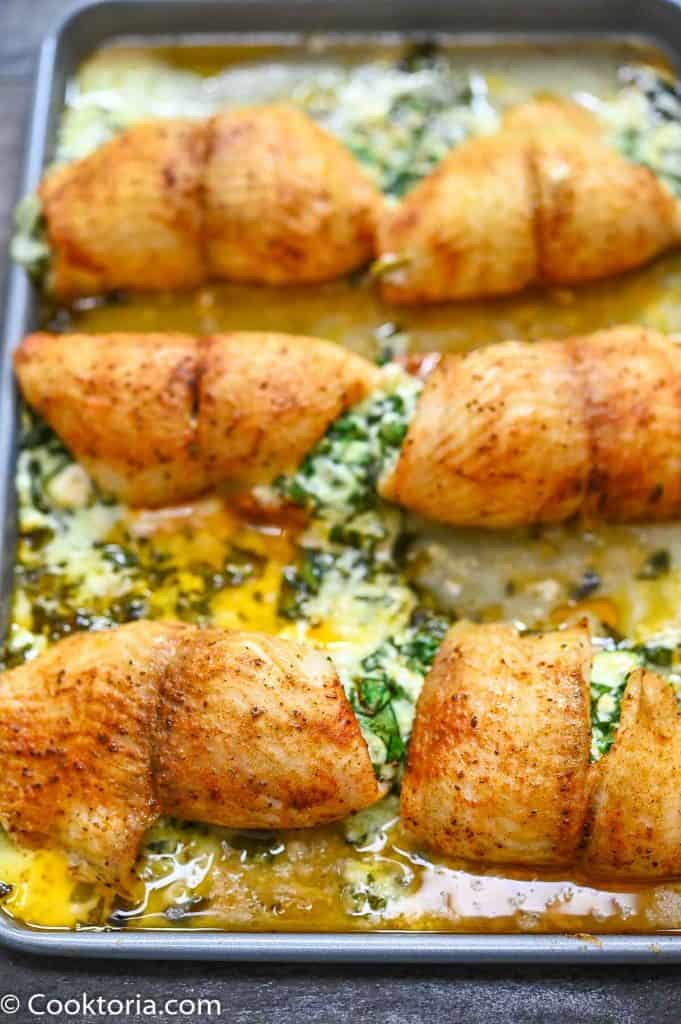
Truth be told, most meals with officers, even flag rank officers, are more formal than sitting down for a meal at Denny’s, but we’re not having a multi-course meal like we’re in first class on the Titanic. Then again, I haven’t had lunch with too many admirals, so experiences may vary. As for the Captain, everything was going well and the arrangements for the meal were all set.
The Lunch
The admiral arrived and the meal began. As the steamed clams were being passed around all the officers were taking big helpings of these things. The bowl of clams arrived at the admiral and he didn’t take any. He just passed the bowl along. The Captain briefly noticed this but didn’t think too much of it. Then they got to the main course, and the Captain noticed that the admiral was being pretty finicky with his food. He was sort of picking around it with his fork and only eating whatever was inside the flounder roll (spinach or something). The Captain noticed this the entire meal, and the admiral was polite and not saying anything. The Captain said there wasn’t anything wrong with the food; it was delicious.
Of course, some of you can probably see where this is going.
So the meal ended and the admiral went home. The Captain was still a bit confused, so he called up the admiral’s chief of staff and asked if anything was wrong. The chief of staff mentioned that the admiral doesn’t like seafood. Additionally, the admiral was from Texas, so he likes BBQ. (Obviously, this wasn’t Rickover, as he was from what would be modern-day Poland.) It turns out that the problem was that they never asked if the admiral had any dietary needs or preferences. (Or maybe the admiral forgot to bring along his staff and the all-important food taster. We wouldn’t want to poison the admiral, would we?) Anyway, nobody got in any apparent trouble for this.
This admiral was eventually transferred to SUBLANT (Submarine Force, Atlantic), and then to SUBPAC (Submarine Force, Pacific). I don’t think this admiral was the COMSUBLANT (Commander, Submarine Force Atlantic) and COMSUBPAC since there’s only been one (VADM Elton W. “Joe” Grenfell), who was in those positions in the 1960s, at least to my knowledge, and was born in Massachusetts. This event occurred after his tenure.
An Ironic Echo
Here’s where it gets ironic. One year, they’re doing a RIMPAC (Pacific Rim exercise with various naval forces from other countries around the Pacific). The Japanese Maritime Self-Defense Forces were participating and the Japanese officers took this admiral out to a sushi dinner! Yeah, I bet he really enjoyed that one!
As a side note, in case you don’t know, sushi is actually an entire cuisine consisting of a variety of foods, some cooked, some raw. When you think of the thinly sliced raw fish, you’re thinking specifically of sashimi.
It still is kind of funny, considering that a good chunk of the world’s population gets their primary source of protein from seafood (not just the Japanese). Understandably, some people just don’t like fish or seafood, cooked or uncooked because of the flavor or texture, or whatever.
Would Submarines Today Serve Sushi?
I asked the captain if the menus on submarines today contained any sushi? Since Japanese food has become much more accepted and popular in the last 20 or so years, would submarine cooks today ever serve sushi for lunch or something? His response was that they very well might, but it would probably be something more palatable to Americans, like California roll, or something fried, such as shrimp tempura. Probably not sashimi, though. But who knows? Maybe a modern submarine CS (Culinary Specialist) could chime in.
Sushi definitely wouldn’t be on the menu before then. Even up to the ‘80s and probably ‘90s, East Asian cultures, such as Japan, were viewed as really exotic and mysterious. A sort of Orientalism mindset was still prevalent. Japanese food was seen as gross or odd by Westerners. “Those Japanese people are so barbaric! They eat that raw fish! That’s what I call bait! They need to cook their food properly!” That kind of thinking. It’s only taken about 20 or so years for these foods to become more mainstream.
Is Submarine Food Really That Good?
There’s also a lot to be said of the quality of food served on submarines. Submarines are known to have the best food in the entire U.S. military…not just the Navy. According to the U.S. Navy submariners I’ve talked to the accuracy of that statement is generally on point, but I’ve heard both good and bad (but mostly good) things about submarine food. God help the cook if the food is bad because there’s no place to hide on a submarine! However, having never personally tasted any food that actually came out of a submarine galley, I can’t speak with any authority regarding the quality of it. In my experience, the food I’ve had out of galleys isn’t atrocious, but it isn’t 5-star quality, either. You can eat it, but it’s occasionally hit or miss. Some of it’s really good, some of it’s not so good. Most of the time, it’s just average, but it certainly beats fast food any day of the week. In reality, the quality of the food aboard ships, submarines, or ashore depends on many factors, starting with the skill of the cooks. Submarine cooks initially go to 5 weeks of Navy Culinary Specialist (CS) “A-school” and selected ones are sent for another 5 months at the Culinary Institute of America (CIA). By that time, they’re pretty much chefs. After they leave the Navy, many of them go on to cook in fancy hotels, restaurants, and even the White House (which usually has at least one former submarine cook, or so I’ve been told).
How discriminating your personal tastes are is probably a major factor. If you grew up with lots of gourmet, Michelin-starred food, then you probably wouldn’t find a submarine meal to be the most epicurean thing you’ve ever tasted. Secondly, what your favorite foods are no doubt influences how well you enjoy the menu. Thirdly, when you’re tired and hungry, just about anything tastes good. Lastly is time underway. The absence of any fresh ingredients after the first couple of weeks at sea would probably have some bearing on the quality since any ingredients after that would come frozen, dehydrated, powdered, or out of a can. At that point, you’d be hard-pressed to refer to the food as “fresh,” and there’s only so much you can do with canned, dried, or frozen ingredients. As one tour guide/former sub sailor puts it, “a lot of different kinds of food comes out these cans…some of it good, some of it not so good.”
On USS Blueback, most of the tour guides who are former sub sailors say that the food is usually pretty good, but there have been instances of botched meals. For example, one tour guide relates how a cook accidentally used salt instead of sugar to make pancakes. Nobody was happy with that breakfast. There was another instance of one meal containing powdered cottage cheese that had been rehydrated. The crew took one bite of that stuff and promptly spit it out.
Beverages
In terms of beverages, another thing would be the “mechanical cow,” that is, the milk machine. You’ll have fresh milk for roughly a week, and after that, it’s powdered milk, which tastes sort of like chalk. Otherwise, they’ll just put iced tea or lemonade in the machine. However, I’ve heard that submarines today may be using shelf-stable milk (or something along those lines) which can last for months at room temperature and actually tastes like milk.

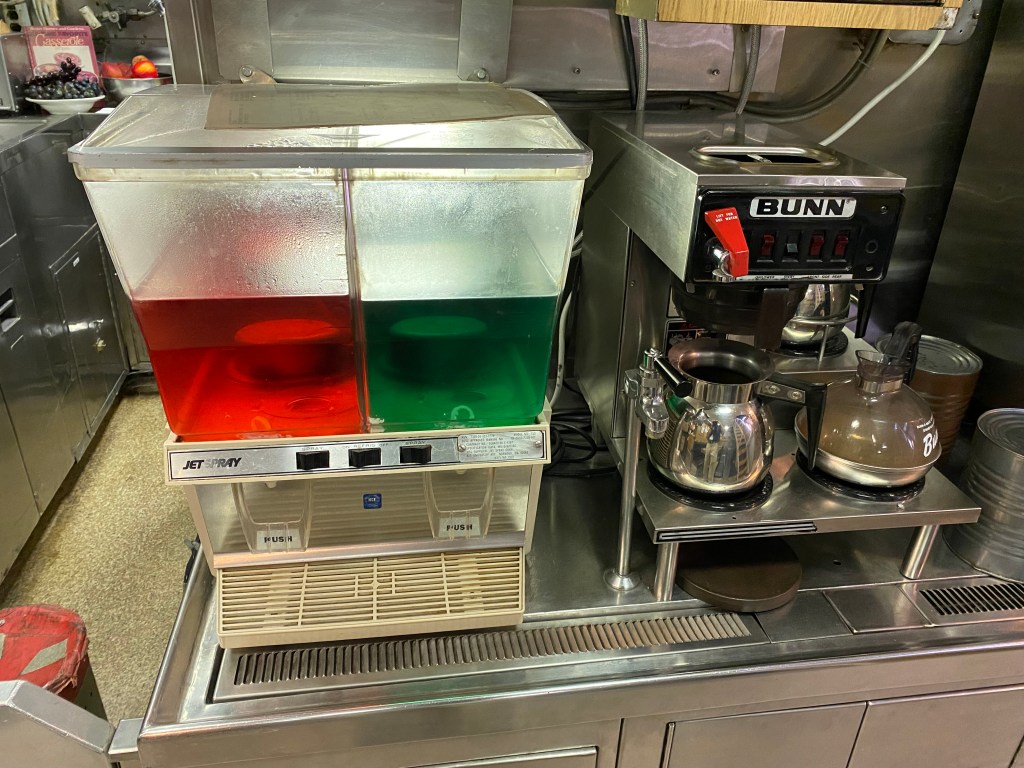
Another sea service un-favorite is bug juice, which is essentially an industrial-strength Kool-Aid or Gatorade. It’s a solution of water, food coloring, vitamins, minerals, and lots of sugar. The color (whether it be red, orange, yellow, green, purple, or blue) has no effect on the flavor because it all just has a funky, sugary taste to it. Submariners drink it so as not to get scurvy and they need vitamin D due to lack of sunlight. One volunteer tour guide who served on USS Memphis (SSN-691) said that the bug juice machine on that boat was actually a slushie machine to make it more appealing for the sailors to drink. Apparently, it worked because more guys were drinking it. In reality, it merely changed the texture and not the flavor. That’s military psychology for ya!
Coffee would also be available 24/7 since the U.S. Military pretty much runs on coffee. One justification I’ve heard regarding coffee is that modern nuclear submarines keep the oxygen level in their atmosphere at about 18% which is slightly lower than at sea level (normally 21%). The purpose is to reduce the risk of fire on board. This lower oxygen subsequently makes you more drowsy, so coffee is always available since the caffeine helps keep you awake and alert.

U.S. submarines also have the added bonus of having soft-serve ice cream available 24/7, but the only flavor is vanilla. However, there would be toppings available, such as syrups, sprinkles, nuts, maraschino cherries, etc. That said, you probably wouldn’t be allowed to have ice cream unless you were qualified on that boat and had your dolphins. (The qualification process essentially means learning all the systems on the submarine and getting signed off on a “qual sheet.” On modern subs, it takes around one year to do.) So the joys of eating ice cream non-stop are reserved for qualified crewmembers. If you want ice cream, then work harder and get qualified! The exception might be that you’re doing a really good job on your qualifications thus far, and someone vouches for you, allowing you to have some ice cream…but they better be present when you’re eating it. It all reinforces the cold military logic that these nice things wouldn’t be allowed unless they had some ulterior motive, such as making you work harder or longer.
Final Thoughts
The Captain also mentioned how he once asked for anchovies on his pizza, but they didn’t have them on the submarine because they were an imported item, so the cook substituted sardines instead (or some kind of small fish). He also said peanut butter goes well on pizza. OK, whatever you say, Captain. I won’t judge.
Anyway, we could easily discuss submarine cuisine for hours or days. There are entire recipe books devoted to how Navy food and submarine food has evolved over time. Maybe Max Miller will do a Tasting History YouTube video on submarine food one day (He’s already done a few on Navy foods). As for me, I’m searching for an original recipe for curry in the Imperial Japanese Navy. But all in good time.
 Fair Winds & Following Seas