
Definition
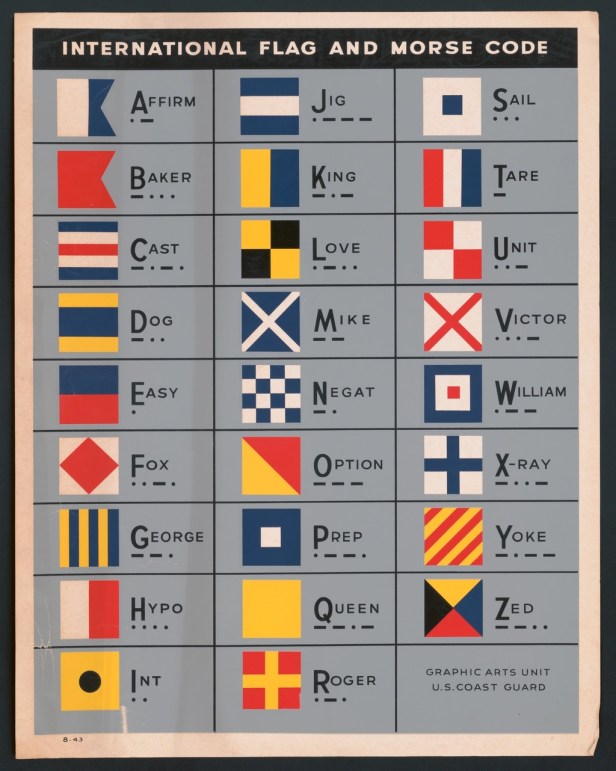
Noun
- The international radio code composed of dots and dashes.
Origin
Early 20th century. Named for its inventor Samuel Finley Breese Morse.
Comments
Also known as Continuous Wave (CW) transmission. Samuel Morse invented the telegraph and pioneered the code for its use. The system of dots and dashes representing alphabetical and numerical symbols can be easily transmitted by wireless, sound, light, and signal flags. It was the primary method of signalling at sea until the introduction of the radio-telephone.
Morse got the idea for the system while on the packet ship Sully. He was originally turned down for a patent by other nations until the U.S. government covered his costs. The first Morse signals were transmitted on 24 May 1844 between Washington D.C. and Baltimore. By 1858, most European nations offered 400,000 francs to use his invention.
References
Kemp, P. (1994). The Oxford Companion to Ships and the Sea. Oxford University Press.
Rogers, J.G. (1985). Origins of Sea Terms. Mystic Seaport.
 Fair Winds & Following Seas