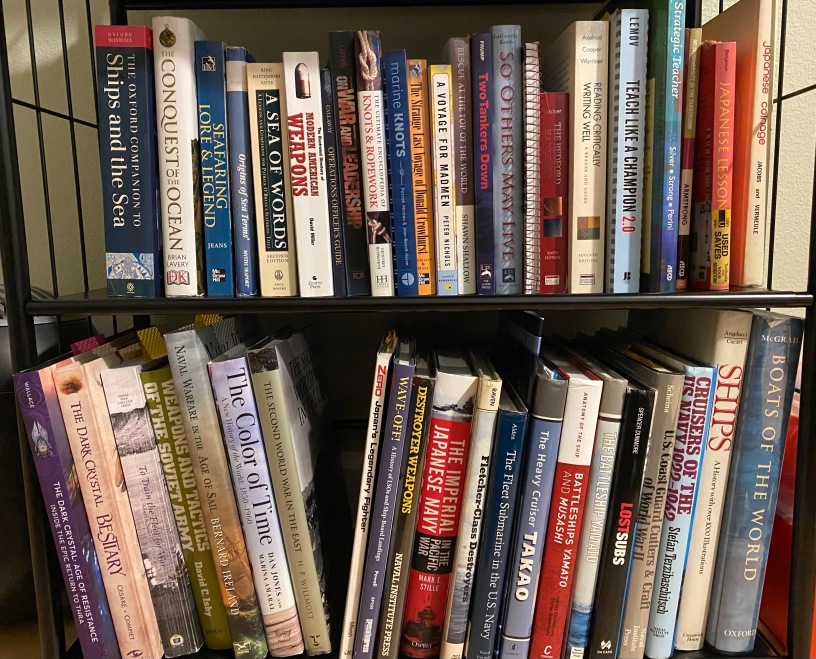

Published in 1984 by the Naval Institute Press (a publisher predominantly known for naval history and military reference works), The Hunt for Red October is Tom Clancy’s first novel and practically defined the modern military techno-thriller. Heavily focused on naval technology, the book examines a fictional Soviet ballistic missile submarine and the NATO attempts to find and recover it.
Author’s Background
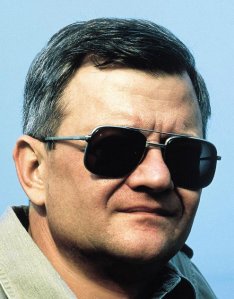
Tom Clancy (1947 – 2013) was born in Baltimore, Maryland. He attended Loyola College (now Loyola University) and majored in English Literature. While in school he enrolled in the Army Reserve Officer Training Corps (ROTC) program, but he was ineligible to serve due to his poor eyesight. Upon graduating, Clancy worked as an insurance agent and wrote in his free time. The Hunt for Red October started his career as a novelist. Clancy would go on to write or co-author nearly 20 fiction books, most of which feature the character Jack Ryan. Additionally, he would author numerous non-fiction works on military topics and technology.
Tom Clancy passed away in 2013 near his home in Baltimore due to heart failure at the age of 66. Even before then, his name was licensed to endorse movies, TV shows, and video game series; particularly those dealing with espionage, military intelligence, and technical topics. Despite not having any professional background in intelligence or as a naval officer, Clancy was known for doing extensive research for his works and popularizing the military fiction and techno-thriller genre.
Plot
Full Spoilers Ahead!!
On Friday 3 December 19821, Captain First Rank Marko Ramius takes command of the Soviet Navy’s newest Typhoon-class ballistic missile submarine, Red October, and heads to sea from Polyjarnyy inlet near Murmansk. Ramius, the best submarine skipper in the Soviet Navy, is renowned for having taken out the lead boat in every class of submarine for many years and trained a significant number of officers. Despite his pedigree, Ramius previously lost his wife to what should’ve been a routine appendectomy, but the doctor was drunk and prescribed ineffective antibiotics. Since the doctor escaped punishment due to being the son of a high-ranking Party member, Ramius is actually bitter at the Party and vows to make the State pay. Thus, before sailing, Ramius sent a letter to Admiral Yuri Padorin and announced his intention to defect to the United States. Alarmed, the Soviet Northern Fleet sets sail in pursuit of Red October with orders to sink her. Instead of rendezvousing with the Alfa-class submarine, V.K Konavolov, for several days of exercises, Ramius kills Red October‘s political officer and sets a course for the U.S. East Coast.

Meanwhile, Dr. Jack Ryan, a naval historian and CIA analyst leaves London, England, and meets Admiral James Greer and Skip Tyler, a former submarine commander, at CIA Headquarters to discuss new information obtained from British Intelligence, as well as a high-placed CIA spy in the Soviet government known as CARDINAL, about the Red October. The men conclude that Red October has an experimental drive system known as a tunnel drive which would be extremely quiet in operation and difficult to detect by sonar. Confirming the information, Ryan leaves to brief the President of the United States and the Joint Chiefs of Staff on the situation.

Upon reaching the Mid-Atlantic Ridge near Iceland, Red October is briefly detected by the Los Angeles-class fast attack submarine USS Dallas under the command of Bart Mancuso. Sonar Technician 2nd Class Ronald “Jonesy” Jones hears Red October but doesn’t initially classify it as a submarine. Eventually, Jonesy discerns that the submarine is using a new type of propulsion drive which emits a faint harmonic rumble which now allows Dallas to track the contact. Mancuso reports to SUBLANT (Submarines Atlantic) that they have detected a possible new submarine and are continuing the pursuit.
At the White House, based on the movement of the Soviet Northern Fleet, Ryan convinces the President and Joint Chiefs that Ramius is actually attempting to defect to the United States and recommends that they take advantage of the situation and steal the Soviet submarine. He is then dispatched to the aircraft carrier USS Kennedy and then the Royal Navy aircraft carrier HMS Invincible to locate and make contact with Ramius and Red October.

Several hundred miles northeast of Norfolk, Sturgeon-class submarine USS Pogy is monitoring Soviet submarines when the Alfa-class submarine E.S. Politovskiy, in pursuit of Red October, suffers a reactor meltdown and sinks, with only a single crewman surviving. Meanwhile, the old ballistic missile submarine USS Ethan Allen takes on a small crew of officers and senior enlisted to get her underway into the North Atlantic with massive demolition charges aboard. The Deep Submergence Rescue Vehicle (DSRV) Avalon is also mobilized on another U.S. submarine.
With a plan in place, USS Pogy rendezvous with HMS Invincible which is positioned to intercept Red October. USS Dallas, still tailing Red October, allows herself to be detected so the submarine will slow down and detect the nearby British ships. Coming up to periscope depth, HMS Invincible communicates with Red October and alerts them that Soviet ships and submarines are waiting off the U.S. coast to attack them. They give coordinates to proceed to a location southwest of Norfolk where USS Ethan Allen, and the submarine rescue ship USS Pidgeon, with the Deep Submergence Rescue Vehicle (DSRV) Mystic, are waiting. Upon reaching the area, a radiation accident is faked on Red October which forces the crew to evacuate via Mystic to the awaiting Pidgeon, while Ramius and his defecting officers stay behind with the submarine under the pretense that they’ll submerge and scuttle the boat.
With the helicopter carrying the Russian-speaking CIA agents having crashed en route to the area, Ryan and Owen Williams, a Russian-speaking British officer, board Red October via Mystic and confirm that Ramius and his officers wish to defect to the U.S. Unbeknownst to the men, Red October‘s cook, Igor Loginov, in reality, a loyal GRU agent, has stayed behind during the crew evacuation. As Ryan is being given a tour of the submarine, Loginov wounds Williams and Ramius and attempts to destroy the sub by blowing up a missile inside its tube; however, Ryan kills him before he can do so and the missile is ejected into the sea.
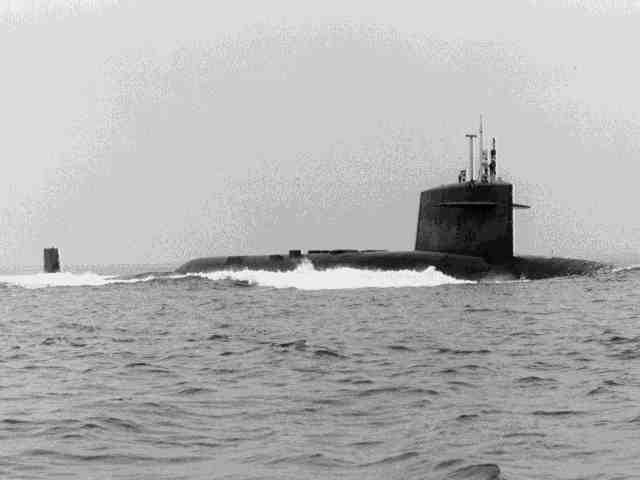
Meanwhile, USS Ethan Allen is blown up nearby to fake Red October‘s scuttling. A submersible with a Russian officer on board is sent down to “confirm” that the wreckage is indeed Red October. They locate a Russian depth gauge (which had been placed aboard Ethan Allen to uphold the ruse), as well as Red October‘s ejected ballistic missile. Red October‘s evacuated crew are taken to Washington D.C. and given a quick tour, despite Soviet officials’ attempts to shield them from American decadence. While most are eventually repatriated, a few decide to defect and stay behind in America.
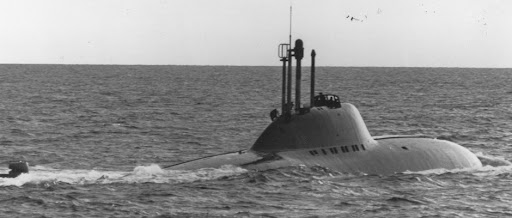
While Red October is escorted into Norfolk by USS Pogy and USS Dallas, V.K Konavolov, having lingered behind following the Soviet withdrawal, locates the three submarines and initially mistakes Red October for an Ohio-class ballistic missile submarine. Eventually deducing that it’s the Red October, Konavolov attacks and successfully hits it with one torpedo, but fails to sink it. After a tense battle, Red October sinks Konavolov by ramming it. Red October is successfully escorted into Norfolk and hidden in a drydock. Ryan debriefs at CIA Headquarters with Admiral Greer and heads back to London.
Critical Observations
Author’s Note: I tried reading this book some 25 years ago when I was much younger because I was really into submarines and Cold War espionage at the time. Naturally, as a young teenager, I wanted to be a secret agent like James Bond or work for the FBI or CIA. Of course, none of that happened! Still, I was already familiar with the 1990 movie adaptation (see my review here), and my parents recommended that I try reading the book. They had already read it and the book is always better…right? Well…I tried reading the book, but due to the technical nature of Clancy’s writing, I only made it about 40 pages into the book before I got bored with it. Fast forward to 2024 and I find myself working on a submarine! No, I’m not a Navy submariner. I work on the museum ship USS Blueback (SS-581), to be precise. My work has brought me back into studying submarines, and Blueback has a particular connection with The Hunt for Red October film. Naturally, I borrowed a copy of the book from the ship’s library and finally read the whole thing.
Clancy reportedly based the plot of this novel on a Master’s thesis he read about the real-life mutiny that occurred aboard the Soviet frigate Storozhevoy in November 1975. However, in that case, the mutineer, Valery Sablin, wasn’t attempting to defect, but rather was a staunch Leninist and was attempting to start another revolution. Still, Soviet news presented the mutiny as an attempt to defect to Sweden.
Positives
Regarding the writing, Tom Clancy’s novels are something of an acquired taste. People either like his books or they don’t. The most common complaint I hear is that the writing is too technical and feels like reading a manual. That said, I don’t have a problem with it; although I admit it isn’t for everyone. If you’re familiar with military technology, submarines, and naval history, then you shouldn’t have a problem comprehending this book. You don’t need a Bachelor of Science degree or naval experience to appreciate the narrative, but the characters are definitely secondary to the technical aspects of the story.
It’s important to note that serving on submarines is a highly technical field within naval warfare. There’s a lot of engineering and math involved, and given the technical aspects of qualifying and serving on subs, submariners consider themselves to be elite sailors. In this respect, the book could be considered Clancy’s love letter to one of the dorkiest communities within the U.S. Navy. The research he did definitely shows because it pretty much nails the life of submarine sailors and also depicts their attitude of believing they’re God’s gift to the Navy.2
Reportedly, this book caused enough of a stir within the military/intelligence community when it was published that Clancy was interviewed by the FBI concerning the technical information, but he was cleared of any wrongdoing. Contrary to popular belief, Clancy had no access to any classified or top-secret information while writing the book. He merely used publicly available sources, like Norman Polmar’s Guide to the Soviet Navy, as well as Larry Bond’s wargame Harpoon, along with consultations with several naval officers to form the basis for this book (and the later Red Storm Rising). In fact, his initial draft to the Naval Institute Press was sent back with a request to cut out roughly 100 pages of technical details. Whether these pages could’ve compromised sensitive information or were merely taken out for reasons of pacing are unknown.
While a spy story set during the Cold War would imply a complex tale of subterfuge, Byzantine plots, assassins, and secret codes, the narrative is actually very linear. In fact, it only takes place over the course of 18 days. The chapters are called “days” and multiple events in different locations occur on the same day. For example, the chapter could begin with an event on board Red October, while another event could occur on USS Dallas which is trailing her. Meanwhile, several thousand miles away, the President of the United States could be meeting with the Soviet ambassador as the two engage in political maneuvering. Despite this jumping around, the plot provides enough story beats and moves steadily enough that the story doesn’t bog down too much.
Negatives
While the story is good, it’s a little too far-reaching and some of the material and subplots could be excised to make the narrative smoother. For example, the subplot with CARDINAL, as well as the sinking of E.S. Politovskiy are only tangentially related to the story and don’t really add much. Similarly, the actions of USS Pogy, a Sturgeon-class submarine don’t do much to advance the plot, even though she plays a significant role.
I didn’t go into this book expecting Pulitzer Prize-winning fiction, and Clancy isn’t known for great characterization, but the characters in the novel are a little dry. The issue is that the dialogue is a little too staid. It feels somewhat stilted and occasionally artificial. As in, the conversations between characters in the book are too clean and orderly. Nobody talks like this. It’s not the worst I’ve read, but it’s very economical. As with many Tom Clancy properties, the characters take a back seat to the technical information and espionage. Then again, as someone who reads a lot of naval history, I’m pretty used to this style of writing and military language tends to be very concise and meant to get information across efficiently.
As to how accurate the book is, while Clancy thoroughly researched his books, he was known to change certain information to not give away too much technical knowledge. In Sherry Sontag and Christopher Drew’s Blind Man’s Bluff, Admiral James Watkins notes that about two-thirds of this book is accurate while the rest is made up, and the capabilities of the U.S. military are overstated. Watkins further noted that when Clancy submitted the manuscript to the Navy for review and clearance, rather than trying to correct the inaccuracies of the book, he decided to let the Naval Institute Press publish it because it possessed good propaganda value. “The Soviets kind of believed it, and we won the battle, and therefore it was a significant part of the noncostly deterrence of submarines.”3
Without getting too much into the weeds about the book’s inaccuracies, in reality, most Soviet submarines were not given names. The Typhoon-class submarines were rare exceptions. The attack submarines, such as the Alfa-class, were given alphanumeric designations. Furthermore, the book (and film) depicts Red October as having a large missile compartment that the crew could access, much like the U.S. Ohio-class ballistic missile subs. In reality, on a Typhoon sub, the missile tubes are situated between the two pressure hulls with the outer hull wrapped around them. Another glaring inaccuracy is that the meltdown of E.S. Politovskiy‘s reactor is attributed to a failure in the pressurized water heat exchanger. In reality, Alfa-class submarines used liquid lead to cool the reactor, which is partially what made them very powerful for their size. So there’s no way that the reactor could’ve suffered a meltdown as depicted in the novel owing to its different design.
Still, most of the inaccuracies in the book could be handwaved by the fact that either Clancy changed the information for security reasons or the details of the Soviet submarines weren’t known to the West at the time. Of course, the post-Cold War world of 2024 means we have the benefit of hindsight to confirm the facts.
Verdict
Overall, I enjoyed this novel. The narrative flows steadily and is filled with enough information to keep the reader informed and engaged. The technical details are not too overwhelming, but the reader would do well to have a basic understanding of submarines before picking up this book. On the other hand, some of the subplots in the book could be shortened or taken out since they have little bearing on the plot or drag it down. As with other Tom Clancy works, the characterization suffers and the plots are heavily driven by technical information and events rather than characters or deep thematic elements.
Rating: 3.5 out of 4. Good. Borrow from a library.
Notes
- The year is never specified in the book, but based on the dates given, and the setting of the late-Cold War, the narrative would occur in December 1982. This does create an anachronism since sailors on USS Dallas mentioned watching the Star Wars film Return of the Jedi which wasn’t released until 25 May 1983. The U.S. Navy does have an agreement with Hollywood to get films before they’re released in theaters, but this is usually around 1 – 2 months before their release ashore. It’s doubtful that they would have this film so early. Then again, since Clancy wrote this book while the Cold War was still ongoing and likely assumed it would continue, it could be that the story takes place in 1993, the next year that December 3rd fell on a Friday. ↩︎
- The author of this post can attest to that attitude since I work with several former sub sailors. If there ever was a subsurface counterpart to fighter pilots, it would be submariners. The reason for the attitude of submariners is that submarines require a lot of technical expertise to operate, their jobs are very technical in nature, and their operations are cloaked in secrecy. It can be summed up in the following quotes: “There are only two types of ships: submarines and targets,” and “The best Marine is a submarine.” This isn’t to say that they’re always arrogant, but a certain haughtiness occasionally shows through in that they act like they’re the only ones with the sea stories to tell. It gets a bit annoying in my opinion. ↩︎
- Sherry Sontag, Christopher Drew, and Annette Lawrence Drew, Blind Man’s Bluff: The Untold Story of American Submarine Espionage (New York: Public Affairs, 2016), 322. ↩︎
Bibliography
Sontag, Sherry, Christopher Drew, and Annette Lawrence Drew. Blind Man’s Bluff: The Untold Story of American Submarine Espionage. New York: Public Affairs, 2016.
 Fair Winds & Following Seas