

“If the Cuban Missile Crisis put the United States and Soviet Union within yards of nuclear war, then the sudden disappearance of a Soviet ballistic missile submarine in May of 1968 – brought the world within inches.”
Opening text – quoting author Kenneth Sewell1
- Director: Todd Robinson
- Producers: John Watson, Julian Adams, Pen Densham
- Starring: Ed Harris, David Duchovny, William Fichtner, Lance Hendricksen, Julian Adams
- Released: 1 March 2013
- Tagline: You’ll never see it coming
Note: While it has a different title, this film is very loosely based on Kenneth Sewell’s book Red Star Rogue and its rather silly conspiracy theory.
An old Soviet submarine captain is given one last command of an aging diesel-electric ballistic missile submarine. Sent out on patrol with some mysterious new crewmembers and strange new equipment, the captain finds that he holds the fate of the world in his hands.
Plot
*FULL SPOILERS AHEAD!!!
Note: I’ve had to boost the brightness and gamma of most of the screen captures since much of the film is very dark.
Captain Dmitri “Demi” Zubov (Ed Harris), the son of a legendary Soviet naval officer, is nearing the end of his career, which has failed to live up to the reputation of his father. Despite having just returned from a patrol, Zubov is ordered to get underway again from Rybachiy Naval Base on the Kamchatka Peninsula to respond to massing U.S. naval forces in the Pacific. Commodore Vladimir Markov (Lance Hendricksen) gives Zubov command of the old diesel-electric B-67, which will be decommissioned and sold to China following the patrol. B-67 also happens to be the first boat Zubov served on.

Unable to recall all of the normal crew from their R&R, additional crew is mustered, including a new navigator, Lieutenant Bavenod (Julian Adams), and Mr. Bruni (David Duchovny) from the Special Projects Institute. As the crew makes ready to depart, the Executive Officer, Commander Alex Kozlov (William Fichtner), notices a strange piece of equipment being attached to the hull of the boat, which is to be tested by Mr. Bruni and his men while the boat is on patrol.


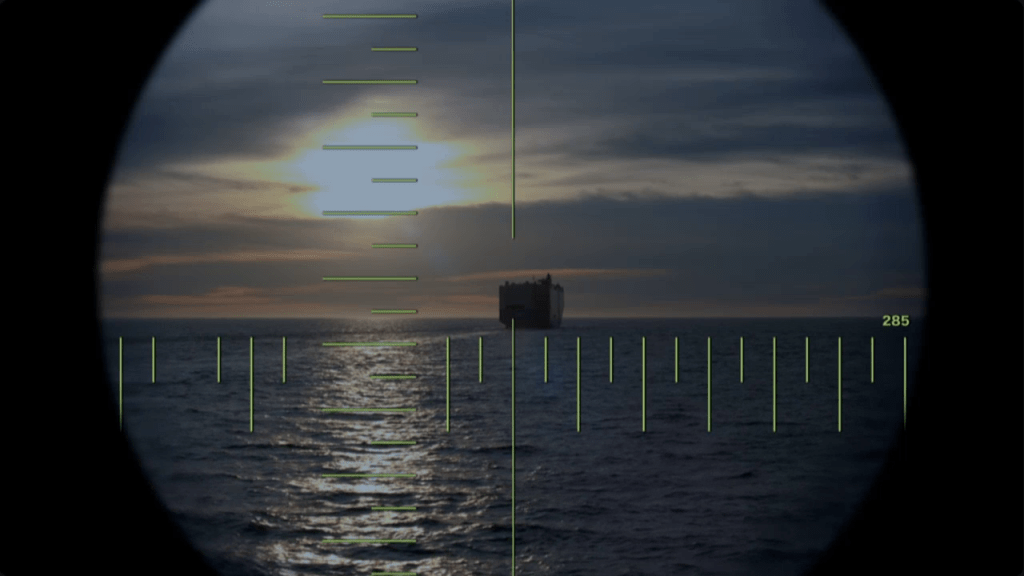
Getting underway, Kozlov confides to Zubov that Bavenod was supposedly killed aboard the submarine K-27 in a radiation accident and that the technicians from the Special Projects Institute are likely KGB osnaz commandos. Zubov orders the crew to be kept separated from Bruni’s men, and a series of drills is conducted to test the new crewmembers. In the middle of a drill, a nearby Panamanian merchant ship is spotted, and Bruni orders Zubov to position the submarine underneath it, which he reluctantly agrees to, but in the process, the boat is badly shaken when it nearly collides with the ship’s screws.



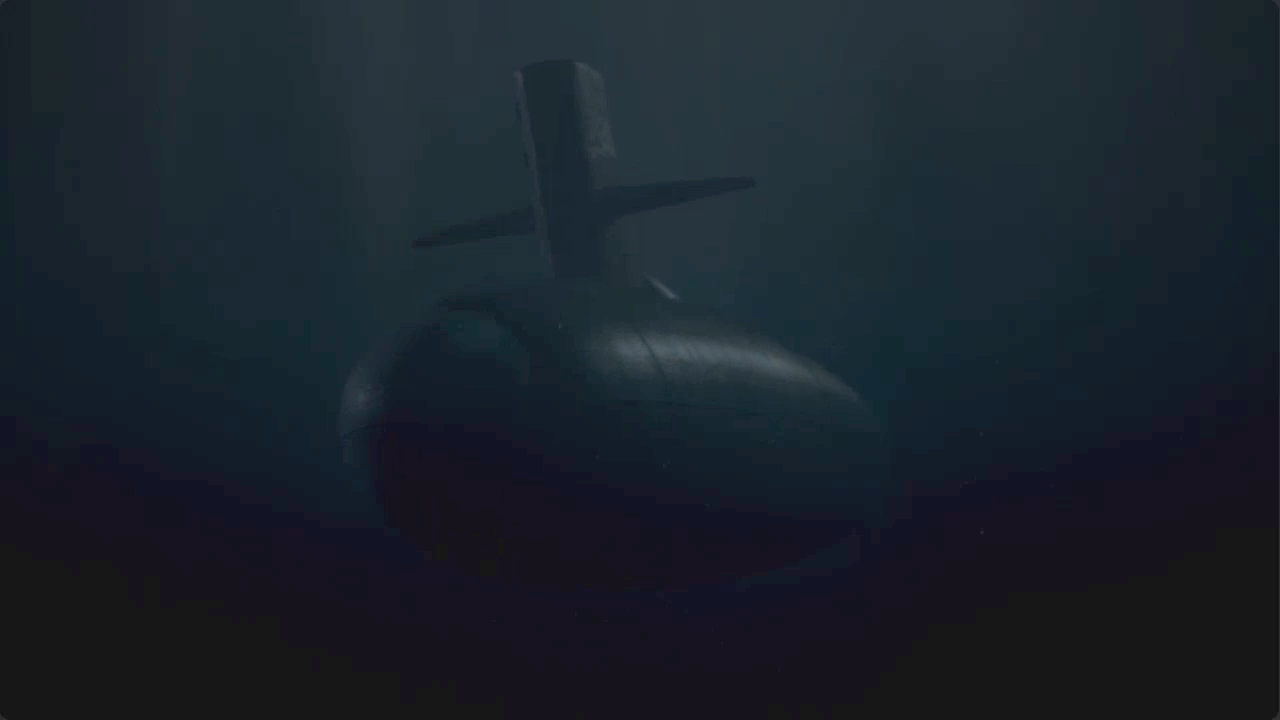
While discussing their mission and the inclusion of the Osnaz men with Mr. Pavlov (Johnathon Schaech), the political officer, Zubov suffers an epileptic seizure but recovers. Later, an American Skipjack-class submarine is detected nearby, and Bruni orders Zubov to take the boat to snorkel depth and start the diesel engines, despite the fact that this would immediately alert the U.S. sub. As the Skipjack turns to trail the boat and Zubov prepares to fire torpedoes, Bruni orders the “phantom” to be started. The sound signature of B-67 suddenly changes, and the U.S. sub breaks off contact. Zubov surmises that the new piece of equipment on the boat (the phantom) is a cloaking device and Bruni explains that despite the difference in size between the vessels and the submarine’s own noise, the phantom allows the boat to completely mask its acoustic signature and mimic that of any other vessel they have a signature for, in this case the Panamanian ship they previously shadowed.


At dinner, the officers debate the utility of the phantom device with Bruni and Pavlov ecstatic about their new capability. With phantoms on their submarines and the ability to mimic the acoustic signature of any vessel, the Soviets could negate the advantage of the superior American sonar and tip the balance of the Cold War in their favor. On the other hand, Zubov and Kozlov are wary that it could push the Soviets and Americans closer to a nuclear war.
As they reach their designated reporting point and rise to send a microburst transmission to seek confirmation about their orders, Bruni and his men seize control of the boat and lock Zubov, Kozlov, and others loyal to them, including the navigator Bavenod, away. While confined, Zubov reveals that earlier in his career, he collided his boat with Markov’s during an exercise and suffered a traumatic brain injury. The collision started a fire in the forward torpedo room, and Zubov ordered the door to the compartment sealed to prevent the fire from spreading. The compartment was flooded, and six men died. Given this error in judgment and his shameful record, Zubov concludes that he would never have been entrusted with something as secret as the phantom, and that the Osnaz men have gone rogue and intend to launch a nuclear strike on the American Pacific Fleet.

Rallying his loyal men, Zubov and Kozlov send crewmen to disable the nuclear warhead on the missile while others release a transponder to the surface to alert friendly forces of their predicament. A nearby November-class submarine, K-123, responds and gets into position to attack them, but Zubov convinces Bruni to briefly give command of the ship back to him. He successfully outmaneuvers and disables K-123 with a close torpedo shot.


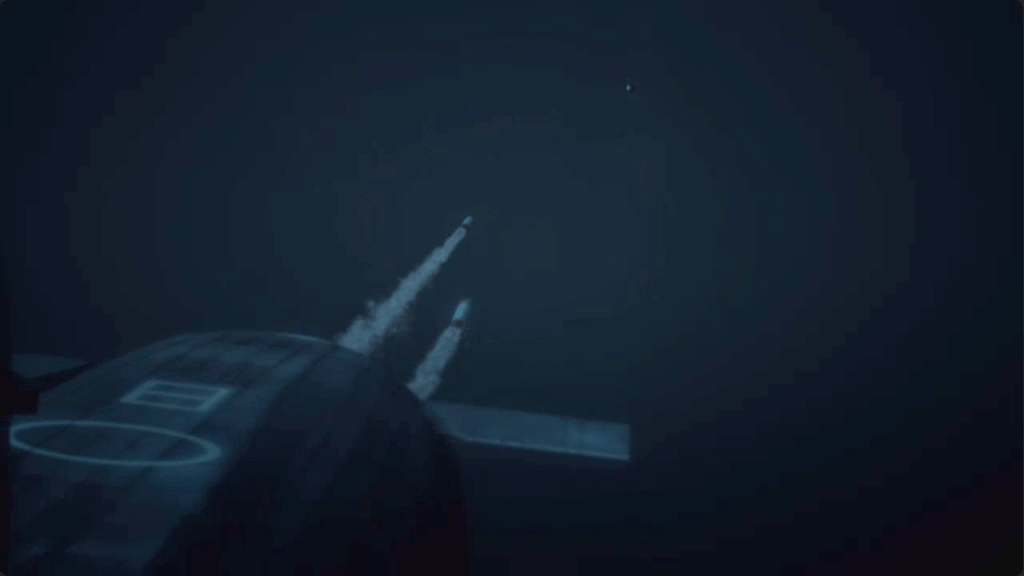
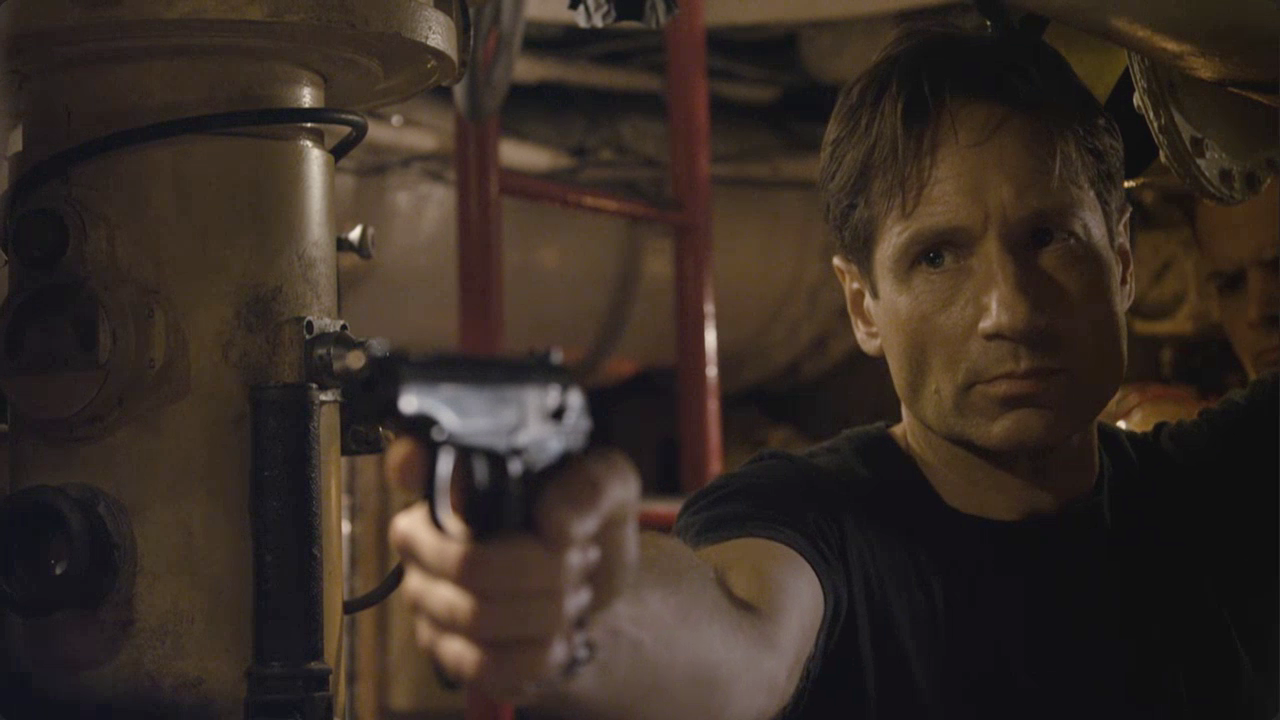
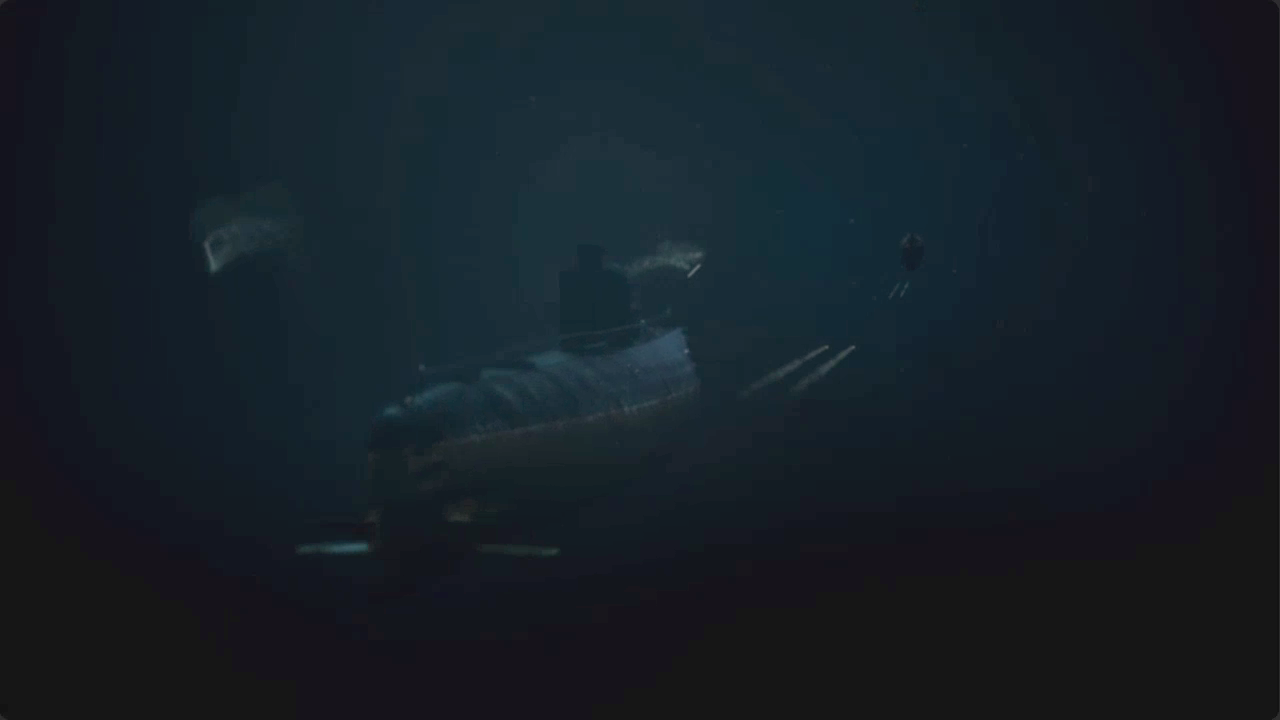


Bruni explains that the Americans possess a highly effective anti-ballistic missile defense system called Dark Star, which would allow them to launch a first strike and counter any retaliatory launch from the Soviets. Fearing that the Americans now have no incentive to remain defensive, he intends to use the phantom to masquerade the sub as one of the boats they sold to China and launch a nuclear strike to wipe out the American fleet at Midway. This, in turn, will force the Americans to retaliate against China, thereby eliminating both enemies of the USSR and allowing them to broker peace. Zubov, having actually visited America on an arts exchange with his wife, correctly deduces that the Americans possess a sense of empathy and individuality that gives them a reason to remain defensive; however, they would never tolerate the destruction of a single city without retaliation.
As Zubov’s loyal men attempt to retake the control room, Bavenod, having been planted by Bruni, betrays the men and forces them to surrender. Taking the three missile launch keys from Pavlov, Kozlov, and Zubov, Bruni and his men surface the boat and fire a nuclear ballistic missile, killing a crewman in the process who was working in the launch tube and disabling the warhead. In the meantime, the previously disabled K-123 manages to fire two more torpedoes at them, as they’re on the surface. Zubov overpowers Bruni, and a gunfight erupts, which kills Bruni’s men. Attempting to evade the incoming torpedoes, a close detonation of one of the torpedoes damages the boat, and it sinks to the bottom, coming to rest on the French Frigate Shoals.
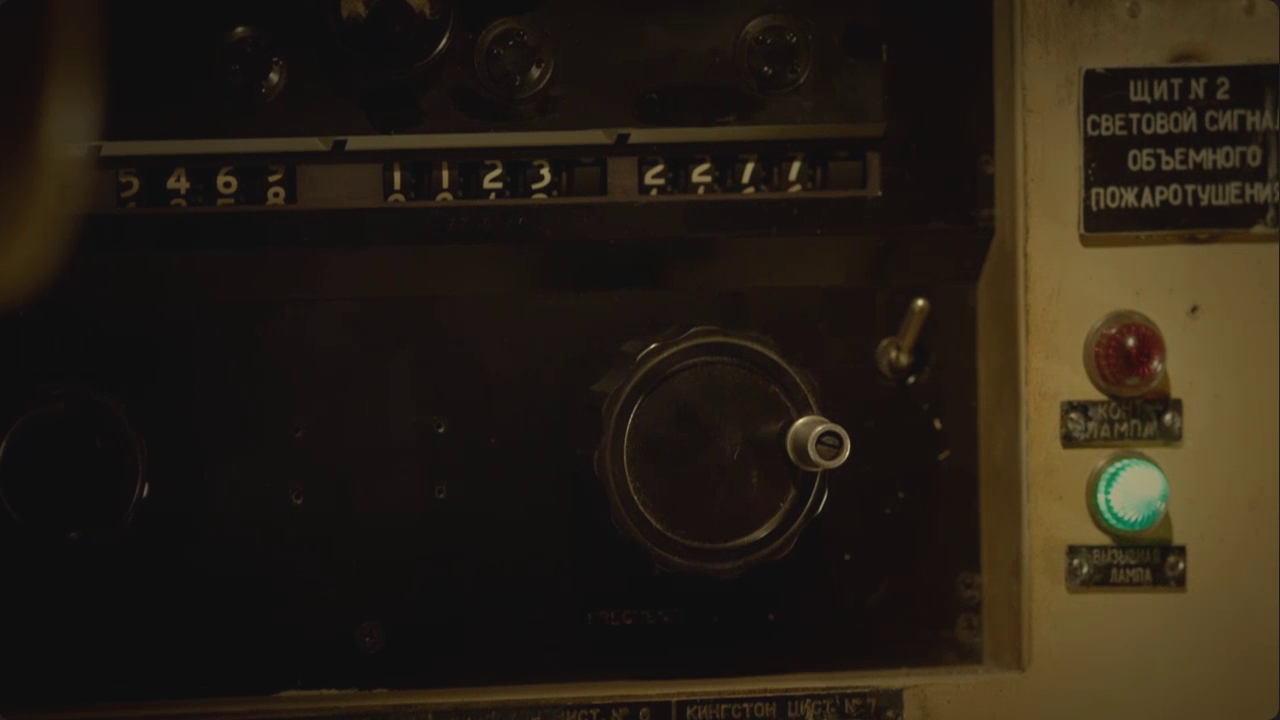


While stuck on the bottom, Bruni explains that he was the crewman that Zubov ordered to seal the door to the torpedo room during the fire, condemning the six men to die. With the crew running out of oxygen and saltwater having contaminated the batteries, creating chlorine gas, Zubov orders Kozlov to escape using an emergency egress suit and tell his rescuers about what happened. Later, hearing noises outside, the crew realizes that the submarine has been recovered and they’ve been saved. Now at the pier, and with the world still as they left it, the men conclude that they were successful at disabling the missile, which splashed harmlessly into the sea. Zubov sees Kozlov, now promoted to Captain, along with his wife and daughter at the pier, paying tribute to their heroism. Zubov and the rest of the crew, standing on deck, realize that they didn’t survive and are ghosts watching from the afterlife as their bodies are removed from the recovered sub.
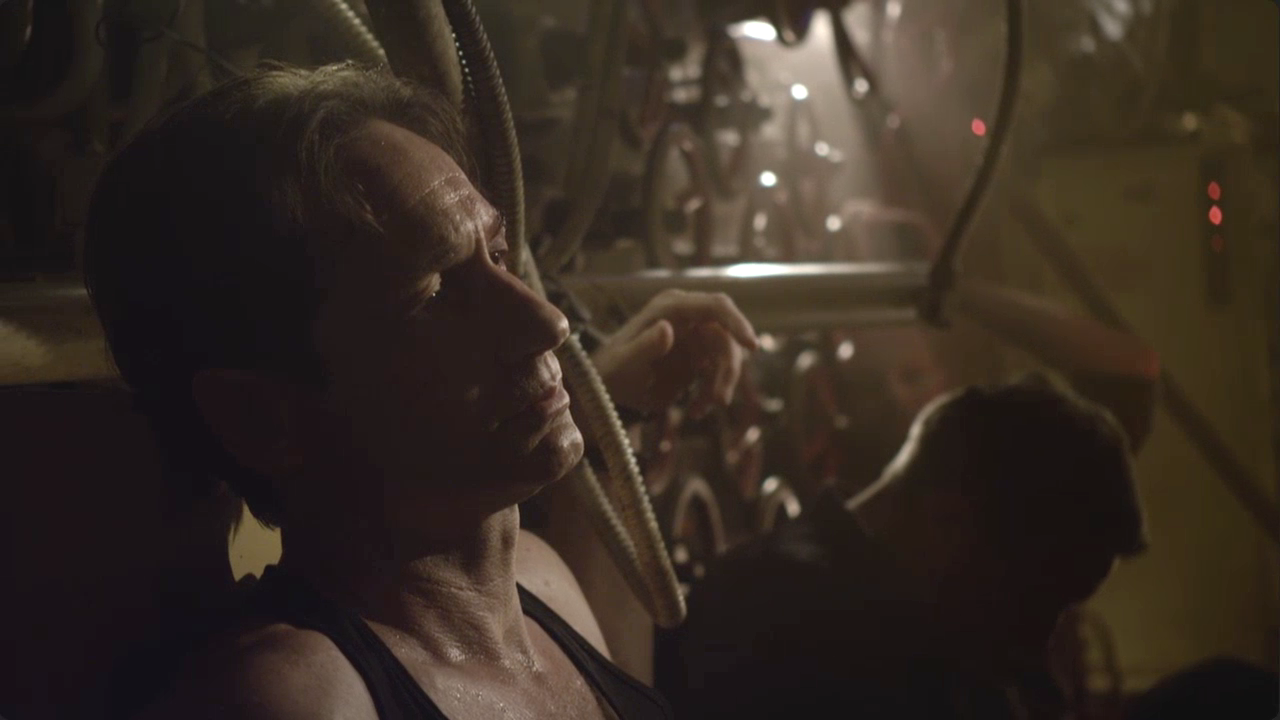
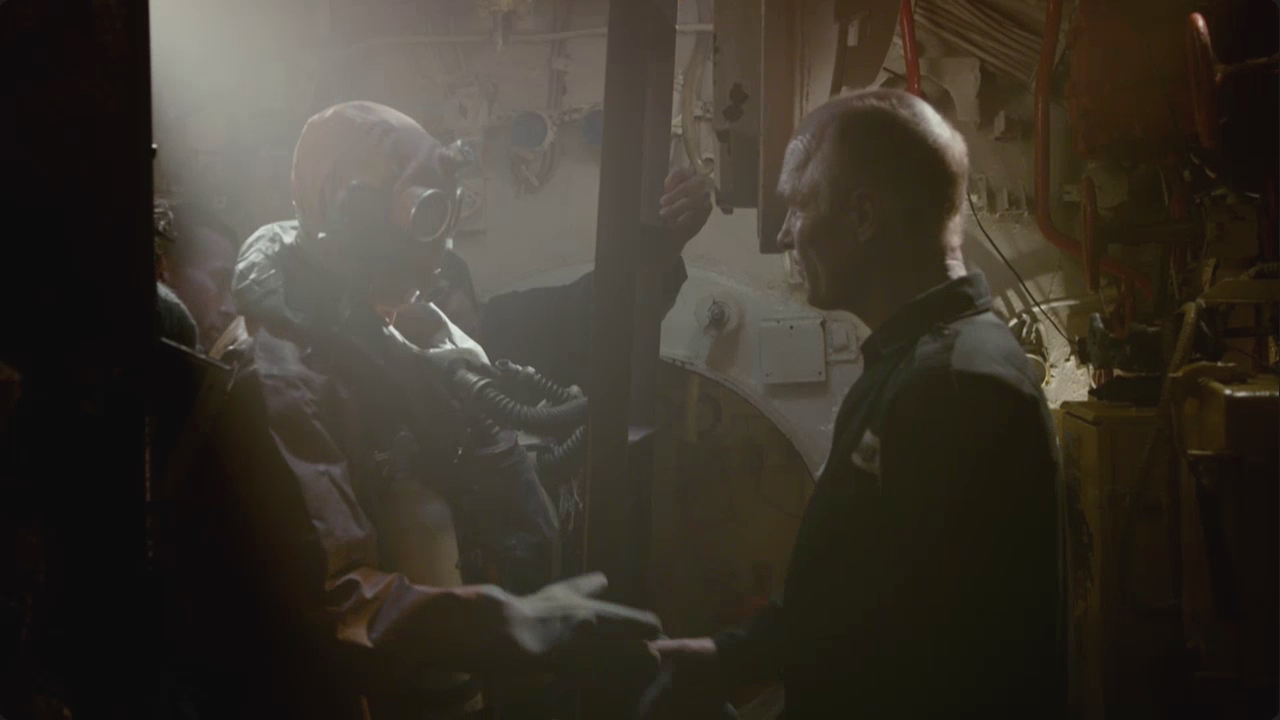


The film’s epilogue states that a Soviet ballistic missile submarine went missing in the South Pacific during the Cold War. It was later raised, and an unexploded missile was also recovered from the ocean floor, but her true mission remains classified by both the American and Russian governments.

Historical Accuracies
Filming Location
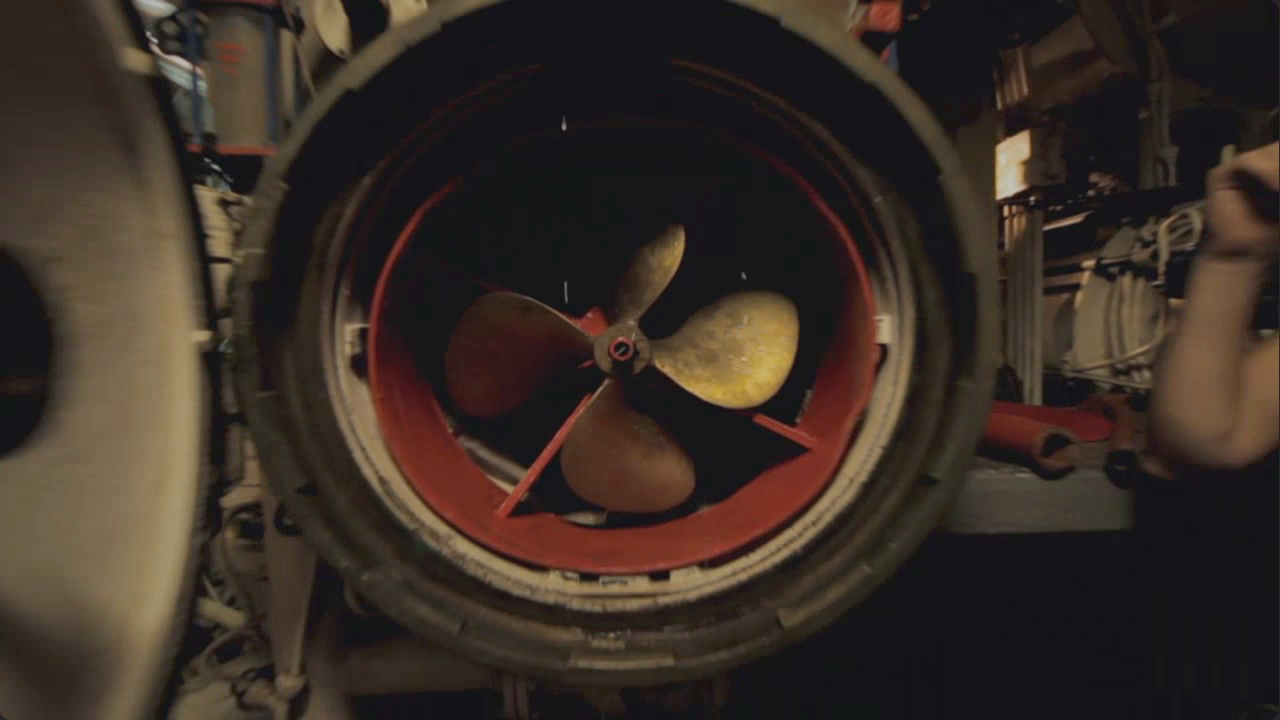
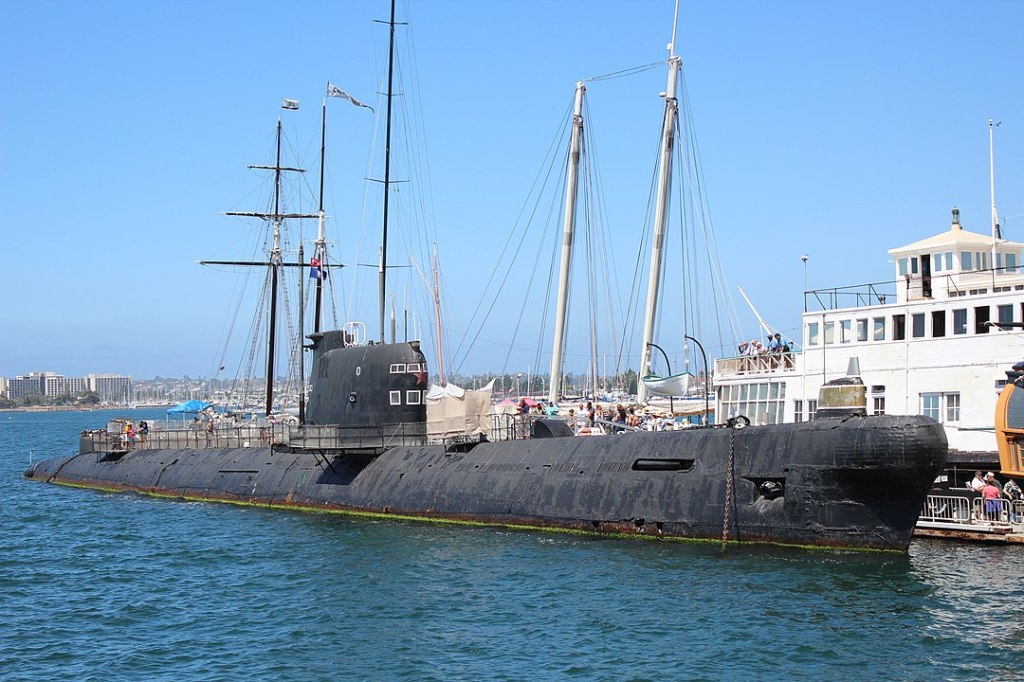
One of the best things I can say about this film is that it looks like an actual submarine. The interior shots of the film are cramped, and the walls are covered in equipment, like an actual submarine. That’s because IT IS an actual submarine! Reportedly, exterior and interior shots (at least to some extent) were filmed aboard the decommissioned Foxtrot-class Soviet submarine B-39, which was a museum ship at the Maritime Museum of San Diego.4 Other filming locations were at the former Naval Training Center in San Diego, as well as Long Beach, California.
The best way to describe a submarine is that it’s a giant metal tube filled with control consoles, equipment, pipes, wires, valves, and storage cabinets everywhere you look. All of this stuff creates a single narrow passageway in the middle, going from one end to the other, amongst which the crew lives and works. As a result, it’s a very claustrophobic environment.
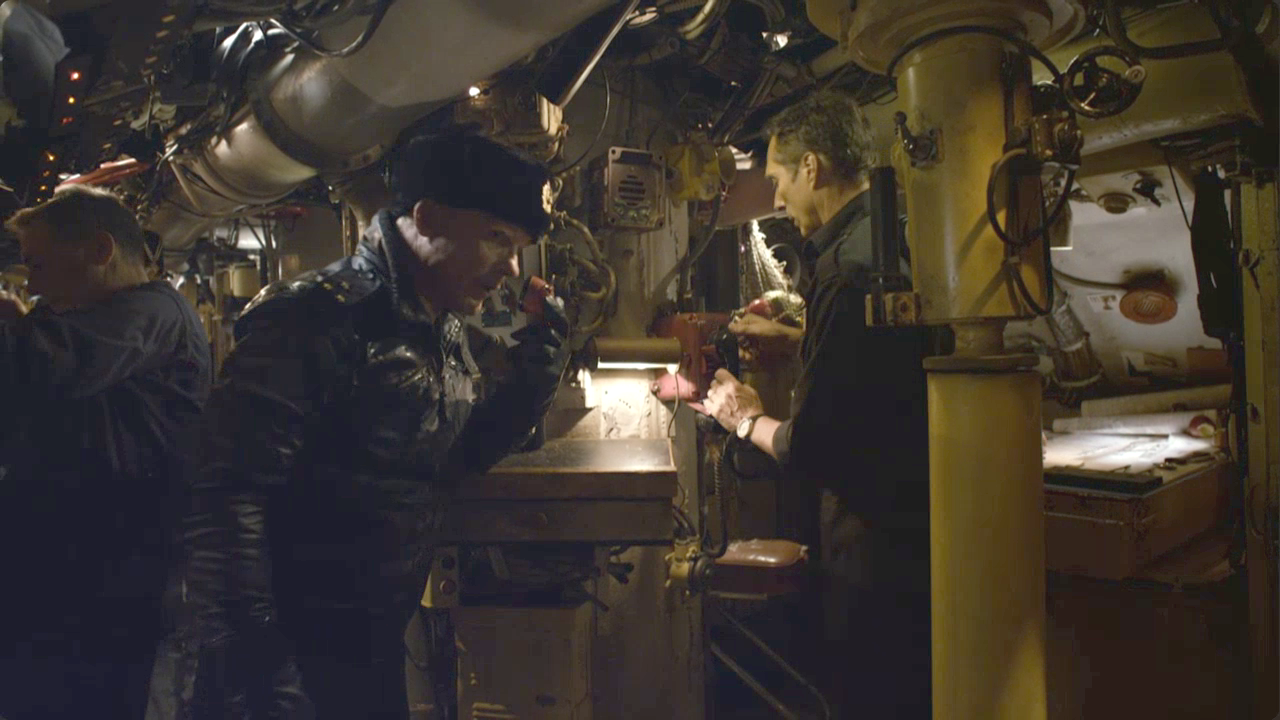
Anybody who works on a submarine (even a museum ship, like me) can fairly easily spot when a film is utilizing a set versus the real thing. Sets often have far more room in them than a real naval vessel. The reasons for this involve safety for the actors and space to put the cameras and film crew.
Exactly how much of this movie was filmed inside the real submarine is unknown, but given the fact that there are so many close-up shots of the actors’ faces (a common criticism of the film) and many areas are always depicted from the same camera angle tells me that those shots were filmed aboard the boat. It’s hard to emphasize just how confined a submarine is; there’s barely enough room for the people, let alone a film camera and crew, as well.5 That said, it all lends a sense of verisimilitude to the look of the film.
Diesel-Electric Submarine Operations
This film is one of the few to depict a post-WWII diesel-electric submarine and a Soviet ballistic missile diesel-electric sub at that. This is extremely rare since most films treat all post-WWII submarines as if they’re all nuclear-powered and have unlimited endurance underwater.6
To clarify, a diesel-electric submarine is essentially a giant hybrid vehicle. The diesel engines are run for propulsion and used to charge the batteries when the boat is on the surface or when snorkeling. However, once the submarine submerges below snorkel depth, it can only run on battery power. Once the batteries run low, then the sub must rise to at least snorkel depth, raise the snorkel, restart the diesel engines, and recharge the batteries (plus refresh the air). Before the advent of the snorkel, submarines had to surface to charge their batteries, so WWII subs were largely designed to run on the surface, and they would only submerge when they were attacking or being attacked.
The use of the batteries and snorkel is demonstrated a couple of times in the film. During the scene when they’re underneath the merchant ship, the remaining charge in the batteries becomes an issue.
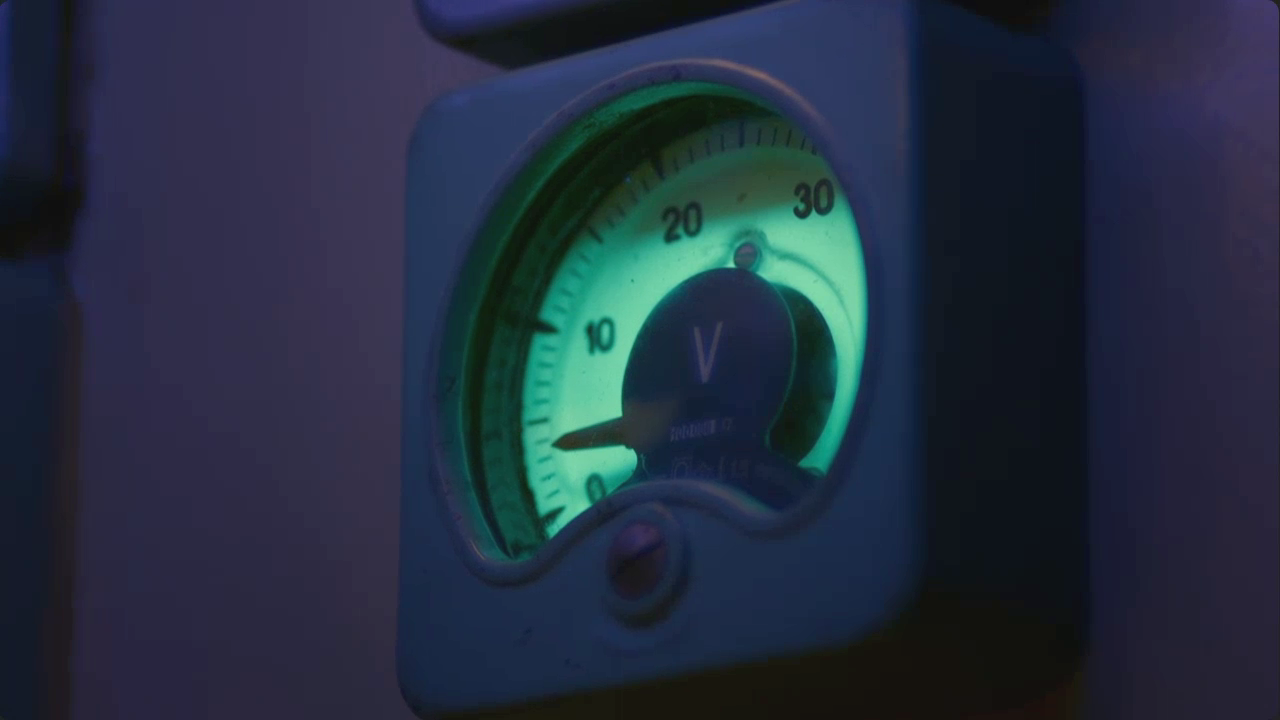
More specifically, this is the only film I know of that actually depicts a submarine snorkeling! When they engage the phantom device, the submarine rises to snorkel depth, raises the snorkel mast, and starts the diesel engines.

However, the film implies that they’re running the engines because the phantom is altering the sub’s sound signature, and they need to be near the surface to mimic the sound and position of a merchant ship. In reality, the phantom device probably consumes a lot of power, so the sub would need to run its diesel engines and generators to produce enough power for it.
Aside from the phantom device, the film is relatively accurate with regard to diesel-electric submarine operations. This tells me that the production most likely consulted with the museum staff in San Diego. While this may mean nothing to the layperson, to anyone familiar with the basic workings of submarines and propulsion, this attention to detail in the film elevates it above the normal Hollywood depictions of submarines.
Historical Inaccuracies/Oddities
Bilges and Crawlspaces
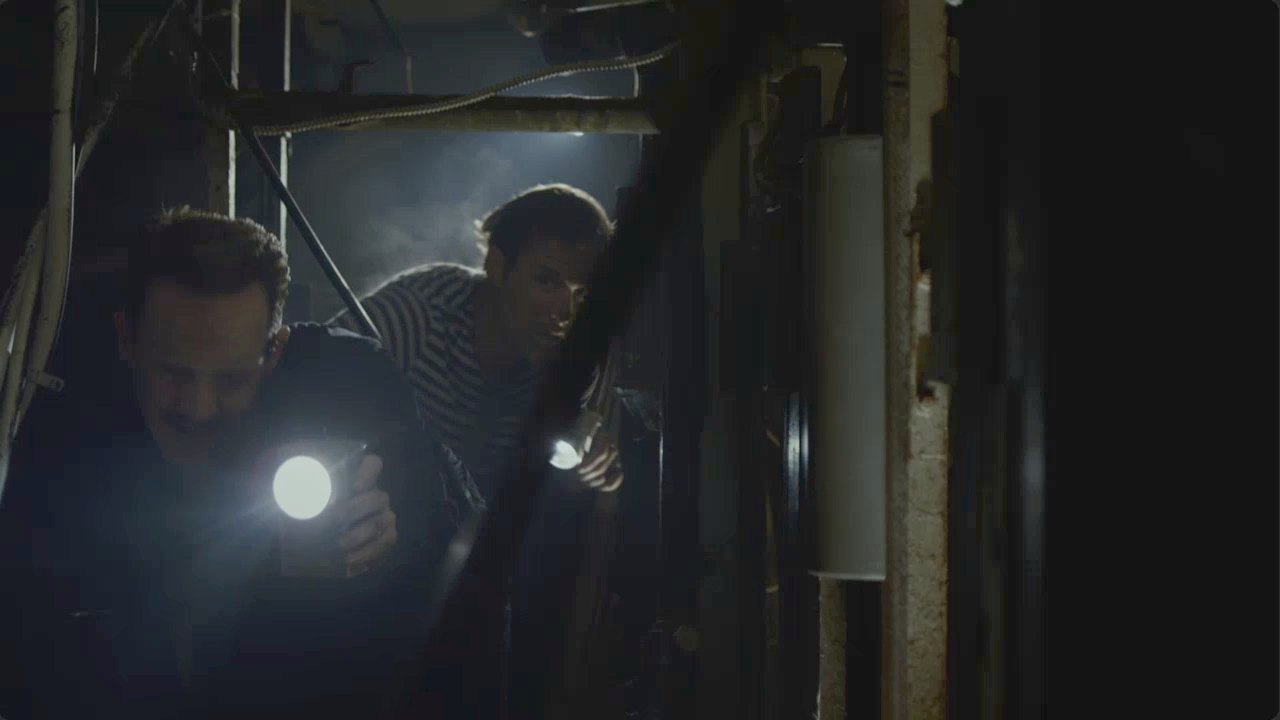
Due to space limitations, most films that take place on a submarine forego filming on actual submarines and instead opt for sets that allow more room for camera placement and for the actors to run around. Unfortunately, this film also commits the error of depicting the submarine as having crawlspaces beneath the deck, which the crew uses to sneak around in after the Osnaz commandos take over the boat.
NOPE. This is basically the equivalent of films showing buildings as having large air ducts for the heroes to crawl around in.
There’s no room on submarines for such crawlspaces. Although they do mention that they’re crawling through the bilges in the film. Crawling through a bilge is technically possible, but it’s not like a secret passageway that provides access to everything. Then again, perhaps Soviet subs had bilges large enough to crawl around in that extend the length of the boat, but I kind of doubt it.
The Wrong Submarines
The B-39 submarine used as the filming location is actually a Foxtrot-class attack submarine, not a Golf II-class ballistic missile submarine that was K-129 historically.
Oddly, the film mentions that Zubov is commanding B-67, which was neither a Foxtrot-class attack sub nor a Golf II-class ballistic missile boat. B-67 was actually an earlier Zulu-class attack sub, which does bear some resemblance to the Foxtrot-class in terms of overall shape and size.7 Furthermore, B-67 was later fitted for launching ballistic missiles and does have the distinction of being the world’s first submarine to launch a ballistic missile (so, in this respect, it is still appropriate). B-67 was modified at Severodvinsk shipyard with two R-11FM missile tubes being fitted to the aft section of the sail. The tubes themselves extended vertically through the fourth compartment and replaced one group of electric batteries and the warrant officer’s space. To fire, the submarine had to surface, and the missile was elevated vertically out of the canister. On 16 September 1955, in the White Sea, B-67 test-fired the first ballistic missile to be launched from a submarine. The missile flew 135 nautical miles to impact the Novaya Zemlya test range.8
The R-11FM was a navalized variant of the R-11 land-based ballistic missile, but was fueled by kerosene and nitric acid in lieu of alcohol and liquid oxygen because those were better for long-term storage.9
The submarine battle at the end of the film depicts them as being attacked by a November-class attack sub, stated to be K-123. However, K-123 was actually an Alfa-class nuclear-powered attack sub that wouldn’t enter service until 1977, nearly 10 years after this film takes place.
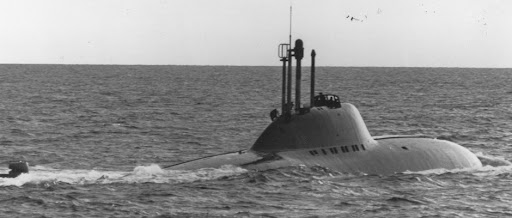
All in all, these technical discrepancies are fairly minor and don’t really detract from the overall plot or require any serious leaps of logic or suspension of disbelief.
Cold War Strategy
In the film, Mr. Bruni mentions an American Anti-Ballistic Missile (ABM) system called Dark Star, which would defeat any nuclear strike launched at the United States. Thus, his reasoning for conducting a rogue nuclear strike at the U.S. fleet off Midway while masquerading as a Chinese submarine would be to start a war between the U.S. and China, thereby defeating both enemies of the Soviet Union.
Bruni mentions that Dark Star is fully operational, so attacking the fleet while it’s in Pearl Harbor would be pointless since the Dark Star system could defeat the missile. They instead plan to hit the U.S. fleet at Midway, which is presumably where they’re massing, as is mentioned at the beginning of the film. I suppose their intention was to sink the ships in the deep water off Midway so the ships couldn’t be recovered, and it’s where they would be vulnerable to attack. What’s odd is that they seem to know the exact coordinates of the American fleet.
In reality, ships move, and they have good strategic mobility, so where they are one day can be very different the next day. The ocean is big, and even a one-megaton nuclear weapon with a significant blast radius would need to be fairly close to the target to have any appreciable effect. The U.S. Pacific Fleet off Midway would need to be standing still, or the Soviets would have to be tracking them for this nuclear weapon to have any reasonable chance of hitting the target.
Admittedly, I’m not very knowledgeable about nuclear warfare, but to my knowledge, there has never been an ABM program called Dark Star, but it is the title of a cheesy 1974 John Carpenter science fiction film. In the late 1960s, there was a proposed U.S. Army anti-ballistic missile system called Sentinel. However, the program was eventually cancelled in March 1969 due to opposition to the placement of Sentinel sites, which cities argued would make them a target for nuclear strikes. The Sentinel program was eventually superseded by the Safeguard program, which was designed to protect the U.S. Air Force’s ICBM sites.
Conversely, in Sewell’s book, their target is actually Pearl Harbor. Hitting Pearl Harbor with a nuclear weapon would have a similar effect regardless of water depth. This won’t be like the Imperial Japanese Navy’s Kido Butai (1st Air Fleet carriers) launching hundreds of planes and dropping lots of bombs and torpedoes on the battleships on 7 December 1941. Rather, the one-megaton nuclear blast from the missile would likely wipe out anything in Pearl Harbor.
The Sewell Conspiracy
I’ve already shot a torpedo into Kenneth Sewell’s book Red Star Rogue in my review (and then proceeded to sink the lifeboats and machine gun any survivors), but let’s address how the film relates to it.
The entire plot of this film is based on Sewell’s conspiracy theory that a group of KGB osnaz commandos seized control of the Soviet ballistic missile submarine K-129 in March 1968 and attempted a rogue nuclear strike on the U.S. Pacific Fleet in Hawaii. The submarine sank under mysterious circumstances while attempting to fire the missile. Thankfully, the film omits the rest of the theory that the CIA raised the whole submarine from the ocean floor.
The closing text of the film states that a Soviet submarine (not explicitly stated to be K-129, but clearly referencing it) sank in May 1968 in the South Pacific and that the submarine and a ballistic missile were raised from the ocean floor (referencing Project Azorian and the CIA’s attempt to recover the sub).
Pretty much all of that closing statement is false since K-129 sank in March, not May, and according to Sewell, it sank off the French Frigate Shoals, which are in the North Pacific, not the South Pacific. According to Sewell’s book Red Star Rogue, the entire sub, along with a ballistic missile, cryptographic equipment, and over 60 bodies were recovered. All of this has been debunked by other historical works (See Norman Polmar and Michael White’s book Project Azorian).
Thankfully, the film carefully states that the plot is “inspired by actual events.” That’s about as faithful to the historical events as this film comes. Sadly, in this day and age, nuance isn’t a thing, so it might as well say “Everything in this film is 100% accurate and actually happened…even the crazy things!”
The Phantom Device – Can a submarine change its sound signature?
The titular Phantom is some sort of cloaking device that, when activated, completely alters the acoustic signature of the submarine. Their initial shadowing of the tanker was meant to acquire enough data for the Phantom to recreate its sound signature.
What’s odd is that when they activate the Phantom, their acoustic signature immediately changes (it’s not gradual), and the American Skipjack sub that’s trailing them just breaks off and goes on its merry way. One wonders what the sonar technicians on that U.S. sub were thinking when the submarine they were following suddenly changed its sound into a much larger vessel. I’m no sonar technician, but I think it would seem rather jarring to hear that. “Hey, Captain! This snorkeling submarine we’re following is actually a larger merchant vessel. False alarm! No big deal!”
Following the first test of the Phantom, the men discussed the device, and the XO commented that their submarine’s engines were still making noise. He also says that the strength of a sound signature is directly proportional to the size of the vessel (noting the significantly larger size of the merchant ship compared to the submarine). This is handwaved by saying that the Phantom magnifies the sound signature, enabling them to mask themselves as whatever they like, provided that they have the relevant acoustic data on the vessel. (Although Bruni does later mention that it only masks a sound signature and does nothing with regard to radio transmissions.) It’s basically a piece of wonder gear that covers all the bases and completely counters any passive sonar system. Thus, with more Phantoms on other submarines, the Soviet Navy could stealthily sneak around and avoid any American anti-submarine measures.
This begs the question: Can a submarine actually change its sound signature?
Yes, it can…sort of. However, it’s not to the extent of the Phantom device in the film. That’s pure science fiction.
The idea of changing or masking an acoustic signature isn’t new; in fact, it’s been done. The PRAIRIE MASKER system installed on U.S. diesel-electric submarines and surface ships was designed to dampen the noise produced by a vessel’s screw and machinery. In fact, the submarine I work on, USS Blueback (SS-581), has (or had) this system installed.
PRAIRIE is an acronym for Propeller Air-Induced Emission. Compressed air is pumped through tiny holes on the edges of a propeller blade to reduce the noise of cavitation. Cavitation occurs when a moving propeller blade creates an area of low pressure behind it, which is less than the vapor pressure of water at that particular depth. Essentially, the lower pressure area is causing the water to boil at a lower temperature. This causes water vapor bubbles to form, which then collapse when they leave that low-pressure area and move into a high-pressure area. These collapsing bubbles create a loud noise, and they can also cause damage to the propeller over time. However, if the edges of the propeller are emitting air bubbles themselves, then the bubbles resulting from cavitation will have some air inside them, so the collapsing water vapor doesn’t completely close the bubble. This creates far less noise.


As further explained by a former submarine captain:
For a given propeller, cavitation is a function of its depth (pressure), speed (RPM), and water temperature. The blade moving closest to the surface is at the lowest sea pressure, so its cavitation, if present, will be greater. Counting the pulses of sound will allow a Sonar Technician to determine the blade rate. By determining the number of blades, he/she can calculate RPM. Deformities or nicks in one propeller blade may cause an earlier onset of cavitation than in the others. The implosion of the bubbles may also cause pitting or erosion of the blades at the points of cavitation, a major problem with some surface ships. Since nuclear submarines mostly operate fast only when deep, cavitation is usually not a major concern except when accelerating.10

The masker part of the system is a series of bands around the hull that also emit bubbles, but instead of reducing the noise of cavitation, they create a curtain of bubbles around the hull, which reflects the sound of machinery back into the hull. This operates on the principle that the speed of sound is different through different mediums. The curtain of bubbles is of a similar density to the water but has a different stiffness, so radiated sounds from the hull moving through water encounter the curtain of bubbles, are reflected back, and dissipate.
Thus, the Prairie-Masker system is mostly designed to reduce the noise of cavitation and the engines of a vessel. It doesn’t drastically alter the acoustic signature of a vessel or make it invisible to sonar.

According to the piping tab, Blueback‘s masker system is composed of three girth emitters around the hull at frames 22, 44, and 51. There are also emitters on the keel from frame 21 to 74, as well as an emitter on the front of the sail. These all use 60 psi air.
The Prairie-Masker system did have limitations. Firstly, it could only be used when the submarine was snorkeling since it needed to intake a lot of air for the air compressor to run this system. Secondly, it was reportedly a maintenance nightmare and didn’t really work as advertised. Thirdly, a sonar technician hearing the Prairie-Masker system will not likely be fooled by it. While it’s intended to sound like a rain squall, the issue is that the sound covers a very narrow area of only a few degrees, whereas an actual rain squall will cover something like 20 degrees. It’s also moving in a very specific direction and speed, and you can still count the blades and number of screws on a contact and be able to classify it as a certain type of vessel (merchant, destroyer, etc.). That said, there’s reportedly at least one account of an ASW exercise where the organizers asked the submarines to turn off their Prairie-Maskers so the surface sonar technicians could better hear them. So either these sonar techs were inexperienced, or there was some value to the Prairie-Masker system. The use of Prairie-Masker on U.S. diesel-electric submarines ended sometime in the 1970s. Former crewmember Rick Neault notes that when he reported aboard USS Bonefish (SS-582) in 1984, she no longer had that system.11 Today, Blueback still has some components of the Prairie-Masker system, such as the air compressor in the engine room.
Regarding the film, presumably, the Phantom device requires quite a bit of power to run, so it would probably drain the batteries quickly if they ran it while submerged, yet that’s what they do when they’re attacked by K-123 near the end of the film. (However, it doesn’t seem to have any effect since it’s never brought up again.) This may also indicate Mr. Bruni’s lack of knowledge of submarine combat tactics, despite having served on submarines previously. Since the Phantom isn’t masking or dampening noise, but rather creating a different noise, its utility is limited to merely changing the sound of the submarine, but not enhancing its stealthiness. Indeed, a submarine’s biggest strength is stealth, and making as little noise as possible and remaining undetected is far better than creating other acoustic signatures.
Positive & Negative Criticisms
On the positive side, I actually enjoyed this film. As I mentioned in my review of Red Star Rogue, I find Sewell’s (conspiracy) “theory” to be better as speculative fiction and as a thriller. In that regard, his theory works better in a film adaptation. Even the movie poster says, “inspired by true events.” That’s probably the best way to put it because the events depicted in the film are very loosely inspired by what one person speculates happened to the submarine K-129 in 1968. Apart from that, it’s entirely a fictional story.
The best thing about the film is the use of a submarine museum as a filming location. It gives a look to the film that isn’t really replicated with sets. The operations of the diesel-electric submarine are much more accurate than in other films. Additionally, the underwater submarine battle at the end is tense and doesn’t fall into the trap of treating submarine combat as the underwater version of an aerial dogfight, with the boats doing all sorts of crazy maneuvers. Rather, it’s actually depicted as asymmetric, with the nuclear-powered K-123 having greater speed, maneuverability, and endurance. In contrast, the B-67 would be quieter underwater since it would be operating on battery power alone. While not explicitly stated, this would be used to their advantage to obtain a favorable attack position, and they manage to get behind the K-123 for a shot at their stern to disable them.
Another positive is the overall characterization. Ed Harris, having portrayed military commanders in other roles, is fairly convincing as the submarine captain Dmitri Zubov. He’s calm, level-headed, and analytical. At times, his character gets irritated, but he has a clear reason for doing so, as people are questioning his judgment or putting the boat at risk. David Duchovny, for once not playing FBI Agent Fox Mulder, plays Mr. Bruni as a Communist extremist gone rogue. While some might argue Duchovny is miscast, I’d have to disagree. In a way, Mr. Bruni counteracts the more rational Zubov in that he represents the more paranoid nature of the Cold War; a man who is driven solely by fear of the other side. In a way, it’s almost like Duchovny is playing Fox Mulder as a bad guy. Imagine Mulder as a delusional man who has gone completely insane and let his conspiracy theories morph into paranoid extremism. In supporting roles, William Fichtner is also good as the boat’s XO, Alex Kozlov, and Johnathon Schaech does a decent job as Lieutenant Pavlov, the boat’s weak-willed political officer.
As for my negative criticisms, given that this film takes place in 1968, at the height of the Cold War, and the fact that the Cuban Missile Crisis was only six years earlier, there’s not a lot of indication or discussion of the wider aspects of the Cold War tensions between the U.S. and the Soviet Union. A handful of lines are spoken alluding to the fact that a missile launch would cause nuclear annihilation between the two superpowers, but the film doesn’t do a very good job of portraying the Cold War tensions of the time. Then again, this film isn’t a philosophical examination of brinkmanship or nuclear warfare. Most of the Cold War tensions are characterized by Harris and Duchovny’s characters.
Regarding the characters, the only person who seems to even attempt a Russian accent is Duchovny, but he’s very inconsistent with it. (Although Duchovny does have some Ukrainian heritage in his family.) Nobody else even bothers with the accent. At least nobody is speaking with a Scottish accent and playing a Lithuanian Soviet sub skipper. All in all, it’s pretty minor and doesn’t detract from the plot.
Another negative criticism of the film is that there’s a strange supernatural element to it. Captain Zubov suffers from auditory and visual hallucinations at several points in the film, implied to stem from the traumatic brain injury he sustained early in his career. He occasionally hears banging on the outside of the hull, has flashbacks to the fire on the submarine, and even sees a barking dog on the boat at one point. It all wraps up with the ghosts of the crew standing on deck at the end of the film. This isn’t a supernatural horror film, so the inclusion of these elements seems a bit out of place.
Phantom tanked hard at the box office, making just over $1 million worldwide on a budget of about $18 million. In many international markets, it went straight to video. In some ways, the film does have a low-budget look to it. It’s not quite made-for-TV, but the special effects are sparing, and the CGI looks dated. The dark look of the exterior shots seems to be an attempt to cover this up. You can tell that the production was working within certain limitations.
Final Verdict
As a depiction of historical events, this film is a conspiracy theorist’s wet dream, but a total negation of historical facts. As a fictional Cold War submarine thriller, this film is much more successful, and the plot works better when viewed as fiction. The veteran actors like Harris, Duchovny, and Fichtner portray their characters convincingly and strut their stuff without being overly dramatic. The use of an actual (former) Soviet submarine museum ship as a filming location lends a great deal of veracity to the film’s atmosphere, and the inclusion of relatively accurate diesel-electric submarine tactics (from what I can tell) shows good attention to detail on the part of the production crew. Clearly, they were listening to the museum staff. The film falters when it comes to depicting the 1960s Cold War tensions; nobody seems to bother with maintaining an accent, and there’s this underdeveloped supernatural element to the film that seems a bit tacked on.
Still, this film was enjoyable to watch. While it lacks the snazzy production values and epicness of well-known submarine movies like Das Boot or The Hunt for Red October, it’s good to see a movie that is fairly subdued and more analytical in its depiction of submarines than most other low-budget submarine films. It won’t win any awards for best acting or deep thematic elements, but this is definitely a film that appeals more to naval/submarine nerds like me.
Very good/worth your time.
Notes
- This particular quote is not actually in the book Red Star Rogue (at least not the edition I read). It may be paraphrasing him or from his later book Scorpion Down. Additionally, it’s not accurate since the real K-129 sank in March, not May, of 1968. ↩︎
- In reality, this is the Foxtrot-class B-39 at the San Diego Maritime Museum. ↩︎
- To the credit of the production team, this appears to actually be a model of a Skipjack-class boat. In addition to the teardrop hull, the characteristic hump behind the sail is visible which houses ducting for the snorkel mast. ↩︎
- Sadly, by 2021, the hull of B-39 had corroded so much that it was closed and towed to Mexico to await scrapping. A similar fate probably awaits the other Foxtrot-class submarine, B-427, which was a museum ship in Long Beach, CA. That submarine was closed in 2016. As of 2021, there are no more Soviet submarine museum ships in the U.S. Upkeep of these vessels in saltwater is very difficult, given the time and money constraints of museums, and as a result, they fall into disrepair. I can speak from experience since I work on a submarine museum ship, which is thankfully in freshwater, but the upkeep requirements are constant, and it often feels like fighting a slowly losing battle. ↩︎
- That said, it can be done and has been done. This film is proof of it. USS Blueback has also had several productions filmed on it, such as the 1990 film The Hunt for Red October, TV shows, and commercials. ↩︎
- Only the United States, Great Britain, and France have all nuclear-powered submarine fleets. Russia, China, and India have a combination of nuclear and diesel-electric submarine fleets. All other countries use diesel-electric and/or air-independent propulsion for their subs. ↩︎
- Norman Polmar and Kenneth J. Moore, Cold War Submarines: The Design and Construction of U.S. and Soviet Submarines, 1. ed (Dulles, Va.: Potomac Books, 2005), 107 – 108. ↩︎
- Norman Polmar and Michael White, Project Azorian: The CIA and the Raising of the K-129 (Annapolis, Md: Naval Institute Press, 2010), 19 – 20. ↩︎
- Polmar and White, 19. ↩︎
- Rob Downie, “BLUEBACK SCUTTLEBUTT Jun. 2022” 3, no. 6 (June 2022). ↩︎
- Rob Downie, “BLUEBACK SCUTTLEBUTT Jul. 2022” 3, no. 7 (July 2022). ↩︎
Bibliography
Downie, Rob. “BLUEBACK SCUTTLEBUTT Jun. 2022” 3, no. 6 (June 2022).
Downie, Rob. “BLUEBACK SCUTTLEBUTT Jul. 2022” 3, no. 7 (July 2022).
Polmar, Norman, and Kenneth J. Moore. Cold War Submarines: The Design and Construction of U.S. and Soviet Submarines. 1. ed. Dulles, Va.: Potomac Books, 2005.
Polmar, Norman, and Michael White. Project Azorian: The CIA and the Raising of the K-129. Annapolis, Md: Naval Institute Press, 2010.
 Fair Winds & Following Seas