In early March 2026, a small but interesting footnote in submarine history occurred.
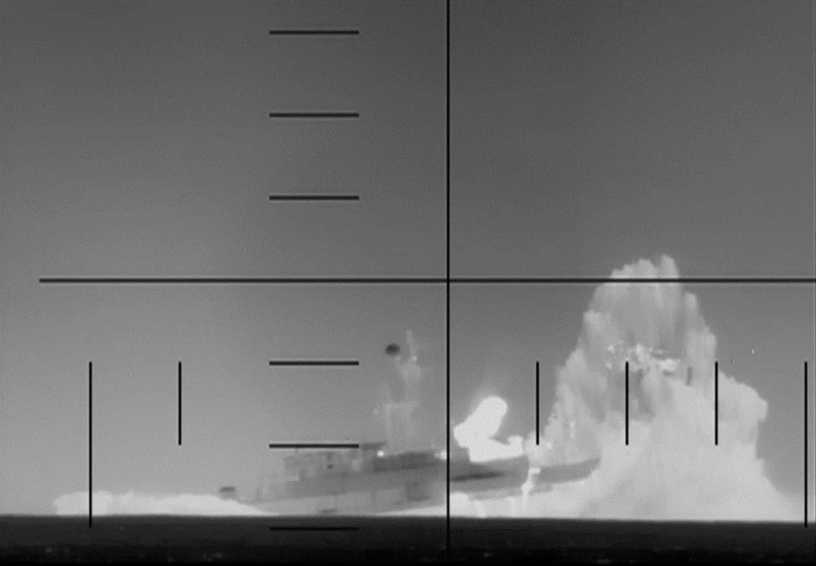
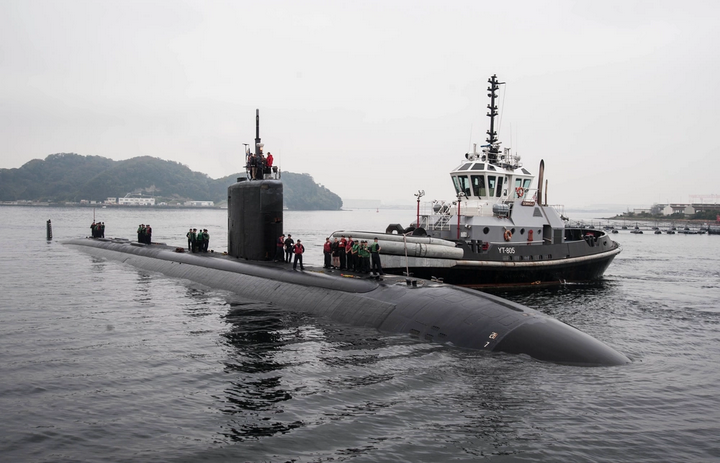
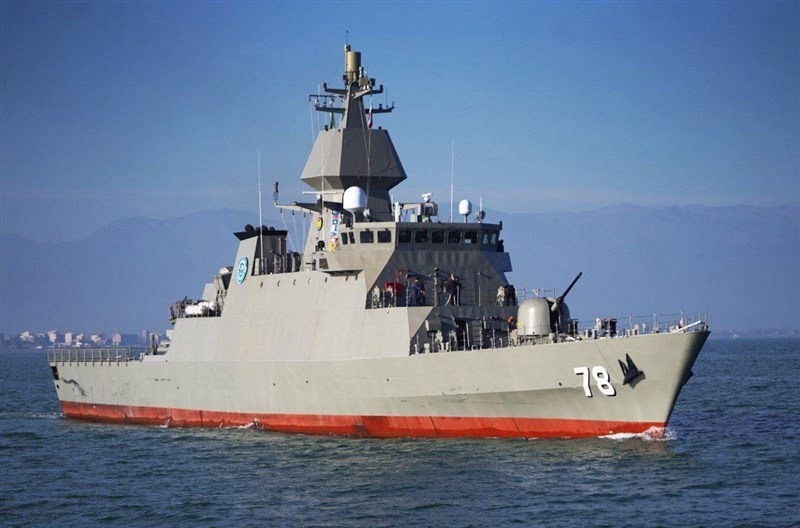
On 4 March 2026, periscope footage from the Improved Los Angeles-class fast attack submarine USS Charlotte (SSN-766) was released showing her torpedoing the Iranian Moudge-class frigate IRIS Dena the previous day. The Iranian frigate was returning from a naval review in India and was in international waters south of Sri Lanka when a Mk. 48 torpedo sank it. Footage clearly shows the torpedo detonating under the stern of the vessel, lifting it out of the water, and breaking the stern off. The vessel then sank stern first. Sri Lankan authorities, responding to the sinking, reported that, of the estimated 180 on board, 32 survivors were rescued and an additional 87 bodies were accounted for.1
Videos
These videos have (mostly) the same commentary with slight differences depending on whether they went on my FWFS gaming channel or my Down Periscope, Up Periscope podcast channel.
Analysis
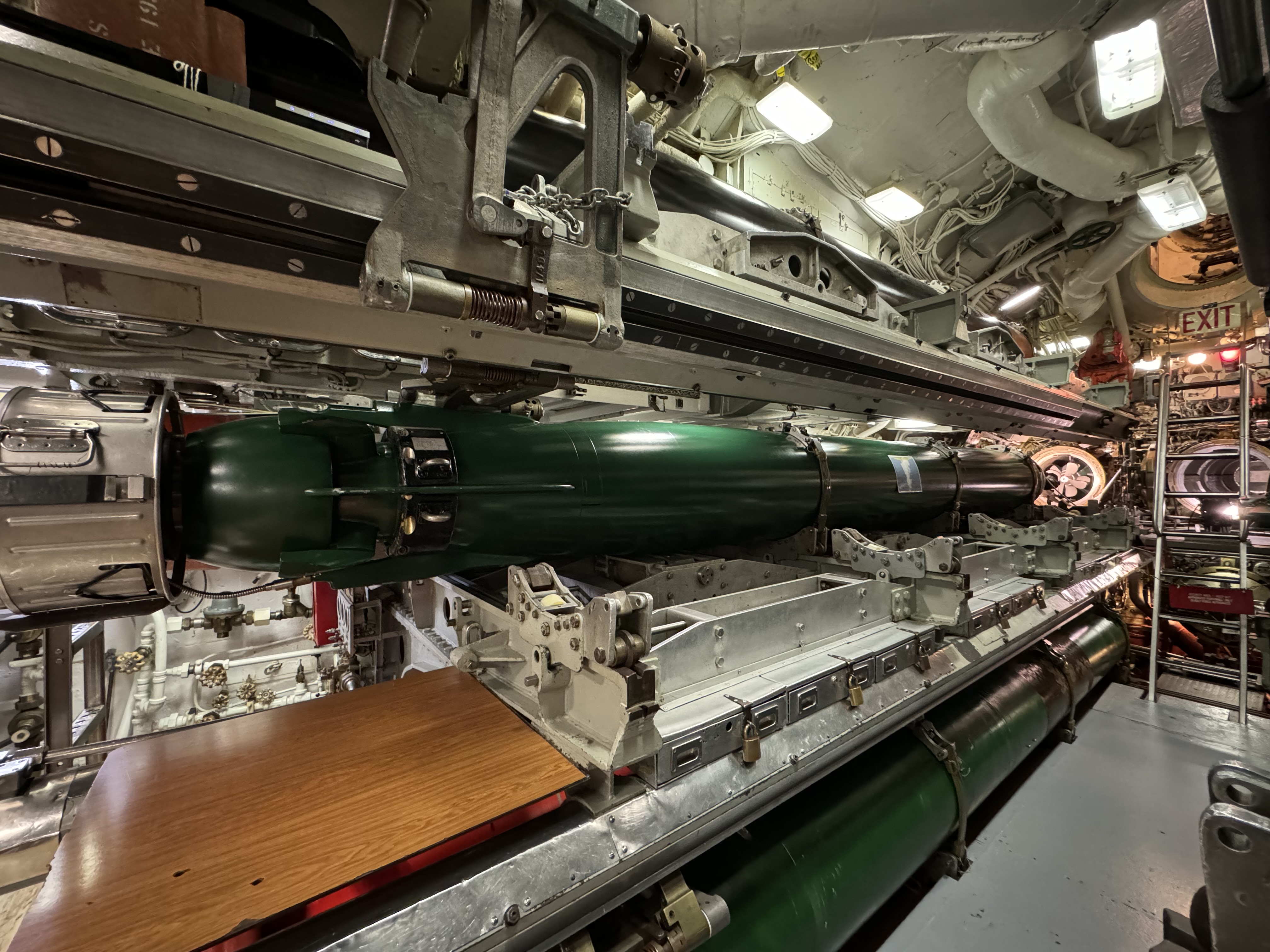
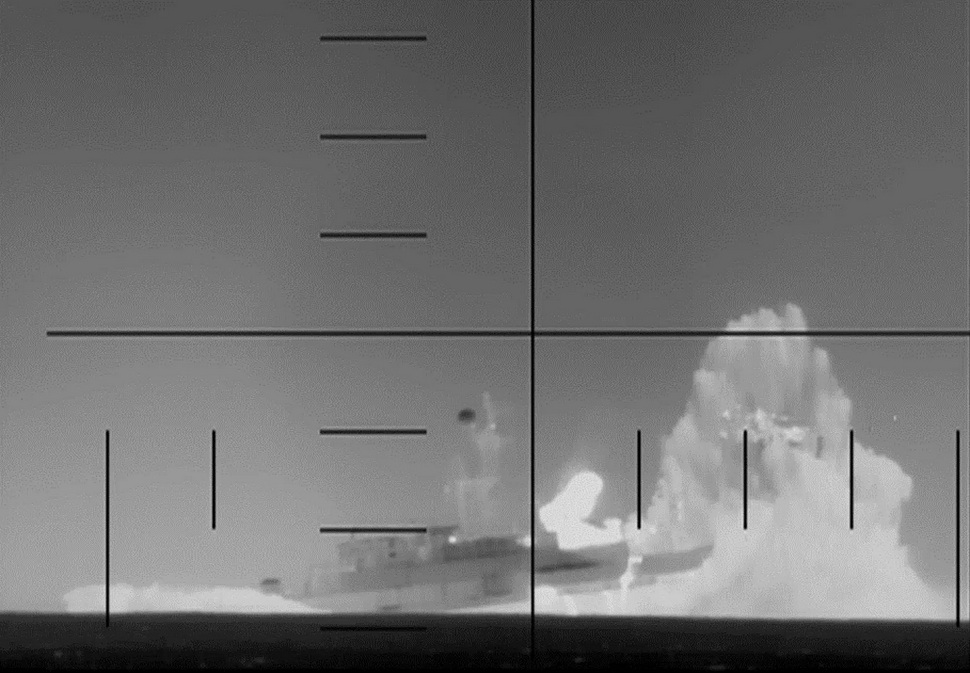
What’s interesting is that, according to CBS News, statements from U.S. officials say that Charlotte actually fired two torpedoes, but the first one missed.3 This does raise questions about the submarine’s position and circumstances at the time of firing, since they appear to be broadside of the target and were close enough to get a good optical view through the periscope. Did they have time to get into a favorable position and perform Target Motion Analysis (TMA), or did they simply snapshot off a couple of torpedoes? Given what we know about the Mk. 48 torpedoes, why did the first torpedo miss? Were they or weren’t they using wire-guidance? If they were using a wire, did it break or was it cut? Additionally, what mod of Mk. 48 was it? We could speculate all day, but I’ll stop there.
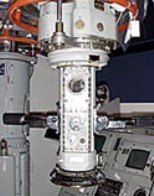
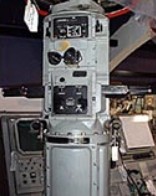
After discussing this event with my colleagues on USS Blueback, we agreed that, since the torpedo detonated under the stern of the vessel, it was likely in passive acoustic homing mode. So the torpedo was homing in on the sound of the screws. The periscope footage also shows the submarine relatively close to the target, though it’s clearly magnified. I mistakenly thought this footage was originally from a modern photonics mast (like on a Virginia-class boat), given that it looks like an infrared image, but since this was a Los Angeles-class submarine, the periscope footage was likely taken with her Type 18 search periscope. This particular scope, while optical, has photo/video recording, low-light enhancement, and IR imaging capabilities. The periscope’s image can be displayed on a screen in the control room. (The other periscope, a Type 2 attack periscope, is also optical, but doesn’t have low-light or any image enhancement capabilities.)
This event is also significant because, to my knowledge, it’s the first time Mk. 48 torpedoes have been used in combat (as opposed to in a SINKEX), and it’s also the first time in over 80 years that a U.S. Navy submarine has fired a torpedo in anger. The last time was on 14 August 1945, when USS Torsk sank several ships in the Sea of Japan just before the end of World War II.
Additional Analysis/Evaluation
I had a further discussion with a former submariner who served on a Los Angeles-class boat, and he seriously doubts that USS Charlotte fired two torpedoes, despite what news reports say. His reasoning is as follows:
- The Mk. 48 is very tenacious.
- If the first torpedo missed, it would’ve circled around, reacquired the target, and re-attacked. It’s capable of doing this multiple times if it has to before it finally hits.
- He said that Mk. 48s are frequently fired at friendly subs during exercises (without live warheads), and recalls that you can hear the torpedo coming at you when it gets close enough, and it makes a high-pitched whine when it passes directly beneath the target (your sub). It then circles around, and you hear it pass underneath you again. (Since it has no live warhead, it doesn’t explode, so you aren’t killed multiple times.) It does this several times until it runs out of fuel, and then, without the fuel, it becomes positively buoyant and floats to the surface to be retrieved.
- The first torpedo probably didn’t malfunction.
- Mk. 48s are test-fired 10 times without a live warhead before they even get their first live warhead in service. They cost a lot of money, so they undergo a lot of testing to make sure they work properly.
- There would’ve been two explosions if the first one missed.
- There’s an interlock safety feature so that if a Mk. 48 torpedo with a live warhead runs out of fuel, it will trigger the warhead and detonate the torpedo. This is to ensure that an enemy can’t retrieve a fully intact live weapon and learn from it.
- It would be a waste of 2 torpedoes.
- The Mouge-class ships displace roughly 1,500 tons. They’re basically corvette-sized vessels, and frigates at best. A single Mk. 48 can easily sink a larger vessel, so two torpedoes are complete overkill for a ship this small.
- The detonation underneath the stern of Dena was likely intentional.
- Whether it was being wire-guided or acoustically homing in is another question, but the engines and screws make the most noise, so that’s what a torpedo will home in on. A torpedo explosion beneath the stern would also destroy the flight deck and any helos the ship may have been carrying. Even if it didn’t outright sink the ship, it’ll at least disable it. (Obviously not in this case with such a small target.)
- He believes that Charlotte‘s captain was being “humanitarian” by having the Mk. 48 intentionally detonate beneath the stern. Since there would be fewer crew in the stern of the ship, a detonation in that area would cause the fewest casualties compared to exploding beneath the keel amidships, causing the most damage, and rapidly sinking the ship (as is seen in several SINKEXs). The captain probably decided that his orders only specified sinking the ship, but it didn’t mean he had to outright kill the entire crew. (Believe it or not, not everyone in the military is some bloodthirsty psychopath who wants nothing but to kill the enemy.)
Lastly, the IRIS Dena was a legitimate target. Why? This was a warship; we didn’t torpedo Lusitania or anything. It doesn’t matter if it wasn’t in the combat zone. It could’ve been on the Moon; location makes no difference in this case. If a ship bears the flag of a belligerent nation, it is fair game, and warships are considered sovereign territory of the nation that owns and operates them. Claims that it was unarmed are completely absurd. It was heading back to the region from a naval review in India, where it participated in live-fire exercises. Plus, warships don’t put to sea without weapons and ammo. Other criticisms say that Charlotte never rendered assistance to the survivors. As has been upheld historically, if surfacing to pick up survivors puts the submarine at undue risk (there were other Iranian warships in the area), then it doesn’t need to. The swift arrival of the Sri Lankan rescue effort also mitigated the need.4 While submarines can be used (and have been used) to rescue friendly forces, there’s literally no room on a submarine to house enemy POWs, and you’d never allow them near the classified equipment on a submarine.
Notes
- Uditha Jayasinghe et al., “U.S. Sub Sinks Iranian Warship off Sri Lanka, Killing 87 and Expanding War Zone,” Asia Pacific, Reuters, March 4, 2026, https://www.reuters.com/world/asia-pacific/sri-lanka-rescues-30-people-board-distressed-iranian-ship-foreign-minister-says-2026-03-04/. ↩︎
- U.S. Navy photo by Petty Officer 2nd Class Brian Reynolds. ↩︎
- James LaPorta and Eleanor Watson, “Torpedo That Struck Iranian Warship Was Fired by USS Charlotte, U.S. Officials Say,” CBS News, March 5, 2026, https://www.cbsnews.com/live-updates/us-iran-war-spreads-azerbaijan-israel-strikes-tehran-lebanon/. ↩︎
- Brent Sadler, “Submarine Warfare 101: Why the sinking of the Iranian frigate Dena by the U.S. Navy was a textbook engagement,” 19FortyFive, March 13, 2026, https://www.19fortyfive.com/2026/03/submarine-warfare-101-why-the-sinking-of-the-iranian-frigate-dena-by-the-u-s-navy-was-a-textbook-engagement/. ↩︎
Bibliography
Jayasinghe, Uditha, Idrees Ali, Phil Stewart, Idrees Ali, and Phil Stewart. “U.S. Sub Sinks Iranian Warship off Sri Lanka, Killing 87 and Expanding War Zone.” Asia Pacific. Reuters, March 4, 2026. https://www.reuters.com/world/asia-pacific/sri-lanka-rescues-30-people-board-distressed-iranian-ship-foreign-minister-says-2026-03-04/.
LaPorta, James, and Eleanor Watson. “Torpedo That Struck Iranian Warship Was Fired by USS Charlotte, U.S. Officials Say.” CBS News, March 5, 2026. https://www.cbsnews.com/live-updates/us-iran-war-spreads-azerbaijan-israel-strikes-tehran-lebanon/.
Sadler, Brent. “Submarine Warfare 101: Why the sinking of the Iranian frigate Dena by the U.S. Navy was a textbook engagement.” 19FortyFive, March 13, 2026. https://www.19fortyfive.com/2026/03/submarine-warfare-101-why-the-sinking-of-the-iranian-frigate-dena-by-the-u-s-navy-was-a-textbook-engagement/.
 Fair Winds & Following Seas