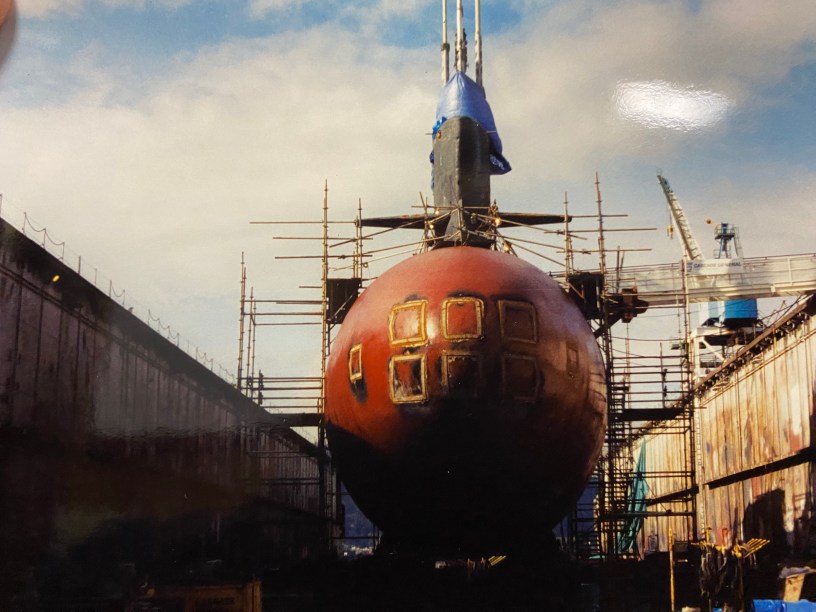
The Pacific Board of Inspection and Survey conducted a survey of the submarine on 17 August 1990 in San Diego, CA. They published their report on 23 August 1990, in which they found:
- The USS BLUEBACK (SS-581) was “unfit for further service” due to the excessive cost required to upgrade the ship for current and future combat operations.
- Material deficiencies existed that significantly degraded the ship’s ability to carry out assigned primary missions.
It’s important to note that warships are very complex machines. They’re a compilation of systems including propulsion, weapons, sensors, etc. All of these systems need to work together to make the vessel combat-capable. Even before ships are formally commissioned and accepted into service, they go through a lengthy period of sea trials (AKA a shakedown cruise) to determine any problems with the systems aboard, along with the vessel’s overall seaworthiness and performance. Sea trials also occur after major periods of yard work to ensure that any new or modified systems function well. Even when ships are in service, equipment and systems are always breaking down, and there aren’t enough hours in the day to keep everything 100% operational all the time.
The following material deficiencies on USS Blueback were noted:
- Required Operational Capability ASU 4 (Detect, identify, localize, and track surface ship targets):
- ASU 4.1 (Detect, localize, and track surface contacts with radar): Mission degraded because ST radar capability was deleted to support an experimental radio system.
- ASU 4.4 (Detect and track surface contacts visually): Mission degraded because No. 2 periscope couldn’t be rotated when fully raised.
- Required Operational Capability MOB 1 (Steam to design capability): Mission degraded because 2 of 3 main generators and one of two main motors were grounded. 2 of 3 main engines were inoperative because they had been placed in lay-up condition.
- Also, the main motor lube oil systems and the main shafting were placed in lay-up status and would need one to two weeks to restore to service. Diesel exhaust valves VH-7, VH-10, and VH-11 had worn bushings.
- Miscellaneous: The flood ports for Nos. 3 and 4 fuel ballast tanks leaked past their seats. No. 2 seawater service pump’s suction and discharge valves also had seat leaks.
- Required Operational Capability MOB 12 (Maintain the health and well-being of the crew):
- MOB 12.4 (Maintain closed atmosphere): Mission degraded because the oxygen banks were placed in lay-up status and charged with nitrogen. Additionally, the ship did not have any current atmosphere control equipment installed (e.g., oxygen generators, COH2 burner, CO2 scrubbers).
- MOB 12.2 (Ensure the operation of the potable water system in a manner consistent with accepted sanitary procedures and standards): Mission degraded because the No. 1 evaporator was placed in lay-up status. No. 2 evaporator was inoperative because of a pinhole leak in the preheater.
- Auxiliaries Deficiencies
- Control Surfaces: The hydraulic ram for the fairwater planes was grooved, and the chrome plating was flaked and pitted. The stern planes’ ram’s water and hydraulic ends were rusted and pitted. The rudder ram’s water end was grooved.
- Air systems: Nos. 1 and 4 air banks’ Marotta valves leaked past their seats. The ship’s whistle air reducer did not regulate. No. 2 high-pressure air compressor was inoperative due to a grounded motor.
- Trim and Drain Pumps: When last tested, the trim pump’s capacity was 490 lbs/min instead of 894 lbs/min. (So about half of what it should’ve been.) The drain pump’s capacity was 600 lbs/min instead of 894 lbs/min.
- Electrical Deficiencies
- Propulsion: 2 of the 3 main generators were inoperative. No. 2 generator’s field windings and No. 3 generator’s armature were grounded. No. 1 main motor’s field windings were grounded. The main propulsion cabling was aged and deteriorated. The main propulsion circuit breakers, control cabinet, and ICV panels had worn components that were no longer supply supported. The forward and after battery groups had exceeded their 30-month service guarantee periods. The batteries were placed into service in June 1987.
- We’ve heard reports from some sailors on the decommissioning crew that one of Blueback’s electric motors caught fire at some point in time, which would’ve necessitated cutting open the hull and replacing the entire thing. The scuttlebutt was that the Navy was eyeing decommissioning Blueback sometime in 1991 anyway, but the fire in the electric motor put the kibosh on that plan. In short, the boat wouldn’t have remained in service much longer anyway.
- Distribution: The No. 3 75 KVA, 60 Hz motor generator was inoperative because of extensive exciter mechanical damage. No. 2 25 KVA 400 Hz motor generator had a history of lowering the DV bus ground below the type commander’s 200K Ohm limit. Cabling throughout the ship was aged and hardened. Many cables no longer had adequate slack to support further wiring repairs inside distribution components. Supply support for major direct current auxiliary power circuit breakers, fuse panels, and controllers was no longer available or was limited.
- Interior Communications: Complete supply support was no longer available for the Mk. 19 Mod 3A gyrocompass control cabinet and communication circuits 1MC, 7MC, and 31MC.
- Propulsion: 2 of the 3 main generators were inoperative. No. 2 generator’s field windings and No. 3 generator’s armature were grounded. No. 1 main motor’s field windings were grounded. The main propulsion cabling was aged and deteriorated. The main propulsion circuit breakers, control cabinet, and ICV panels had worn components that were no longer supply supported. The forward and after battery groups had exceeded their 30-month service guarantee periods. The batteries were placed into service in June 1987.
- Damage Control
- The Emergency Air Breathing (EAB) system was not certified for routine use.
- One thing to note is that the EAB system on Blueback was not original to the boat. It was retrofitted onto it sometime in the 1970s, we believe. There are currently about 8 EAB manifolds throughout the boat. Modern subs are much larger and have an abundance of EAB manifolds.
- The Emergency Air Breathing (EAB) system was not certified for routine use.
- Combat Systems
- Operations
- Electronic Support Measures: Band 7 of the AN/WLR-1G was inoperable. The WLR-1G system is no longer supported by formal Navy training and the supply system, and would need replacement with the WLR-1H.
- Communications: The ship was not configured with a simultaneous four-channel Verdin broadcast system, which was required by the Navy. The audio mode of the AN/BRM-2 tape recorder was inoperative. Only one of the two High-Frequency transmitters and Very Low-to-Medium Frequency receivers required had been installed.
- Masts/Sail: The AN/BRD-6 mast had excessive bearing clearances and rattled with mechanical agitation. Radar absorbent material was missing on both the BRD-6 and ESM masts. Excessive gaps around the masts contributed to flow noise. The sail was severely corroded around the radar and ESM masts.
- Weapons
- Sonar: The BQR-2 and SQS-49 sonar sets were reported to be fully operational; however, 34 of 62 BQG-2 sonar receiving set hydrophones failed the PMS specification for sensitivity. The DUUG-1C provided limited capability for detecting and no capability for analyzing acoustic emissions. The only narrowband capability was provided by the BQR-2 set.
- Mk 101 Fire Control System: The fire control system had been laid up but was reported to be fully operational. The system was only capable of processing only one target at a time and did not support current target motion analysis techniques. It could also not accommodate Harpoon or Tomahawk missiles.
- Mk 58 Torpedo Tubes: The torpedo tube sea pressure gauges had been removed for calibration, rendering all six tubes inoperative. Stop bolts for all tubes failed the PMS-specified torque tolerances. The ship reported that torpedo ejection pump ram cycle times exceeded specifications at test depth.
- Deck: Superstructure areas were rusted and deteriorated. There were numerous longitudinal deck supports that were rusted through. Extensive structural repairs would be required to extend the life of the ship.
- Navigation
- Periscopes: No. 1 periscope had been replaced with a modified Type 8 periscope, which did not have ST radar capability. No. 2 periscope could not be rotated when fully raised; it’s believed this was because of a faulty bearing.
- COLREGS: The stern light was inoperative because of a defective cable, which would require dry-docking the ship to correct. The stern anchor light would not retract. The ship’s whistle valve would stick in the open position when operated.
- Supply
- Repair Parts: Most repair parts had been offloaded. The ship reported that a substantial portion would be usable by other units. The ship had limited storage space for repair parts and no space available for current tools for supply management, such as the SNAPS II computer system.
- Food Service: The food service operation had been secured. The ship reported that all galley equipment was operational. However, the limited space designed for provisions stowage required stowing food throughout the ship during deployments. The small size of the galley and dining area precluded amenities such as a salad bar and soda machine.
- Operations
The following costs further substantiated the findings:
- Acquisition cost: $20,700,000
- Replacement cost: $171,200,000
- Estimated scrap value: $200,000
- Estimated cost of reactivation: $55,000,000
- Estimated modernization repair cost: N/A
- Estimated repair cost: N/A
The Board recommended that if the ship is to be stricken from the Naval Vessel Register, all usable equipment designated by the cognizant technical systems commands should be removed prior to disposal. If the ship were to be disposed of, it should be done in accordance with the laws and regulations for the disposal of naval ships.
Ultimately, Blueback was decommissioned on 1 October 1990 and laid up in the Pacific Reserve Fleet in Bremerton, WA. She was stricken from the Naval Register on 30 October 1990. Thankfully, a public campaign convinced the Navy to turn her into a museum ship, and she came to OMSI as a permanent exhibit in February 1994. She opened for tours in May of that year.
Could the Navy take Blueback back and recommission her into service?
Two of the more common (and fairly reasonable) questions we get from adult (i.e. non-children) visitors are:
- Could Blueback ever be put back into service?
- Would the U.S. Navy ever take the submarine back?
In theory, yes. Realistically, no.
To put the submarine back into service, you would have to fix all of those aforementioned material deficiencies and unconvert her from a museum ship status. This assumes the Navy would even want to recommission the vessel and restore it to full operational status. So all the propulsion systems, weapons, sensors, etc. would need either upgrading, refurbishing, or replacing. Simply getting it underway on its own power would be a far less intensive task, but even that has major hurdles to overcome.
This brings us to the issue of obsolescence. When Blueback entered service in 1959, she was state-of-the-art. However, as the inspection report made apparent, by 1990, much of the equipment and spare parts to service that equipment no longer existed or were no longer being supported. This is even more true nowadays. Aside from that, all of its combat systems are now 30+ years out of date. Regarding the hull, generally speaking, when Blueback was built, a submarine’s pressure hull was good for roughly 30 years of service, give or take. This isn’t a hard number, but it’s related to the physics of it. The pressure hull can only withstand so many cycles of diving down to test depth and surfacing before the metal begins to fatigue out. However, it varies. Some of the Los Angeles-class fast-attack boats and Ohio-class ballistic-missile/guided-missile boats have been in service for 40+ years! The former are gradually being replaced by the Virginia-class, and the latter are scheduled to be replaced by the Columbia-class. Still, try to imagine running an obsolete diesel-powered hybrid truck for 30 to 40 years as the parts slowly degrade and reach obsolescence to the point where you can’t get replacement parts for it.
Recall that the estimated cost of reactivating Blueback in 1990 was about $55,000,000, and the cost of replacing it was about $171,200,000. If we adjust those figures to 2026 dollars, it would be about $137 million to reactivate her and about $426 million to replace her. Bear in mind that that’s just an inflationary adjustment and is based on reactivating or replacing Blueback with equipment and a submarine up to a 1990 standard. In reality, reactivating or replacing Blueback in 2026 with modern equipment or a modern diesel-electric submarine would be considerably more expensive.
Comparison with Modern Japanese Submarines
For comparison, let’s look at some more modern Japanese Maritime Self-Defense Force (JMSDF) diesel-electric boats. I’m a bit more familiar with these, as opposed to other countries’ diesel-electric boats.
- The Oyashio-class boats that were commissioned from the mid-1990s to early 2000s cost about ¥52 billion or $470 million in 1993 per boat.1 (~$1.07 billion in 2026)
- The following Soryu-class boats, the first of which was commissioned in 2009, which had lead-acid batteries and an Air-Independent Propulsion (AIP) system, cost about ¥60 billion or $555 million in 2004.2 (~$970 million in 2026)
- A very modern Taigei-class submarine, of which Japan commissioned its 5th one in March 2026, costs about ¥68.4 billion ($434 million) to build.3
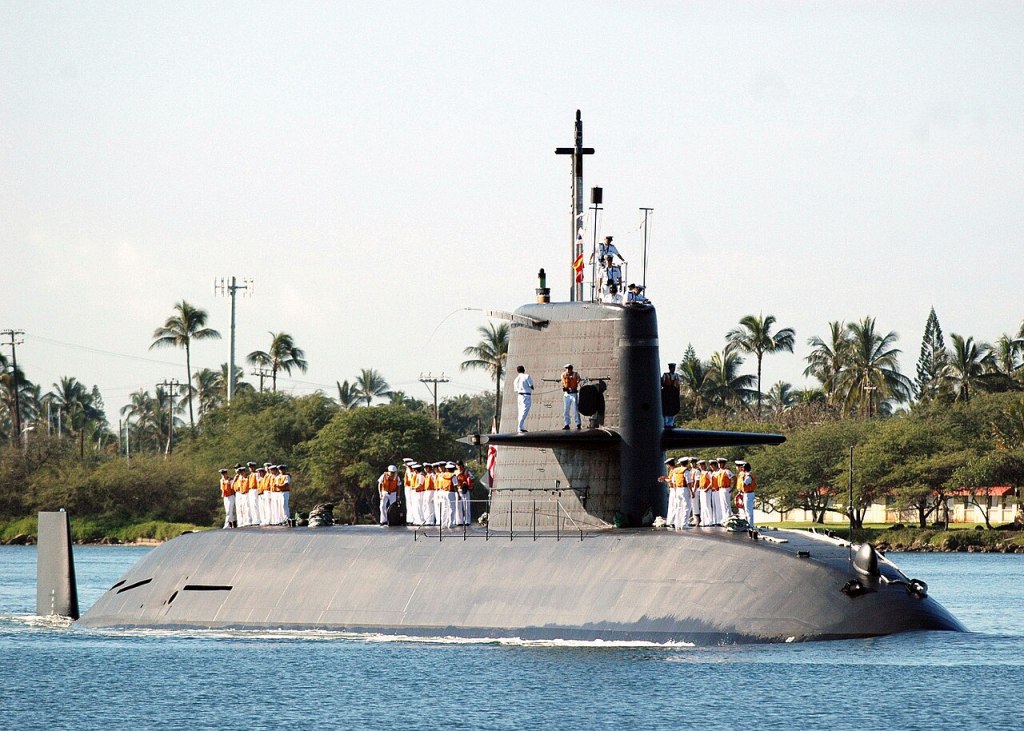
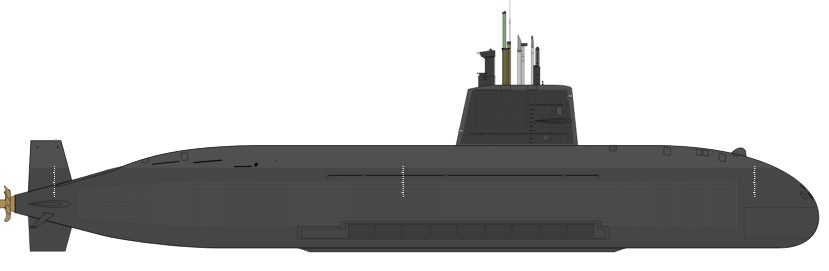
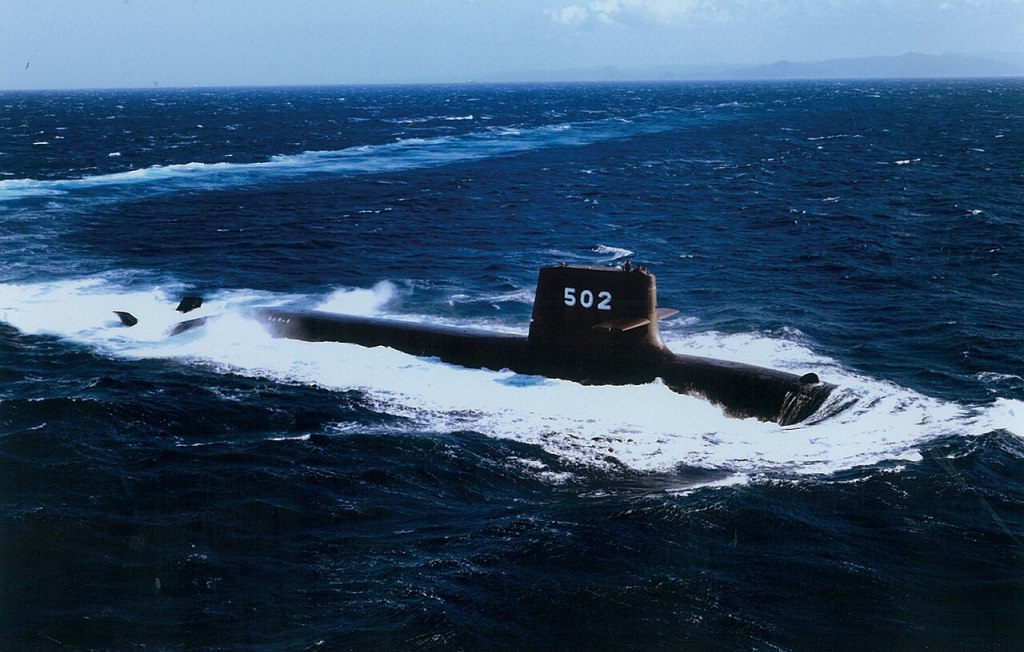
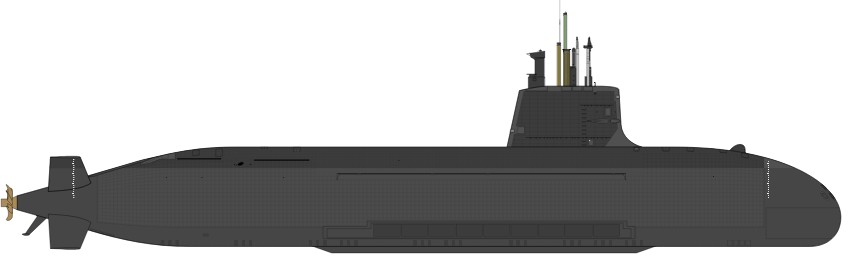
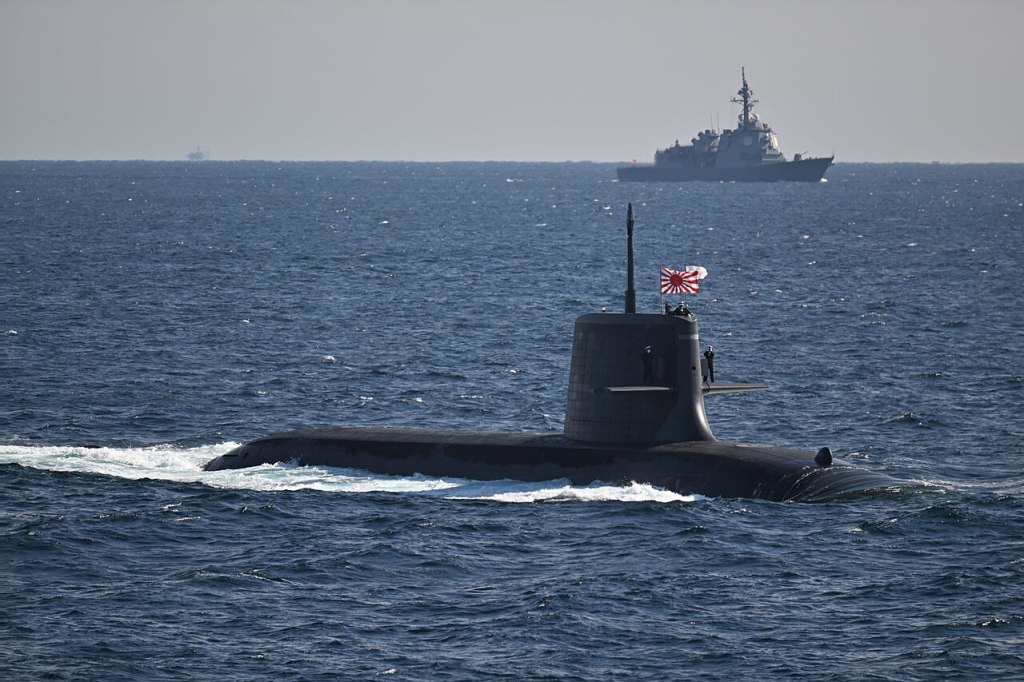
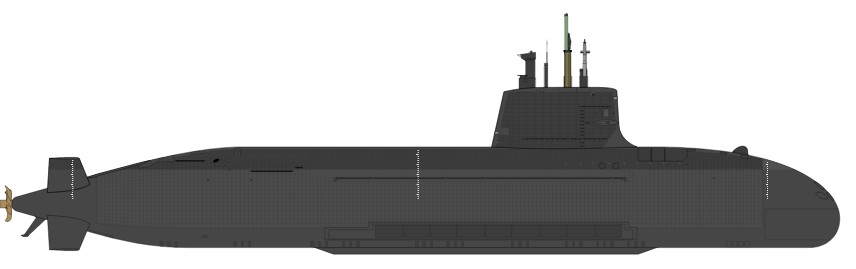
Unfortunately, I couldn’t find the costs of any boats before the Oyashio-class, such as the Uzushio or Yuushio classes, which would’ve been more contemporaneous with the Barbels, like Blueback. These were the first two classes of submarines in the JMSDF with teardrop-shaped hulls, and were, in fact, direct derivatives of the Barbels.
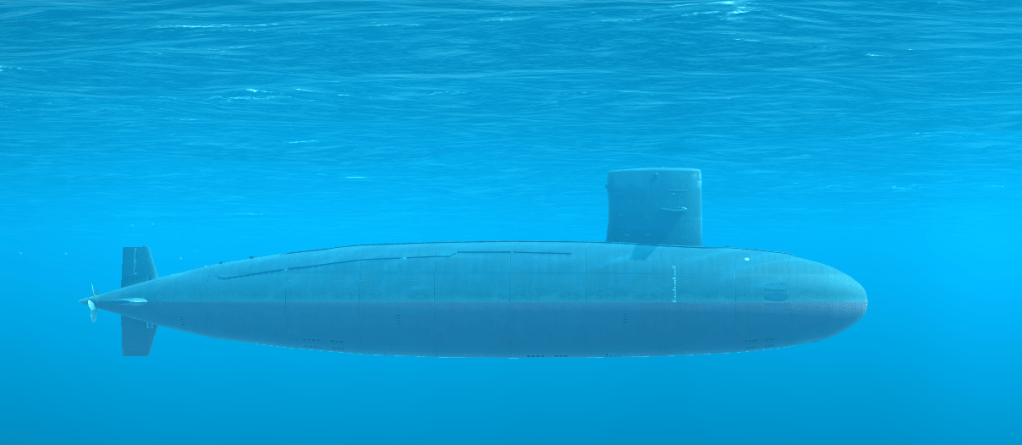
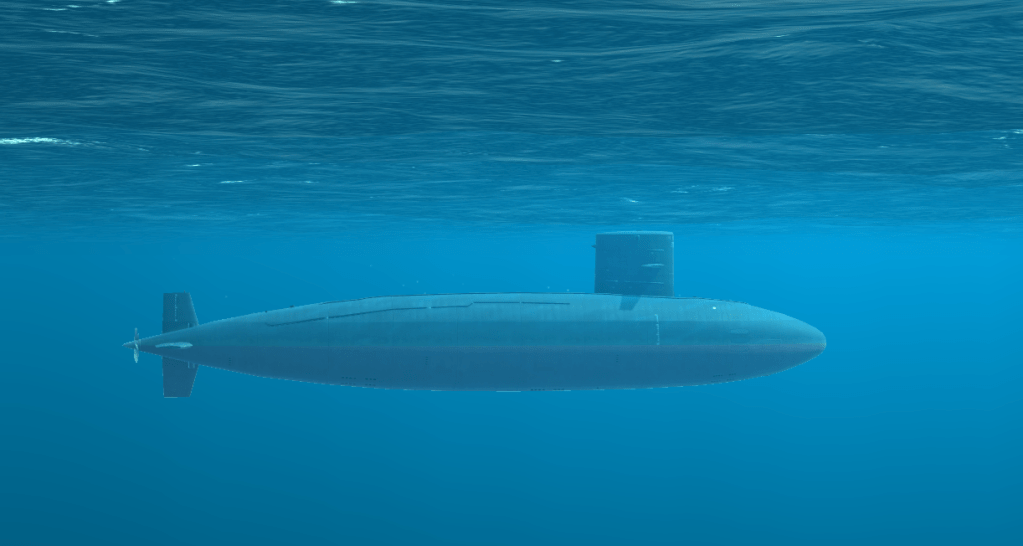
So based on the above figures, these more modern JMSDF subs cost in the range of $434 million to $1 billion in 2026. This is indeed more expensive than the adjusted cost of $426 million to replace Blueback in 1990, but we’re looking at cost figures for more modern diesel-electric boats. It would still be easier and simpler to buy a modern Japanese Taigei-class diesel-electric submarine than it would be to put Blueback back into service. Even in 1990, her systems were so old and becoming so dilapidated that it just made more sense to decommission her. Imagine trying to update her today with modern equipment?
Blueback is forever a museum ship
Given all the aforementioned problems, it begs the question of not if Blueback could be put back into service, but rather, why on Earth would Blueback be put back into service and expected to do its job in the present day?
Now, there is a clause in the agreement to transfer the vessel over to the museum that states that in a time of “national emergency,” the submarine could be recalled by the Department of the Navy. But think about that for a minute. It would have to be an emergency of such extraordinary magnitude that the Navy would have no other recourse than to recommission a 60+ year old diesel-electric submarine. At that point, recommissioning Blueback, or even a handful of museum submarines, wouldn’t make one iota of difference. The country is probably facing some type of existential crisis and is likely already doomed.
Now, let’s take a step back and just talk about the Blueback as a museum ship itself.
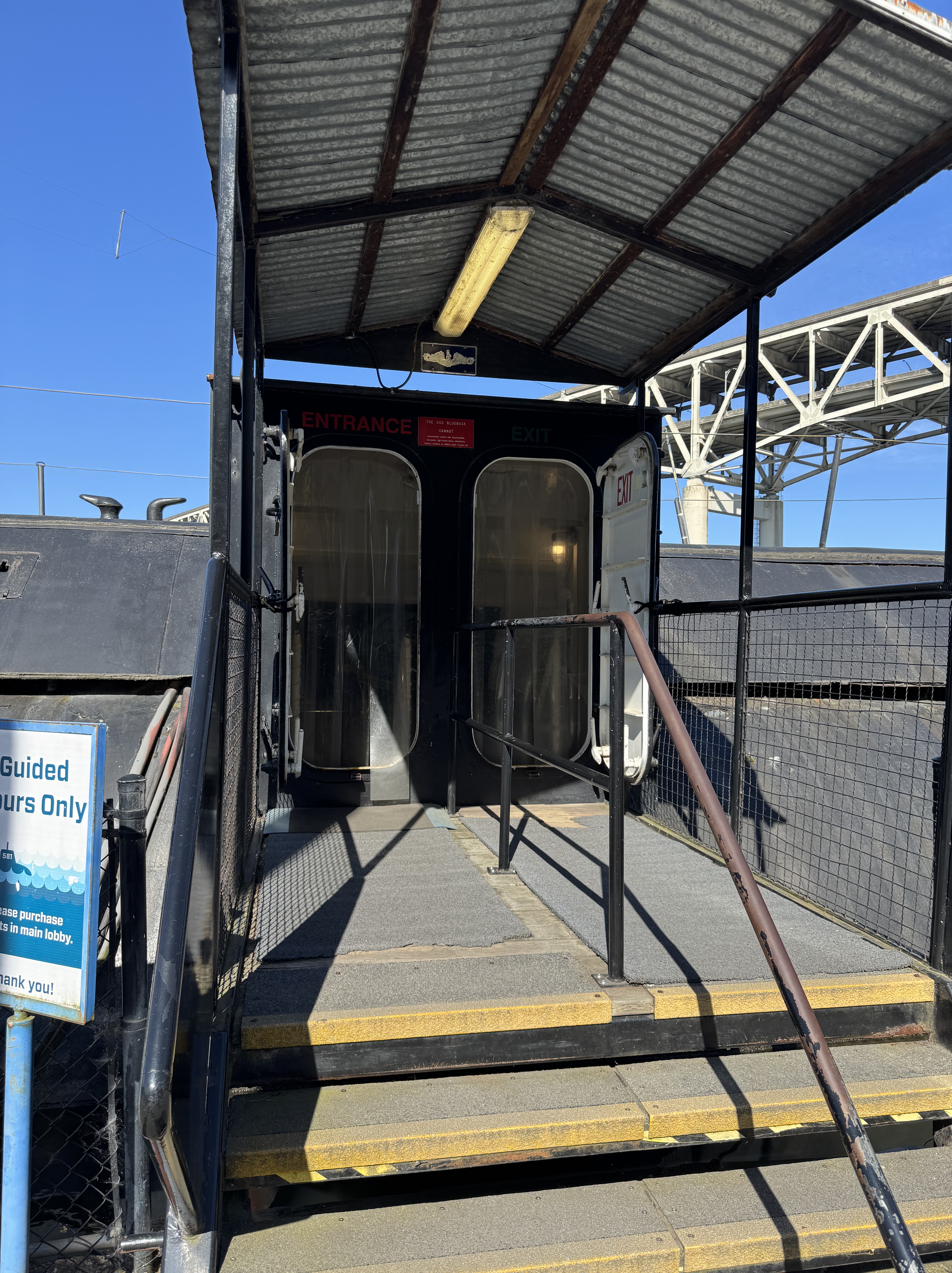
The conversion of Blueback into a museum ship required a number of changes to the boat, which effectively made it unseaworthy and unable to dive. For starters, there’s a giant hole in the side of the hull that is the museum entrance. That would have to be sealed off and made watertight. The screw is unshipped and placed on land as a memorial, so you’d have to put that back on. The flood ports on the bottom of the ballast tanks are plated over and welded shut, so you’d have to cut those open. Similarly, the bow doors on the torpedo tubes are welded shut, so it ain’t firing any weapons any time soon. There are also numerous plugs in the hydraulic systems, so you’d have to find and remove all of those. You’d have to open up the air header so the diesel engines can breathe and somehow reactivate the engines, which haven’t run in over 30 years. They’d probably seize up immediately, so you’d want to soak them in oil for a bit. Plus, you’d have to replace the generators and the electric motors. Then we send someone down to a gas station for diesel fuel, and another person better call the auto parts store and get some acid to put in the batteries, or better yet, just get brand new batteries. Finally, remove the lock that is physically keeping the propeller shaft from turning. I’m sure there’s lots more that needs to be done, but those are the issues that I’m immediately aware of.
Still, a number of systems on the boat do still work, so when tour guides tell you, “don’t touch the buttons, knobs, switches, and valves.” We do actually mean it. You could damage something or set off alarms. However, in terms of this thing going to sea again, it cannot happen.
But don’t take my word for it. To drive home the point that Blueback isn’t going anywhere, the agreement to transfer the vessel over to the museum specifically includes a clause that says the boat is permanently moored here as a static display for the purposes of being a submarine memorial and a science exhibit. Furthermore, the clause states the museum would not reactivate any system on the boat “for the navigation or movement of the vessel under its own power.” The only time it could move is if the Department of the Navy recalled it (which we’ve already established won’t happen), or if it needs to be moved to a shipyard for maintenance or repair, in which case it’ll be tugged there. This last happened when Blueback was drydocked in 1998, but that’s the last time she’s ever moved as of 2026. She has never moved under her own power since 1990. So unlike some other submarine museums in the United States, which can still start their diesel engines, Blueback cannot. So, I think that makes it pretty clear that this thing ain’t going anywhere.
Sorry, campers, Blueback is never going to be a submarine ride. We’re not gonna take river cruises or dive underwater and have a fantastic voyage on Blueback. What you get is a 40-minute tour where we describe life on a submarine and how Blueback works. It’s basically a history lesson. If that’s not what you were expecting, well, them’s the breaks.
Additionally, there’s a clause in the transfer agreement that says we cannot reactivate the galley and serve food on the submarine. Even if we cleaned the galley, there’s probably enough grease, dirt, and grime in there that it would start a fire immediately once we turned on the griddle or the ovens. It’s probably not up to modern-day health and safety codes anyway. Now, OMSI recently began holding birthday parties in the museum building itself, so kids can now stuff themselves full of cake and ice cream and run around like banshees in the museum. Well, they already do that anyway, but now we have added refined sugar to it. So every so often, when we enter the crew’s mess, visitors, often children, say, “I’m hungry, are we gonna eat here?” No. Why not? Because this is a museum exhibit, not a Chuck E Cheese’s. We do not allow any food, drink, or gum on the submarine…period. So we occasionally have to stop parents from pulling the snacks out and stuffing their kids’ faces when we enter the mess decks. No food on the submarine is, in fact, a blessing. Why? Well, food tends to attract bugs and other pests. The chemicals in the food would also significantly speed up the deterioration of the submarine and its artifacts. It would take too much time, money, and energy to serve food. And lastly, we don’t want to clean up a sticky, gross mess off the artifacts, the tables, and the floors every… single…day. NO FOOD ON THE SUBMARINE! Instead, I’d recommend the Portland Spirit for a nice river cruise, and they have pretty good food, too.
So the TLDR is that Blueback could theoretically be put back into service if you fixed the laundry list of problems with it; however, there’s literally no reason for the Navy to take it back, repair it, upgrade it, and recommission it. It will also never move under its own power again, and it will remain a museum ship for the rest of its days.
Notes
- Pete, “Submarine & Nuclear Matters: Japanese Submarine Costings – Oyashios through to Soryu Mark 2s,” Submarine & Nuclear Matters, January 13, 2016, https://gentleseas.blogspot.com/2016/01/japanese-submarine-costings-oyashios.html. ↩︎
- Pete, “Submarine & Nuclear Matters: Japanese Submarine Costings – Oyashios through to Soryu Mark 2s,” Submarine & Nuclear Matters, January 13, 2016, https://gentleseas.blogspot.com/2016/01/japanese-submarine-costings-oyashios.html. ↩︎
- Kosuke Takahashi, “Japan Commissions Fifth Taigei-Class Submarine,” Naval News, March 10, 2026, https://www.navalnews.com/naval-news/2026/03/japan-commissions-fifth-taigei-class-submarine/. ↩︎
Bibliography
Pete. “Submarine & Nuclear Matters: Japanese Submarine Costings – Oyashios through to Soryu Mark 2s.” Submarine & Nuclear Matters, January 13, 2016. https://gentleseas.blogspot.com/2016/01/japanese-submarine-costings-oyashios.html.
Takahashi, Kosuke. “Japan Commissions Fifth Taigei-Class Submarine.” Naval News, March 10, 2026. https://www.navalnews.com/naval-news/2026/03/japan-commissions-fifth-taigei-class-submarine/.

